
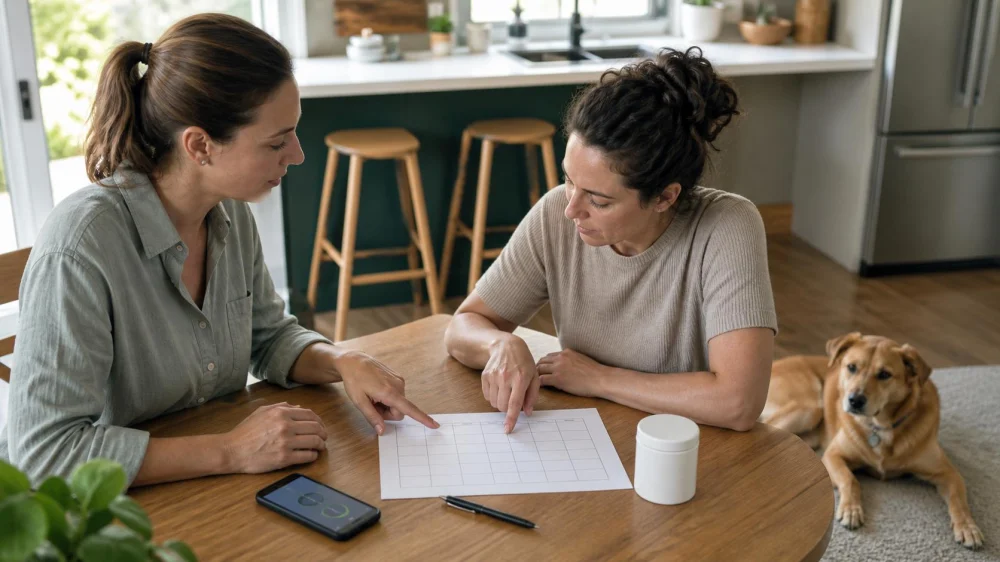
Pet Medication Handoff: Prevent Missed or Double Doses
On this page
Quick answer
Prevent pet medication errors by using one current written record and requiring every caregiver to mark a dose immediately after it is given. The record should match the veterinary label and show the pet, medicine, amount, route, time, last dose, next dose, and special instructions. If you cannot confirm whether a dose was given, do not guess or repeat it—contact the prescribing veterinary team or emergency resource promptly.
Use one medication record
Texts, memory, separate calendars, and pill counts can disagree. Choose one source of truth that every caregiver can access, whether a paper sheet or shared digital log. Copy instructions from the current dispensing label and veterinary directions without translating them into household shorthand that could be misread.
List each medication separately, including nonprescription products, supplements, topical products, and as-needed medicines. Note the exact pet when more than one animal lives in the home. Keep discontinued products off the active list but preserve the veterinary record.
Build a clear handoff
- Identify the pet and medicine. Compare the label, container, and active record before preparing anything.
- Read the full directions. Confirm amount, route, timing, food instructions, storage, and whether the product needs mixing or measurement.
- Check the last entry. Resolve blank, duplicate, or ambiguous marks before giving a dose.
- Prepare one pet at a time. Keep other animals and unneeded containers away from the area.
- Observe administration. Verify the dose was swallowed, applied, or delivered as directed rather than assumed.
- Record immediately. Mark actual time, caregiver, and relevant observation. Do not wait until later.
- State the next action aloud. During an in-person handoff, name the last confirmed and next scheduled dose.
If a dose may be wrong
If a dose was missed, repeated, spilled, vomited, refused, or given to the wrong pet, keep the container and contact the prescribing veterinary practice for case-specific instructions. Provide the pet’s species, weight if known, product name and strength, prescribed amount, actual or possible amount, time, symptoms, and other medicines.
Do not induce vomiting, give food, skip future doses, or compensate with an extra dose unless a veterinary professional directs it. For collapse, seizure, breathing difficulty, severe weakness, or other alarming symptoms, seek emergency veterinary help immediately.
Handoff checklist
- Current label and active medication list agree
- Correct pet clearly identified
- Last confirmed dose, actual time, and caregiver recorded
- Next dose and special conditions understood
- Appropriate measuring device stored with liquid medicine
- Products secured from pets, children, and mix-ups
- Prescribing clinic and emergency contact accessible
Limitations and safety notes
This article is not a dosing guide. Only the prescribing veterinary team can advise what to do for a specific medicine and pet. Human medicine, another pet’s prescription, and old or discontinued products should never be substituted without veterinary direction.
Store products exactly as labeled and do not transfer them into unlabeled containers. Use medication organizers only if the veterinary team confirms they are appropriate for the product and household.
Sources and evidence notes
The workflow follows common medication-safety practice: maintain an accurate list, use the labeled directions, identify the recipient, document administration at the time, and escalate uncertainty instead of guessing. The veterinary prescription and current professional advice are the primary sources.
Frequently asked questions
What if the log is blank but the pill count looks lower?
Treat the dose as uncertain. Pill counts can be misleading, so contact the veterinary team before repeating it.
Can I give the next dose late?
Timing advice depends on the medicine and pet. Ask the prescriber rather than creating a new schedule.
Should two caregivers prepare doses in advance?
That can increase confusion unless the veterinary team approves the storage method and the system clearly identifies every dose. One-at-a-time verification is safer.
What should a pet sitter receive?
Provide labeled containers, the single current record, demonstration of the approved technique, veterinary contacts, and written emergency authorization as appropriate.
Next steps
Create one active record from current veterinary labels, remove outdated household notes, and practice a last-dose/next-dose handoff. Put the clinic and emergency contacts beside the log. When any entry is uncertain, pause and call rather than estimating.





 Animal Discount Clinic4.0 (137 reviews)
 Tweety Brothers Pet Shop3.0 (149 reviews)
 Animal Emergency Clinic of the High Country3.0 (302 reviews)
 Southpaw Vets4.0 (144 reviews)
 Petco4.0 (380 reviews)
 Nicolosi Animal Hospital4.0 (119 reviews)
 Is Your Pet’s Mental Health on Track? Signs, Causes & What to Do
 How to Safely Clean Your Pet’s Ears and Prevent Infections: A Step-by-Step Guide
 How to Manage Anxiety in Dogs During Vet Visits – Tips from Experts
 How to Treat and Prevent Flea Infestations in Pets
 Common Mistakes in Pet Vaccination and How to Avoid Them
 What Every Pet Owner Should Know About Pet Health