
How to Prepare Your Pet for a Veterinary Appointment
On this page
- Quick answer
- Decide whether the visit can wait
- Book the right appointment
- Build a useful health timeline
- Prepare the medication list
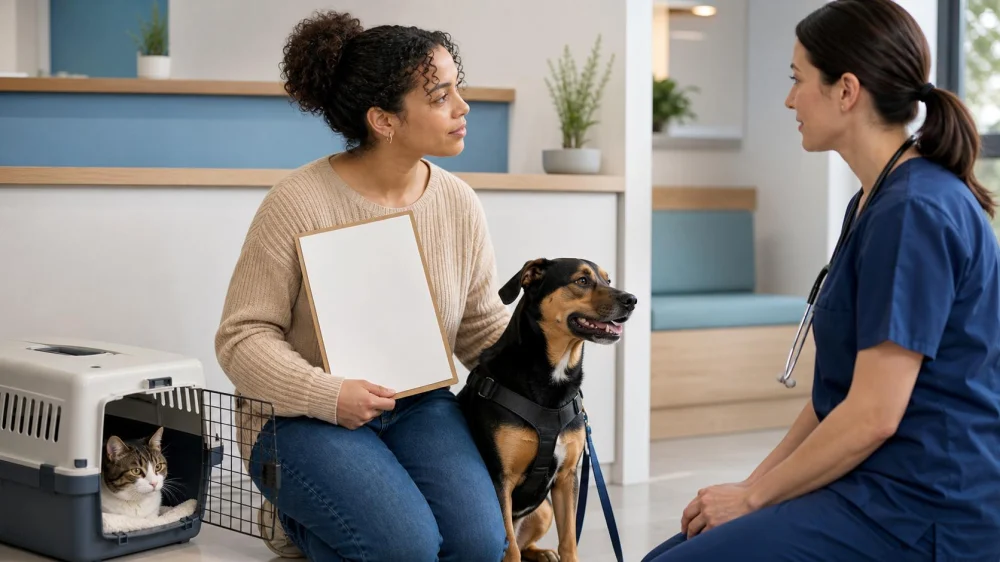
- Plan safe, lower-stress transport
- Appointment-day checklist
- Questions to ask the veterinarian
- Limitations and important notes
- Frequently asked questions
- Sources and evidence notes
- Next steps
Quick answer
Before a veterinary appointment, confirm the visit type, write a short symptom timeline, gather relevant records, and list every medication, supplement, diet, and recent treatment. Ask the clinic about fasting, samples, arrival time, and transport needs instead of guessing. Bring your pet in a secure carrier or restraint, plus focused questions and a way to record the veterinarian's instructions.
Decide whether the visit can wait
A veterinary appointment is a scheduled evaluation by a licensed veterinarian; it is not a substitute for emergency triage. Call a veterinarian or emergency animal hospital promptly if a pet has severe breathing difficulty, collapse, uncontrolled bleeding, repeated seizures, suspected poisoning, major trauma, inability to urinate, or another rapidly worsening condition.
Do not spend time completing a routine checklist when delay could be harmful. Describe the signs by phone and follow the clinic's transport instructions. If possible, call before arrival so the team can direct you to the appropriate facility.
Book the right appointment
Tell the scheduler the main reason for the visit, when it began, whether signs are worsening, and whether more than one concern needs attention. This helps the clinic reserve an appropriate visit length and identify cases needing earlier assessment.
- Routine wellness: Ask which preventive records, vaccine history, and parasite-control details to bring.
- New illness or injury: Report the main signs, duration, appetite, drinking, elimination, energy, and any home treatment already given.
- Recheck: Bring the response to treatment, missed doses, side effects, and changes since the last exam.
- Behavior concern: Ask whether videos, a detailed trigger log, or a longer appointment would help.
- New clinic or specialist: Arrange transfer of records and relevant test images before the visit when possible.
Build a useful health timeline
A concise timeline is more useful than trying to remember events under pressure. Record:
- the date and approximate time the problem first appeared;
- how often it occurs and whether it is improving, stable, or worsening;
- changes in food or water intake, urination, stool, sleep, movement, and behavior;
- recent travel, boarding, grooming, wildlife contact, new pets, diet changes, or possible toxin exposure;
- clear photos or short videos of intermittent signs, when safe to capture them;
- previous diagnoses, surgeries, allergies or reactions, laboratory results, and vaccination records relevant to the concern.
Keep the original context with a photo or video. Note when it was recorded and what happened immediately before and after; do not provoke coughing, limping, aggression, or another symptom merely to film it.
Prepare the medication list
List prescription drugs, nonprescription products, flea and tick preventives, heartworm preventives, supplements, medicated shampoos, and any human product the pet may have received. For each, include the exact name, strength, amount given, schedule, reason, last dose, and prescribing clinic. Photos of both sides of labels can reduce transcription errors.
Do not stop, double, or change a prescribed medicine before the appointment unless the veterinary team directs you to do so. Never give a human pain reliever or leftover animal prescription for a new problem without veterinary guidance.
Plan safe, lower-stress transport
- Use a secure, ventilated carrier for cats and small pets; check latches and the base before departure.
- Use an appropriate leash, harness, carrier, or vehicle restraint for dogs. Do not allow an unrestrained pet to move around the vehicle.
- Introduce the carrier before appointment day when possible, leaving it open with familiar bedding in a quiet area.
- Tell the clinic in advance about fear, bite history, escape behavior, motion sickness, mobility limits, or sensitivity to other animals.
- Ask whether waiting in the vehicle, entering through another door, or going directly to an exam room is available.
- If the veterinarian previously prescribed pre-visit medication, verify the exact timing and dose rather than relying on memory.
Appointment-day checklist
- Follow only the clinic's instructions about food, water, and fasting.
- Confirm whether a fresh stool or urine sample is requested and how it should be collected and stored.
- Bring the symptom timeline, medication list, relevant records, and photos or videos.
- Bring the pet securely restrained and label carriers with current contact information.
- Pack needed mobility support, a small familiar towel, cleanup supplies, and approved rewards.
- Arrive at the time requested, allowing for safe loading and travel without rushing.
- Keep cats and other small pets inside carriers in the parking area and waiting room.
- Have payment and insurance details available, but ask for an estimate before optional diagnostics if cost affects decisions.
Questions to ask the veterinarian
- What are the most likely explanations, and what findings would change the plan?
- Which tests or treatments are recommended now, and which can reasonably wait?
- What should improve, and over what general timeframe?
- Which warning signs require a same-day call or emergency care?
- For each medicine, what is it for, how and when is it given, how should it be stored, and what if a dose is missed?
- Which side effects should prompt stopping the medicine and contacting the clinic?
- Are there interactions with the pet's other drugs, supplements, diet, or health conditions?
- When and how should follow-up occur, and who should receive test results?
Repeat the plan in your own words before leaving. Request written discharge instructions and any available client information sheet for a prescribed drug.
Limitations and important notes
This checklist is general preparation guidance for U.S. pet owners. Species, age, pregnancy, chronic disease, temperament, and the planned procedure can change instructions. Birds, reptiles, small mammals, and other exotic pets may need species-specific temperature and transport arrangements.
Do not fast a pet unless the clinic tells you to; fasting may be inappropriate for some young, small, diabetic, or medically fragile animals. Do not handle a painful or frightened pet in a way that risks a bite. Ask the veterinary team for a safe plan.
Frequently asked questions
Should I bring my pet's medication bottles?
Bring the original containers when practical, or take clear label photos. The veterinarian needs the product, strength, directions, actual amount given, last dose, and any missed doses or reactions.
Should my pet eat before the appointment?
Ask the clinic. The answer depends on the pet, visit, testing, sedation plan, and medical conditions. Continue access to water unless the veterinary team gives different instructions.
Can I bring a stool or urine sample?
Only if requested or accepted by the clinic. Ask how fresh it must be, what clean container to use, and whether refrigeration is appropriate. Label it with the pet's name and collection time.
What if my pet becomes extremely anxious at the clinic?
Tell the team before arrival. Environmental changes, direct rooming, trained handling, or veterinarian-prescribed pre-visit medication may be options. Do not use someone else's sedative or adjust a prior prescription yourself.
Can someone else take my pet to the appointment?
Ask the clinic about authorization. The person should know the history, carry the records and medication list, have your contact information, and understand what decisions and spending they are authorized to approve.
Sources and evidence notes
The U.S. Food and Drug Administration's questions about pet medications emphasizes communication about directions, underlying conditions, alternatives, side effects, and client information sheets. FDA also advises contacting a veterinarian, emergency animal hospital, or animal poison control center for veterinary advice in a pet emergency. Record preparation, secure transport, and symptom tracking reflect common veterinary practice; the treating clinic's instructions take priority.
Next steps
Call the clinic with the main concern and ask about fasting, samples, records, and arrival procedures. Then create a one-page timeline and medication list, test the carrier or restraint, and write your three most important questions. After the visit, store the written plan and schedule recommended follow-up before details are forgotten.




 Natural AquariumZ3.0 (35 reviews)
 Ellis Crossing Animal Hospital5.0 (44 reviews)
 Dr. Erin Van Dokkenburg0.0 (0 reviews)
 Animal Eye Center4.0 (59 reviews)
 VIP Petcare Vaccination Clinic0.0 (0 reviews)
 Petco4.0 (679 reviews)
 Dog Dental Disease Signs and Prevention — Why 80% of Dogs Over 3 Have Gum Problems
 How to Properly Introduce Cats to New Environments – Tips for a Smooth Transition
 The Role of Mental Stimulation in Pet Health: Why It’s Crucial for Your Pet’s Well-Being
 How to Prevent and Treat Worms in Dogs and Cats
 How to Train Your Pet to Be Comfortable Around Strangers
 The Importance of Regular Vet Check-Ups for Preventive Care