
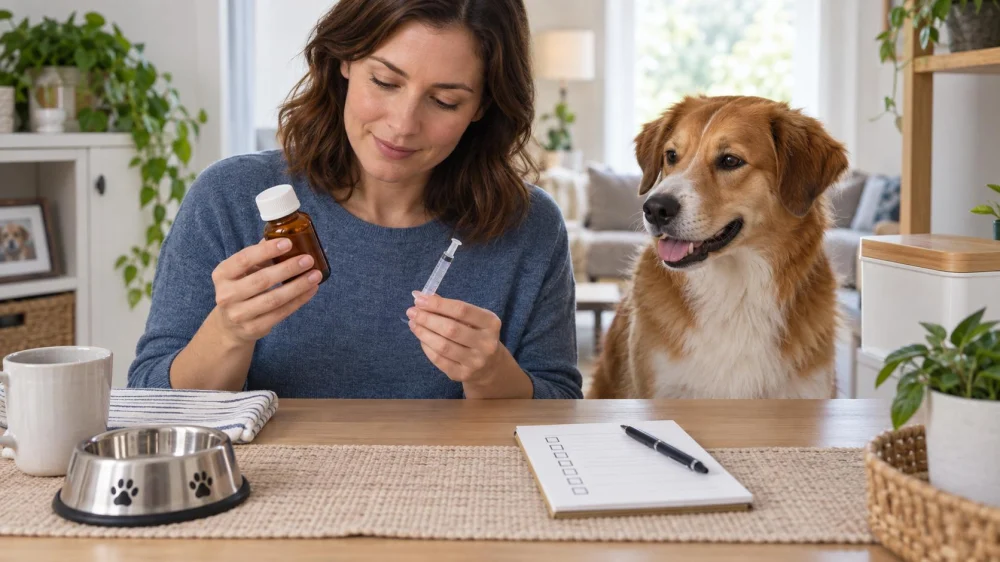
Pet Medication Routine: Labels, Timing, and Vet Checks
On this page
Quick answer
Give a pet medication only to the named animal and exactly as the veterinarian and dispensing label direct. Before each dose, confirm the medicine, strength, amount, route, timing, food instructions, and expiration. Record it immediately. If a dose is missed, vomited, spit out, or possibly repeated, do not guess or double it; call the prescribing veterinarian or emergency resource for medicine-specific advice.
Confirm the pet, medicine, and directions
A safe routine begins before the first dose. Read the entire dispensing label and any client information sheet while you are still able to ask questions. Make sure the label names the correct pet and matches what the veterinarian described.
- Why is the medicine being used, and how long should it continue?
- What is the exact amount, timing, and route: mouth, skin, eye, ear, injection, or another method?
- Should it be given with food, without food, or at a particular time relative to a meal?
- Does a liquid need shaking, refrigeration, protection from light, or a specific measuring device?
- What side effects require a call, an urgent visit, or emergency care?
- Are rechecks, blood tests, or other monitoring needed?
- Could it interact with prescriptions, over-the-counter products, supplements, or preventives already used?
Do not transfer medicine into an unlabeled container or rely on color and shape. Keep medicines for different pets separated. Never share one animal's prescription with another or substitute a human medicine unless the veterinarian specifically directs it for that pet.
Build one reliable medication schedule
Translate the label into a schedule without changing it. Use the exact interval or clock times provided by the veterinarian, and ask how much timing variation is acceptable. Work, travel, meals, and sleep should be planned around the prescribed instructions rather than used to invent a new interval.
- Write the pet name, medicine, strength, amount, route, and start and stop instructions at the top of a log.
- List every planned dose and recheck in local time.
- Assign one responsible person for each dose.
- Use reminders that identify the pet and medicine without exposing private details on a shared device.
- Require a completed log entry before another caregiver assumes a dose was missed.
- Keep the veterinarian, emergency hospital, and poison-control contact route accessible.
For households with more than one caregiver, use one shared source of truth. Text messages, alarms, and pill organizers can support the routine, but the original labeled container and veterinarian instructions remain authoritative.
Give and record each dose carefully
Prepare in a quiet, well-lit area away from other pets and children. Wash or protect hands when directed. Compare the label with the schedule, identify the pet, and use the supplied or recommended measuring device. Household teaspoons are not a substitute for a calibrated device.
Do not cut, crush, open, dissolve, mix, or hide a tablet or capsule unless the veterinarian or pharmacist says the exact product may be altered. Some products depend on their coating, release design, or safe handling. Eye and ear medicines are not interchangeable, and topical products must be used only on the instructed site.
After administration, close the container, return it to storage, and record the time, amount, route, person, and any problem. Observe the pet for the side effects and follow-up signs described by the veterinarian. A short video or photo may help the clinic understand a reaction, but do not delay urgent care to document it.
Handle missed, repeated, or rejected doses
The correct response depends on the medicine, formulation, amount, timing, and pet. Do not apply a universal missed-dose rule. Call the prescribing clinic when a dose is late or missed, and ask when the next dose should be given.
If the pet spits out or vomits medicine, do not automatically repeat it. Part of the dose may have been absorbed, and another full dose could give too much. Note the time, what you observed, whether the medicine was visible, and any symptoms, then contact the veterinarian.
If an extra dose may have been given, the wrong pet received it, a human medicine was given by mistake, or a pet chewed a container, call a veterinarian, emergency animal hospital, or animal poison-control service immediately. Keep the package available. Do not induce vomiting or give a home remedy unless a qualified professional directs it.
Store, dispose, and verify information
Follow the product label for temperature, light, moisture, and refrigeration. Keep the original container tightly closed in a secure location that pets and children cannot reach; a counter, bag, or ordinary child-resistant vial may not stop a determined animal. Separate animal medicines from human medicines to reduce mix-ups.
Dispose of expired, unused, or unwanted medicine through a take-back option when available or according to the product and official guidance. Do not flush or throw away a product merely by habit. Ask the veterinarian or pharmacist when instructions differ or a controlled, hazardous, or compounded product is involved.
Evidence notes: the FDA Center for Veterinary Medicine advises owners to understand why, how, how often, and how long a medicine is given; to ask about food, storage, missed doses, interactions, side effects, and rechecks; and to keep medicines in original labeled containers stored securely. Review the FDA pages on questions for your veterinarian and proper medication storage, then follow the current instructions for the specific prescription.
Frequently asked questions
Should I give two doses after missing one?
Do not assume so. Call the prescribing veterinarian for instructions based on the specific medicine and timing.
Can I use a kitchen spoon for liquid medicine?
Use the calibrated device supplied or recommended for that prescription. Ask the clinic or pharmacy to demonstrate the correct measurement.
Can pet medicine be stored with family medicine?
Separate storage reduces mix-ups. Keep every medicine in its original labeled container and in a location secure from pets and children.
What if my pet seems better before the medicine is finished?
Continue or stop only as the veterinarian directs. Contact the clinic before changing duration, amount, or frequency.
What information should I report with a possible side effect?
Provide the pet, medicine, strength, amount, time, route, other products used, observed signs, and any relevant package or lot information. Seek emergency help for severe or rapidly worsening signs.
Conclusion and next steps
Before the next dose, read the label, confirm the correct pet and medicine, and make one shared schedule. Record administration immediately and keep the container secure. Most importantly, decide now whom to call for a missed, rejected, repeated, or accidental dose. Medicine-specific advice from the veterinarian is safer than guessing when the routine changes.


 Vet Plaza Animal Clinic4.0 (204 reviews)
 All Creatures Veterinary4.0 (58 reviews)
 VIP Petcare Vaccination Clinic0.0 (0 reviews)
 Petco4.0 (1352 reviews)
 Oak Valley Veterinary Services5.0 (23 reviews)
 Apple Country Animal Hospital4.0 (344 reviews)
 Top 10 Tips for Pet Health - Expert Advice for Happy, Healthy Pets
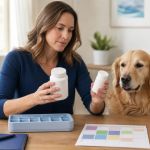 Pet Medication Refill Planning: Avoid Unapproved Dose Changes
 Traveling with Pets: Tips for a Safe and Comfortable Journey
 How to Support a Dog Recovering from Surgery with Care and Comfort
 How to Help Pets Cope with Separation Anxiety | Brothers Pets
 How to Spot and Treat Hip Dysplasia in Dogs: A Complete Guide