
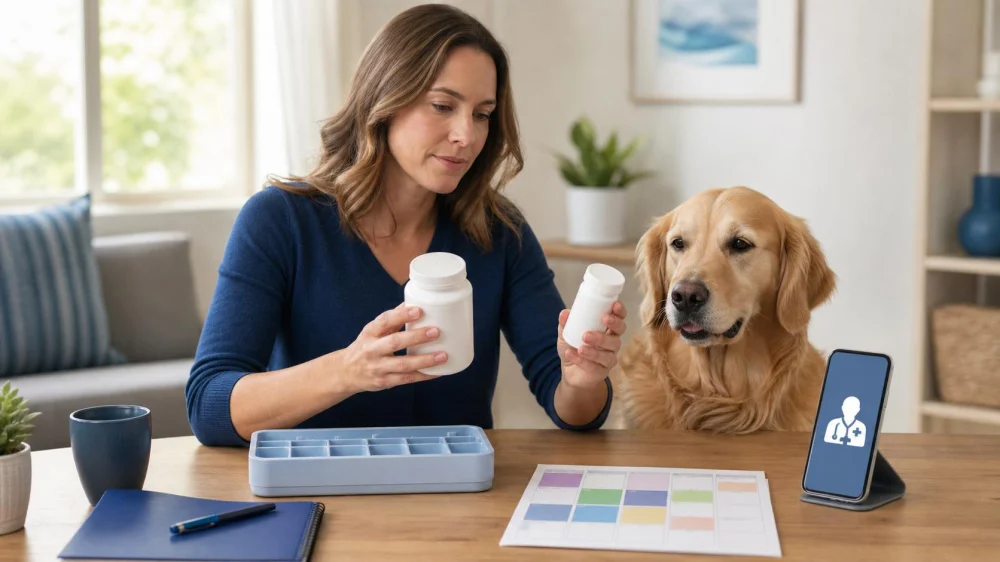
Pet Medication Refill Planning: Avoid Unapproved Dose Changes
Table of contents
Quick answer
Count remaining pet medication before the last week, then contact the prescribing veterinary clinic with the pet's name, drug, strength, directions, pharmacy, and doses left. Ask whether an exam, test, or new prescription is required. Do not stretch the supply, skip doses, double doses, substitute another pet's medicine, or use a human product unless the veterinarian gives specific instructions.
Count doses early
Choose one day each week to check long-term medicines. Count tablets, capsules, measured liquid doses, injections, patches, or topical applications and calculate the expected run-out date from the current label. Allow extra time for weekends, holidays, shipping, special ordering, compounding, prior authorization, and required laboratory work.
Record medicines stored in more than one place, but do not combine bottles with different lot numbers or expiration dates. For controlled drugs, refrigerated products, insulin, or compounded formulations, ask the clinic how early a refill may legally and safely be prepared.
Verify the prescription
Read the dispensing label, not memory. Confirm the pet, drug name, strength, dosage form, amount per dose, route, frequency, duration, prescriber, refill status, storage, and expiration or beyond-use date. Note the purpose of the medicine and the monitoring plan.
If the label conflicts with the veterinarian's latest directions, stop and call before the next uncertain dose. Do not rely on an old portal message or handwritten note after a treatment change.
Request the refill
Use the clinic's approved portal, phone, or pharmacy process. Provide the exact current label information, remaining doses, preferred pharmacy, and any travel deadline. Mention vomiting, missed doses, difficulty administering, side effects, weight change, new illness, or medicines from another clinician.
Ask when approval should be complete and who will contact you. A request confirmation is not a filled prescription. Check that the pharmacy received authorization and has the product in stock before making a trip.
Plan required monitoring
Veterinarians may require an examination, blood test, urine test, blood pressure check, drug level, weight, or other follow-up before renewing a medicine. FDA notes that rechecks are important for long-term diseases and that a veterinarian knows when dose changes or testing may be needed.
Schedule monitoring before the supply runs out. Ask whether the pet should fast, whether morning dose timing changes on test day, and when results will be reviewed. Follow only the clinic's instructions.
Check the pharmacy
A prescription veterinary medicine requires a valid prescription from a licensed veterinarian. Be cautious of websites that offer prescription pet drugs without verification. Confirm the pharmacy, shipping conditions, expected arrival, return policy, and contact route for a damaged or warm package.
Do not switch between approved, compounded, human, or veterinary formulations based only on a similar name or price. Concentration, inactive ingredients, device, and dosing can differ. Ask the veterinarian to approve the exact product.
Handle a possible gap
Call the clinic as soon as a gap becomes possible. State the last dose available and the normal schedule. The safe response depends on the medicine and condition. FDA advises asking the veterinarian what to do after a missed dose; do not create your own catch-up schedule.
For seizures, insulin, heart medicines, steroids, antibiotics, pain control, or other important therapies, an interruption may carry specific risks. If the clinic is closed, use its emergency instructions. Call a veterinarian, emergency animal hospital, or animal poison control service for urgent veterinary advice.
Check the filled medicine
Before the first dose, compare the new label with the old plan. Verify pet, drug, strength, form, directions, quantity, appearance, storage, and measuring device. Ask about any change in tablet color, manufacturer, concentration, or instructions.
Use an oral syringe or device marked for the prescribed unit. Keep medicines separated by pet and away from children and animals. Save the clinic and pharmacy numbers with the administration log.
Refill checklist
- Count doses and calculate the run-out date.
- Read the current label.
- Contact the prescribing clinic early.
- Report side effects, missed doses, and new medicines.
- Schedule required exams or tests.
- Confirm authorization, stock, and pickup or shipping.
- Compare the new fill before dosing.
- Ask the veterinarian about any gap or mistake.
Limitations and veterinary note
This article provides general organization guidance, not veterinary diagnosis or dosing advice. Requirements and risks vary by drug, species, condition, state law, and pharmacy. Only the treating veterinarian can direct missed doses, substitutions, tapering, monitoring, or emergency care.
Frequently asked questions
Can I give half doses to make medicine last?
Not unless the veterinarian specifically instructs it. Changing the dose can reduce benefit or cause harm.
Should I double the next dose after a missed dose?
Do not assume so. Call the veterinarian because instructions differ by medicine.
Can I use another pet's leftover medicine?
No. Even a similar pet may need a different drug, strength, formulation, or monitoring.
Why does the clinic require a recheck?
The veterinarian may need to confirm response, safety, weight, organ function, or whether treatment should change.
Is an online pharmacy safe?
Use one that requires a valid veterinary prescription and can verify its source and handling. FDA lists absence of prescription verification as a red flag.
Sources and evidence
- FDA: Medications for Your Pet—Questions for Your Vet — covers missed doses, vomiting, side effects, and long-term rechecks.
- FDA: Buying Pet Medicines Online — explains prescription verification, monitoring, and pharmacy red flags.
- FDA: Veterinary Medication Errors — provides questions that help owners prevent wrong-drug and wrong-dose errors.
Next steps
Count every current pet medicine today and put each run-out date on one calendar. If any supply ends within ten days, contact the prescribing clinic with the label and doses remaining. Confirm monitoring, authorization, and pharmacy stock, then compare the new fill before giving it.


 Assure Vet Animal Hospital3.0 (61 reviews)
 Elite Puppies5.0 (1 reviews)
 VCA Sand Lake Animal Hospital4.0 (240 reviews)
 Healing Paws Wellness Center4.0 (43 reviews)
 Paw Prints Veterinary Hospital4.0 (117 reviews)
 Vetco Vaccination Clinic0.0 (0 reviews)
 Understanding the Importance of Omega in Pet Diets
 Can Dogs Eat Plantains? Fried vs Ripe Safety Guide
 Expert Advice on Seasonal Pet Care: Keep Your Pet Healthy Year-Round
 How to Make Mealtime Fun for Picky Dogs | Tips and Ideas
 Top 9 Tips for Pet Training That Actually Work
 Top 13 Tips for Pet Grooming | Keep Your Pet Healthy, Happy, and Well-Groomed