
- Understanding Dog Swimming
- Step-by-Step Guide to Introducing Your Dog to Water
- Choosing the Right Location for Dog Swimming
- Safety Tips for Swimming with Your Dog
- Common Mistakes to Avoid When Teaching Your Dog to Swim
Understanding Dog Swimming
Swimming is a great form of exercise and bonding activity for you and your dog. However, not all dogs are naturally inclined to enjoy the water. Some breeds are born swimmers, while others may need extra help to overcome their fear. Understanding your dog’s temperament and swimming ability is the first step in safely introducing them to the water.
In this article, we will explore how to safely introduce your dog to swimming, the benefits of water activities, and the best practices for a successful and enjoyable experience. Whether you're dealing with a dog that’s nervous about water or a natural swimmer, these tips will guide you in helping your pet feel confident and comfortable in the water.
1. Step-by-Step Guide to Introducing Your Dog to Water
Introducing your dog to water for the first time can be a challenging yet rewarding experience. Here’s a step-by-step guide to ensure a positive experience:
1. Start Slowly and Gradually
Start by allowing your dog to observe the water from a safe distance. Let them get familiar with the surroundings before making any moves toward the water. Slowly bring them closer, giving them plenty of time to explore without pressure.
2. Use Positive Reinforcement
Whenever your dog shows curiosity or calmness around the water, reward them with praise or treats. This helps create a positive association with water and encourages them to continue exploring.
3. Enter the Water Together
Once your dog seems comfortable around the water, it’s time to enter with them. Start by standing in the shallow water and gently coaxing your dog in. Allow them to enter at their own pace, and never force them into the water.
4. Keep Sessions Short and Positive
Keep the initial swimming sessions brief. Too much time in the water can overwhelm your dog. Gradually increase the time as your dog becomes more comfortable. Always end the session on a positive note with praise or playtime.
2. Choosing the Right Location for Dog Swimming
The location where you introduce your dog to swimming is crucial for their comfort and safety. Here are some factors to consider when choosing the right swimming spot:
1. Calm Water
Choose a calm body of water such as a quiet lake, pond, or a shallow beach with little to no waves. Fast-moving water or strong waves can scare your dog and make them less inclined to swim.
2. Shallow Areas
A shallow area allows your dog to enter the water gradually and gives them a safe space to retreat to if they get overwhelmed. Make sure the area is free from sharp rocks or debris that could cause injury.
3. Clean and Safe Environment
Ensure that the water is clean and free from harmful bacteria or pollutants. Also, make sure the area is dog-friendly, with no dangerous animals or strong currents that could pose a threat to your dog’s safety.
3. Safety Tips for Swimming with Your Dog
When swimming with your dog, safety is paramount. Here are some essential tips to ensure both you and your dog have a safe experience:
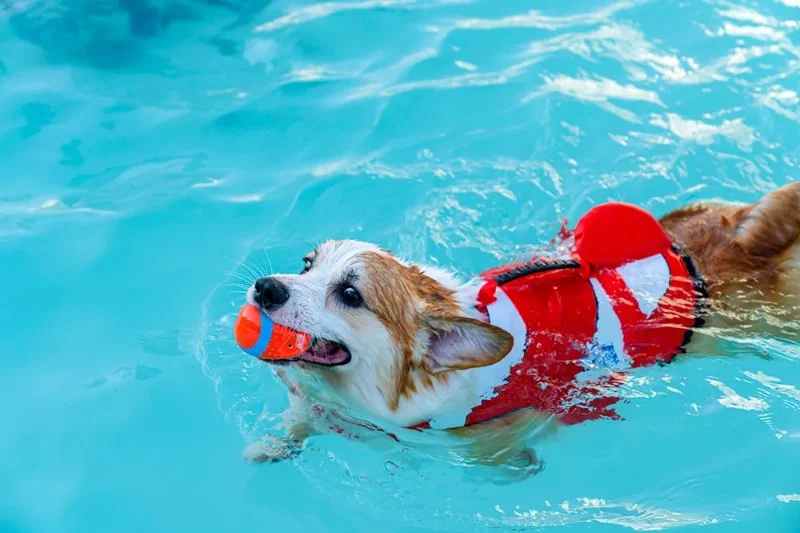
1. Use a Dog Life Jacket
If your dog is a beginner swimmer or has a fear of the water, consider using a dog life jacket. This will provide extra support and buoyancy, helping your dog feel more confident while swimming.
2. Watch for Signs of Stress
Always monitor your dog for signs of stress or exhaustion. If your dog is panting heavily, struggling to stay afloat, or showing reluctance to continue, it’s time to take a break.
3. Never Leave Your Dog Unattended
While your dog is in the water, always keep an eye on them. Never leave your dog unattended, even if they are a strong swimmer. Accidents can happen quickly, and you need to be ready to assist if needed.
4. Common Mistakes to Avoid When Teaching Your Dog to Swim
Introducing your dog to swimming can be a learning experience for both of you. Avoid these common mistakes to ensure a smoother transition:
1. Forcing Your Dog Into the Water
Never force your dog into the water, as this can increase their fear of swimming. Allow your dog to take their time and enter the water on their own terms.
2. Overwhelming Your Dog
Avoid long swimming sessions or too much pressure on your dog early on. Keep the first few sessions short and enjoyable, gradually building their confidence over time.
3. Not Using a Life Jacket
Even if your dog is a strong swimmer, it’s always a good idea to use a life jacket, especially in open water or unfamiliar areas. This provides added safety and reassurance for both you and your dog.
5. Consulting Brothers Pets for Swimming Gear
If you’re planning on taking your dog to the water, it’s essential to have the right gear. At Brothers Pets, we offer a wide range of dog swimming gear, including life jackets, floatation devices, and waterproof accessories to keep your dog safe while they enjoy swimming. Visit our website to find the best products for your dog’s swimming adventures!






 Companion Animal Hospital Mount Prospect4.0 (412 reviews)
 Ash Creek Animal Clinic4.0 (218 reviews)
 Animal Eye Specialty Center4.0 (220 reviews)
 Monroe Animal Clinic4.0 (44 reviews)
 VCA Sterling Animal Hospital4.0 (136 reviews)
 Animal Care of Mathews4.0 (40 reviews)
 How to Recognize and Treat Cushing’s Disease in Dogs
 How to Improve Your Pet’s Diet for Better Skin and Coat Health
 Dog Grooming Tips for Maintaining a Healthy Coat | Brothers Pets
 Tips for Teaching Puppies Basic Commands at Home: A Beginner's Guide
 Best Supplements to Support Healthy Aging in Cats: Keep Your Senior Cat Active
 The Dos and Don’ts of Parasite Prevention Every Pet Owner Should Know