
Pet Dental Care at Home: Build a Safer Daily Routine
On this page
- Quick answer
- What home dental care can do
- Start with a low-stress mouth check
- How to introduce toothbrushing
- How to evaluate dental products
- Build a routine your pet can tolerate
- Weekly dental-care checklist
- Limitations and veterinary triggers
- Sources and evidence notes
- Frequently asked questions
- Conclusion and next steps
Quick answer
Use pet-specific toothpaste and a soft brush, introduce each step gradually, and stop before your dog or cat becomes distressed. Frequent brushing is the most direct home method for disrupting plaque, but it cannot remove hardened tartar or treat painful disease. Arrange a veterinary oral exam for persistent odor, bleeding, swelling, loose teeth, reduced appetite, or difficulty chewing.
Pet dental care at home means routine, noninvasive plaque control performed while an animal is comfortable and awake. It supports oral health between veterinary visits; it is not a substitute for an examination, dental X-rays, anesthesia, or treatment when disease is present. This article is for United States dog and cat owners beginning a preventive routine.
What home dental care can do
Brushing reaches the outer surfaces of teeth where plaque accumulates and can help prevent a soft film from remaining undisturbed. The useful action comes from gentle mechanical contact, not from scrubbing hard or using a strongly flavored product. A calm, repeatable session is better than an occasional struggle.
Home care cannot show what is happening below the gumline, repair a fractured tooth, or safely remove established calculus. Scraping visible deposits with household tools can injure enamel or gums, cause pain, and miss disease beneath the surface. Professional evaluation is the right choice when the mouth is painful or abnormal.
Start with a low-stress mouth check
Choose a quiet time when the pet is relaxed. From the side, gently lift the lip without forcing the mouth open. Look briefly at the visible teeth and gum edge, then reward calm behavior. The first sessions may last only a few seconds.
- Notice whether odor has changed rather than judging normal breath by a perfect standard.
- Look for redness, bleeding, swelling, sores, broken or discolored teeth, heavy brown deposits, or an object caught in the mouth.
- Watch for head turning, pawing at the mouth, dropping food, chewing on one side, reluctance to eat, or resistance that is new.
- Compare both sides without pulling the jaw open or placing fingers between the teeth.
Stop if the pet freezes, growls, hisses, snaps, struggles, pants heavily, or attempts to escape. Pain and fear increase bite risk. Do not punish the warning; create distance and contact the veterinary team if the response is sudden or severe.
How to introduce toothbrushing
- Ask the veterinarian first. Confirm that brushing is appropriate, especially for a pet with existing mouth pain, recent dental work, a bleeding disorder, or handling sensitivity.
- Choose pet-specific supplies. Use toothpaste labeled for dogs or cats and a soft pet toothbrush or other tool recommended for the animal's size. Never use human toothpaste.
- Build a handling cue. Touch the cheek, lift the lip for one second, reward, and finish. Repeat until the pet remains loose and comfortable.
- Introduce the taste separately. Offer a tiny amount of pet toothpaste as the label directs. Do not force it into the mouth.
- Add brief contact. Touch one or two outer tooth surfaces with the brush, then reward and stop. Increase the number of teeth over several sessions.
- Use gentle circles or short strokes. Focus on the outside surfaces near the gumline. There is usually no need to pry the mouth open to reach inner surfaces.
- Finish while it is going well. End with a calm reward or preferred activity. If the pet pulls away, return to an easier step next time.
Aim for a schedule the veterinary team recommends and the pet accepts. Daily brushing is a common goal because plaque forms continually, but frequency should never justify force. A behavior professional or veterinary technician can help with cooperative-care training.
How to evaluate dental products
Dental diets, chews, treats, water additives, wipes, and gels vary in evidence, safety, calories, and intended species. Look for clear labeling, the correct animal and size, complete use instructions, and independent veterinary dental acceptance when available. Ask the veterinarian how the product fits the pet's medical and nutrition plan.
- Chews: choose an appropriate size and supervise. Avoid products so hard that they risk tooth fracture, and remove pieces that could be swallowed whole.
- Dental diets: use only as directed and include their calories in the daily intake. A therapeutic diet may require veterinary oversight.
- Water additives: confirm species safety and monitor whether the pet drinks normally after the water changes.
- Wipes and gels: use pet-labeled products and understand that contact time and mechanical action may differ from brushing.
A product is not ideal if it causes vomiting, diarrhea, reduced drinking, mouth irritation, choking, broken teeth, or stress. Stop using it and contact the veterinary team.
Build a routine your pet can tolerate
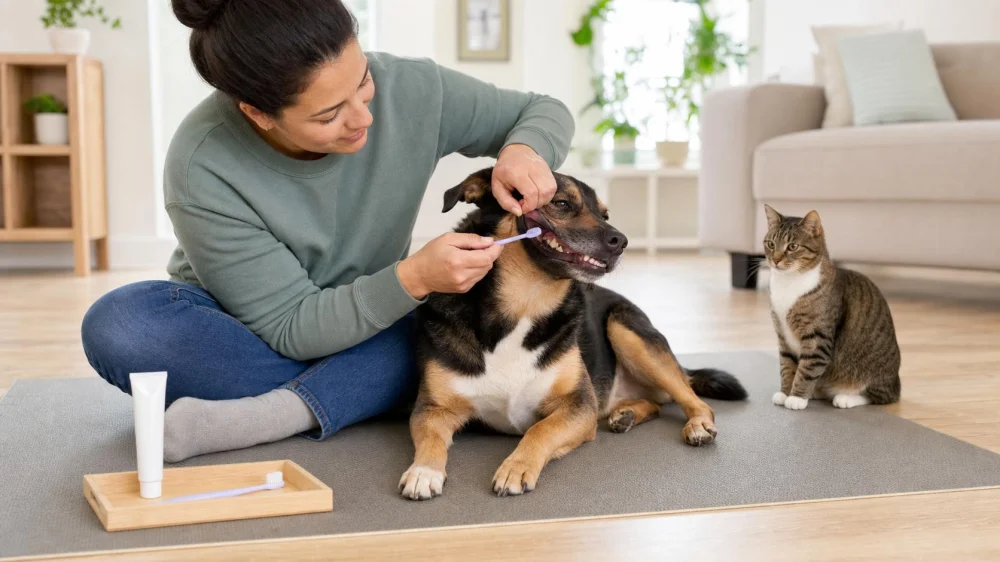
Keep supplies in one location, use the same short cue, and pair the session with a predictable reward. For dogs, a nonslip mat can signal where the routine happens. For cats, a stable perch or familiar towel may provide choice and secure footing. Let the animal leave whenever possible.
Track completion with a simple calendar, not a contest for perfect technique. Note skipped sessions, new sensitivity, odor changes, or product reactions. If progress stalls, shorten the session or return to lip lifting rather than holding the pet more tightly.
Weekly dental-care checklist
- Pet accepts the handling cue without hiding, freezing, or defensive behavior.
- Toothpaste and tools are pet-specific, clean, intact, and within date.
- Visible gums show no new bleeding, swelling, sores, or marked redness.
- No tooth appears newly broken, loose, discolored, or painful.
- Eating, chewing, drinking, grooming, and play remain normal.
- Dental chews are supervised and sized to reduce swallowing risk.
- Product calories are counted in the pet's feeding plan.
- Routine and professional dental follow-up remain current.
Limitations and veterinary triggers
Contact a veterinarian promptly for facial swelling, mouth bleeding that does not stop, a fractured or loose adult tooth, an oral mass, inability to close the mouth, severe pain, sudden refusal to eat, or trauma. Breathing difficulty, collapse, major bleeding, or a caustic exposure requires emergency guidance.
Persistent bad breath is not simply a cosmetic problem. It can accompany dental disease or other health conditions and deserves assessment. Cats can hide oral pain, and dogs may continue eating despite significant disease, so appetite alone cannot rule out a problem.
Do not perform anesthesia-free scraping at home or use sharp instruments. A complete veterinary dental procedure may require anesthesia and imaging to assess the entire tooth and structures below the gumline. The veterinarian should explain individual risks and benefits.
Sources and evidence notes
This guidance reflects broad veterinary dental practice: frequent mechanical plaque control, pet-specific products, gradual cooperative handling, professional assessment of pain or disease, and avoidance of unapproved human products. No single chew, additive, or home technique replaces a complete oral examination.
Use the pet's veterinarian, product manufacturer instructions, and recognized veterinary dental guidance as current sources. Recommendations vary with species, age, tooth anatomy, behavior, diet, and medical conditions, so an individualized plan is more reliable than a universal product list.
Frequently asked questions
Can I use human toothpaste on a dog or cat?
No. Human toothpaste is not designed to be swallowed by pets, and some ingredients may be unsafe. Choose a product specifically labeled for the animal and follow its directions.
Do I need to brush the inside of every tooth?
Many home routines focus on the accessible outer surfaces near the gumline. Do not force the jaw open. Ask the veterinary team to demonstrate the technique appropriate for your pet.
Can dental chews replace brushing?
They can be a useful addition for some pets, but performance and safety vary. Brushing provides direct mechanical contact; use chews only when appropriate for the pet's size, chewing style, calories, and dental condition.
Why do my pet's gums bleed during brushing?
Bleeding may reflect inflamed tissue, excessive pressure, injury, or another problem. Stop brushing the area and arrange veterinary advice rather than scrubbing harder.
When should a puppy or kitten start dental care?
Gentle cooperative handling can begin early, but teething and retained baby teeth affect timing. Ask the veterinarian when brushing should start and which tools fit the animal's developmental stage.
Conclusion and next steps
Schedule or confirm an oral exam, select pet-specific supplies, and begin with a one-second lip lift rather than a full brushing session. Build only when the pet remains comfortable. Pair consistent home plaque control with veterinary evaluation so visible cleanliness never hides pain or disease below the gumline.






 North Lexington Veterinary Clinic4.0 (118 reviews)
 VIP Petcare Vaccination Clinic0.0 (0 reviews)
 Irwin Avenue Animal Hospital4.0 (274 reviews)
 Lake Lavon Animal Hospital4.0 (221 reviews)
 Wolf Creek Equine4.0 (35 reviews)
 Shallowford Animal Hospital4.0 (525 reviews)
 Top Supplements for Supporting Dog Joint Health
 Benefits of Omega-3 Fatty Acids for Pets: Boosting Health and Wellness
 How to Safely Administer Medication to Your Pet
 How to Provide Comfort for Pets with Separation Anxiety
 How to Spot and Treat Allergies Caused by Food in Pets
 How to Prevent Heartworm Disease in Pets: Prevention and Treatment Options