
Pet First-Aid Kit: What to Pack and What Not to Use
On this page
- Quick answer
- What a pet first-aid kit can and cannot do
- Core supplies to pack
- Pet-specific additions
- What not to use without veterinary direction
- How to build and store the kit
- Emergency-use checklist
- Limitations and urgent-care triggers
- Sources and evidence notes
- Frequently asked questions
- Conclusion and next steps
Quick answer
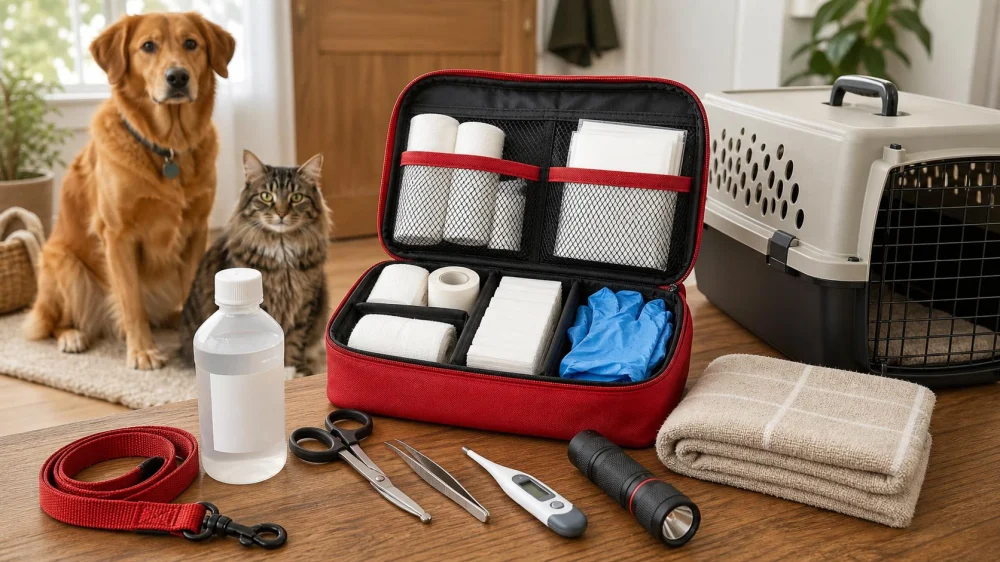
A practical pet first-aid kit should contain clean gauze, nonstick pads, self-adhering wrap, tape, saline, gloves, blunt-tip scissors, tweezers, towels, a digital thermometer, a spare leash, and current emergency contacts. Use it only for temporary support while contacting a veterinarian. Do not give human medicine, induce vomiting, or apply harsh chemicals unless a veterinarian specifically directs you.
A pet first-aid kit is a portable set of basic supplies for protecting yourself, limiting contamination, covering a minor wound, and transporting an injured dog or cat. It is not a home clinic and cannot determine the cause or severity of an illness. This guide is for pet owners in the United States preparing for common travel and household emergencies.
What a pet first-aid kit can and cannot do
The kit is best for buying time safely: placing a clean barrier over a wound, controlling minor external bleeding with pressure, flushing visible debris when instructed, preventing licking during transport, and collecting information for the veterinary team. It is also a single place to keep phone numbers and medication details when stress makes them difficult to recall.
It is not ideal for diagnosing poisoning, treating breathing difficulty, setting fractures, closing deep wounds, managing seizures, or substituting for urgent veterinary care. Supplies can reduce additional harm, but they do not make a serious condition safe to monitor at home.
Core supplies to pack
- Disposable nitrile gloves: protect you and reduce contamination. Pack several pairs in case the first pair tears.
- Sterile gauze pads and rolls: provide a clean wound cover and material for gentle direct pressure.
- Nonstick wound pads: help cover a superficial injury without bonding as readily to the surface.
- Self-adhering bandage wrap: holds padding in place. It can tighten dangerously, so use only with veterinary guidance or first-aid training and check the toes for swelling or coolness.
- Medical tape: secures dressings without relying on knots. Avoid sticking it directly to fur when possible.
- Sterile saline wound wash: can rinse surface debris from eyes or wounds when the label permits. Use a sealed, in-date product rather than homemade mixtures.
- Blunt-tip scissors: cut gauze or tape with less chance of poking a moving animal. Do not cut close to skin you cannot see.
- Tweezers and a tick-removal tool: handle visible surface debris or ticks. Do not probe wounds.
- Clean towels and an emergency blanket: support gentle restraint, warmth, padding, or transport. Avoid overheating.
- Digital thermometer reserved for the pet: use only if your veterinary team has shown you how and the pet can be handled safely.
- Flashlight or headlamp: improves visibility while leaving a hand free. Include fresh batteries.
- Waste bags and sealable bags: isolate soiled material or carry a sample when a veterinarian requests one.
Pet-specific additions
Add a spare leash or slip lead for a dog and a secure, correctly sized carrier for a cat. A familiar towel can help move a frightened cat without reaching toward its face. For a dog, a basket-style muzzle may protect handlers only if it fits correctly and the dog can breathe freely. Never muzzle an animal that is vomiting, struggling to breathe, unconscious, overheated, or has a facial injury.
Keep a current list of the pet's name, photo, species, breed or type, weight, age, allergies, medical conditions, medications, veterinarian, nearest emergency clinic, poison-control contact, and an alternate caregiver. Include a copy of relevant records for travel, but protect personal information and update it whenever treatment changes.
Pack only medications specifically prescribed for that individual pet, in the original labeled container, and follow the current veterinary instructions. Check whether temperature or light exposure makes a medication unsuitable for a car kit.
What not to use without veterinary direction
- Human pain relievers or cold medicine: common ingredients can be toxic or incorrectly dosed for dogs and cats.
- Hydrogen peroxide, salt, mustard, or other vomiting remedies: inducing vomiting is unsafe for some substances, species, and medical conditions.
- Alcohol, concentrated disinfectants, essential oils, and harsh cleaners: these may damage tissue or cause poisoning through licking or absorption.
- Ointments and creams not approved for the pet: licking changes the exposure, and a product may trap contamination or interfere with examination.
- Tourniquets: incorrect use can cause severe tissue injury. Use only when a veterinary professional or properly trained emergency responder directs you.
- Expired, loose, or unidentified medication: do not guess what a tablet is or whether an old prescription still applies.
Activated charcoal and other poisoning treatments should not be routine do-it-yourself supplies. Call a veterinarian or animal poison service first; the correct response depends on the substance, amount, timing, symptoms, and animal.
How to build and store the kit
- Choose a visible container. Use a durable, water-resistant bag that opens fully and can be carried with one hand.
- Separate clean and handling supplies. Place dressings, tools, documents, and pet-control items in labeled compartments. Use simple categories rather than tiny hard-to-find pockets.
- Add a written action card. List the veterinarian, emergency clinic, poison contact, pet details, and the instruction “call before giving medication or inducing vomiting.”
- Fit handling equipment. Confirm the spare leash, carrier, or veterinarian-approved muzzle actually fits before an emergency.
- Store it safely. Keep supplies dry, away from children and pets, and protected from heat or freezing. A vehicle kit may need a climate-safe storage plan.
- Inspect it on a schedule. Review the kit every three months and before travel. Replace opened, wet, contaminated, damaged, or expired items.
Emergency-use checklist
- Move away from traffic, fire, water, electrical hazards, aggressive animals, or other immediate danger without putting yourself at risk.
- Observe breathing, responsiveness, visible bleeding, and the animal's ability to stand without forcing movement.
- Call a veterinarian or emergency clinic, describe what happened, and follow their instructions.
- Approach carefully; pain and fear can cause even a familiar pet to bite or scratch.
- Use only the minimum first aid needed for safe transport.
- Bring product packaging, suspected toxin information, medication lists, and the time the problem began.
- Transport in a secure carrier or with controlled restraint while another person drives when possible.
Limitations and urgent-care triggers
Seek immediate veterinary help for breathing difficulty, collapse, unconsciousness, repeated seizures, uncontrolled bleeding, suspected poisoning, heatstroke, severe burns, bloated abdomen with unproductive retching, major trauma, eye injury, inability to urinate, paralysis, or extreme pain. Call while preparing to leave so the clinic can advise on transport and readiness.
Do not reach into the mouth of a conscious animal, remove an embedded object, straighten a limb, or force food or water. If an animal is choking, bleeding heavily, or not breathing, obtain live professional guidance when possible; species, size, and condition affect the response.
First aid also has limits for the handler. If an animal cannot be moved without a serious bite risk or if the scene is dangerous, contact animal control or emergency responders as appropriate. Human safety comes first.
Sources and evidence notes
The supply and decision guidance here reflects broad veterinary emergency practice: protect the scene, minimize handling, contact a veterinary professional early, avoid unprescribed drugs, and use first aid to support transport rather than replace diagnosis. Product labels and the pet's veterinary care plan remain the controlling instructions.
For current details, consult your regular veterinarian, a local emergency veterinary hospital, recognized animal poison-control services, and the manufacturers of prescribed medicines and medical supplies. Ask your veterinary team to review your completed kit because age, species, chronic disease, travel, and local hazards can change what belongs in it.
Frequently asked questions
Can I use a human first-aid kit for my pet?
Some basic supplies overlap, including gauze, gloves, tape, saline, and blunt scissors. Remove medicines and topical products that have not been approved for the pet, then add pet handling equipment, veterinary contacts, and current medical information.
Should hydrogen peroxide be in a dog first-aid kit?
Do not use it to induce vomiting unless a veterinarian or animal poison professional gives case-specific instructions. Vomiting can worsen injury after certain exposures and may be dangerous for an animal with symptoms or an impaired airway.
How often should I replace kit supplies?
Check every three months and before trips. Replace anything expired, opened, wet, dirty, heat-damaged, or missing. Update emergency contacts, weight, medication doses, and medical conditions at the same time.
Where should I keep the kit?
Keep the main kit in a known, accessible place away from pets and children. A smaller travel kit can stay with the carrier or walking gear, but avoid leaving temperature-sensitive supplies or medications in a hot or freezing vehicle.
Is online advice enough during a pet emergency?
No. General articles cannot examine the animal, identify a toxin, assess circulation, or account for medical history. Call a veterinary professional and use the kit only as directed while arranging appropriate care.
Conclusion and next steps
Assemble the core supplies in one visible bag, add pet-specific records and handling equipment, and ask your veterinarian to review it at the next routine visit. Save emergency numbers in your phone as well as on paper. The most valuable part of the kit is a clear plan: protect the scene, call early, avoid improvised treatment, and transport safely.





 North Lexington Veterinary Clinic4.0 (118 reviews)
 VIP Petcare Vaccination Clinic0.0 (0 reviews)
 Irwin Avenue Animal Hospital4.0 (274 reviews)
 Lake Lavon Animal Hospital4.0 (221 reviews)
 Wolf Creek Equine4.0 (35 reviews)
 Shallowford Animal Hospital4.0 (525 reviews)
 Top Supplements for Supporting Dog Joint Health
 Benefits of Omega-3 Fatty Acids for Pets: Boosting Health and Wellness
 How to Safely Administer Medication to Your Pet
 How to Provide Comfort for Pets with Separation Anxiety
 How to Spot and Treat Allergies Caused by Food in Pets
 How to Prevent Heartworm Disease in Pets: Prevention and Treatment Options