
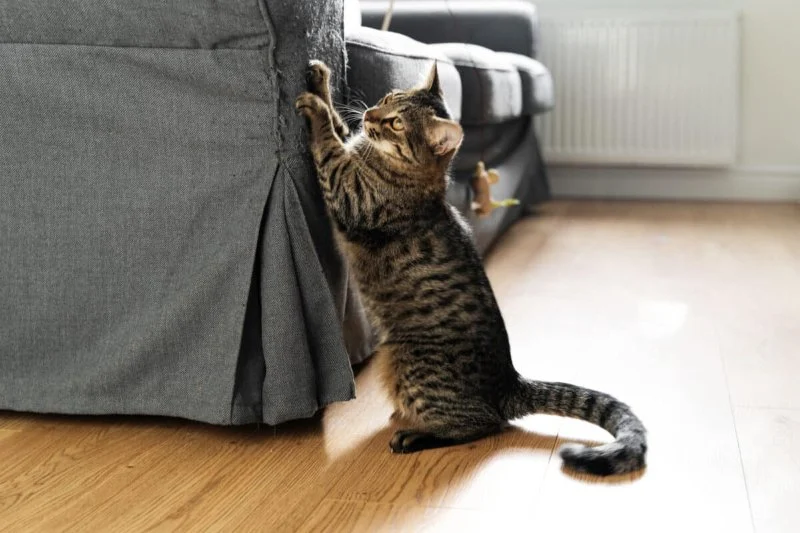
How to Stop a Cat From Scratching the Couch Without Losing Your Mind (or Your Furniture)
- 1-understanding-why-cats-scratch-furniture-and-couches
- 2-choosing-the-right-furniture-protectors-for-cats
- 3-how-scratch-pads-and-scratching-posts-change-behavior
- 4-step-by-step-training-to-stop-cat-scratching-couch
- 5-real-stories-of-cat-owners-solving-scratching-problems
- 6-long-term-strategies-for-a-cat-friendly-home
1. Why Cats Scratch the Couch in the First Place
If you’ve ever walked into your living room and found your couch shredded like confetti, you already know the frustration behind trying to figure out how to stop a cat from scratching the couch. But here’s the thing most people miss: cats are not misbehaving. They are communicating and fulfilling instinctive needs.
1.1 Scratching Is Not “Bad Behavior”
Cats scratch to mark territory, stretch their muscles, and maintain claw health. The couch just happens to be in the wrong place at the wrong time. Upholstery offers the perfect resistance for claw sharpening, which is why it becomes a favorite target.
1.2 Emotional Triggers Behind Scratching
Stress, boredom, or changes in environment can increase scratching behavior. A new pet, moving furniture, or even a new scent can trigger repeated couch scratching sessions. Understanding this emotional layer is key before jumping into solutions.
2. Choosing Furniture Protectors That Actually Work
When people search for ways to stop cats from scratching furniture, they often jump straight to punishment. That rarely works. Instead, physical barriers like furniture protectors are far more effective and humane.
2.1 Clear Plastic Couch Guards
These transparent shields stick to the sides of couches and block claw access. Cats dislike the slippery texture, which discourages repeated scratching attempts. They are especially useful for fabric sofas that are easily torn.
2.2 Fabric Slipcovers with Scratch Resistance
Modern slipcovers are designed with tightly woven materials that resist claw penetration. They don’t just protect the couch—they also blend into home decor, which makes them a favorite for pet owners who care about aesthetics.
2.3 Double-Sided Sticky Pads
Cats hate sticky surfaces on their paws. Placing removable adhesive strips on scratching hotspots creates an immediate behavioral boundary. This method works best as a temporary training tool while redirecting the cat’s habits.
3. Scratch Pads and Scratching Posts That Redirect Behavior
One of the most effective long-term solutions for stopping couch damage is not blocking scratching entirely, but redirecting it. This is where scratch pads and posts become essential tools.
3.1 Horizontal Scratch Pads for Lazy Scratchers
Some cats prefer scratching flat surfaces. Cardboard scratch pads mimic couch texture more closely than you might expect, making them an easy replacement target. Sprinkle a bit of catnip and many cats will switch almost immediately.
3.2 Vertical Scratching Posts for Stretching Cats
Tall scratching posts satisfy a cat’s full-body stretch. Sisal rope-covered posts are especially effective because they replicate tree bark texture. Placing one near the couch often solves the scratching problem within days.
3.3 Placement Strategy Matters More Than Price
A common mistake is hiding scratch pads in corners. Cats will not use them there. They need to be placed exactly where the couch scratching happens. Think of it as replacing the “bad option” with a better one in the same location.
4. Training Your Cat to Leave the Couch Alone
Training a cat is less about control and more about redirection and consistency. Once you understand this, progress becomes much easier and less frustrating.
4.1 Interrupt and Redirect Immediately
When your cat starts scratching the couch, gently interrupt with a sound or clap—never punishment. Immediately guide them to a scratch pad or post. Repetition builds association over time.
4.2 Reward Desired Behavior
Positive reinforcement is critical. Treats, praise, or playtime after using the scratch pad helps the cat understand what behavior is preferred. Cats repeat what benefits them.
4.3 Consistency Over Time
Behavior change does not happen overnight. Most households see improvement within 1–3 weeks when consistency is maintained. Mixed signals from owners slow down progress significantly.
5. Real-Life Experiences From Cat Owners
One cat owner in Chicago shared a story about her rescue cat “Milo,” who completely destroyed the armrest of her couch within a month. After trying sprays and yelling—without success—she switched strategies.
She installed clear furniture protectors and placed a scratch pad directly next to the damaged couch arm. Within 10 days, Milo completely shifted behavior. The couch stopped getting worse, and the scratch pad became his favorite spot.
Another case involved a family in Austin who used a combination of couch guards and vertical sisal posts. Their cat initially resisted but eventually adopted the post as a daily stretching ritual, especially after play sessions.
These real-life cases show that how to stop a cat from scratching the couch is not about force—it’s about smarter environment design.
6. Creating a Home That Naturally Prevents Scratching Damage
6.1 Environmental Enrichment
Cats that are mentally stimulated scratch less destructively. Interactive toys, climbing trees, and window perches all reduce boredom-driven scratching behavior.
6.2 Strategic Furniture Layout
Position scratching posts near entry points of rooms or near favorite sleeping spots. Cats often scratch after waking up, so placing alternatives nearby is highly effective.
6.3 Choosing Durable Home Materials
Some households redesign their environment using pet-resistant fabrics. While not necessary, it can significantly reduce long-term furniture damage in multi-cat homes.
6.4 Recommended Solutions and Where to Find Them
For pet owners looking for reliable tools such as scratch pads, furniture protectors, and behavioral enrichment products, Brothers Pets offers curated solutions designed specifically to stop destructive scratching behavior while keeping cats comfortable and happy.
Choosing the right combination of protection and redirection tools makes the biggest difference. Instead of fighting your cat’s instincts, you are simply giving them a better option that satisfies the same need.






 Englewood Veterinary Center4.0 (72 reviews)
 Spay & Neuter Clinic at Seattle Animal Shelter4.0 (91 reviews)
 Hoof-N-Paw Veterinary Services4.0 (145 reviews)
 Inwood Aquarium4.0 (128 reviews)
 Woodbourne Veterinary Hospital4.0 (509 reviews)
 Market Street Animal Clinic4.0 (115 reviews)
 How to Help Your Pet Cope with Separation from You
 Understanding Canine Eye Disorders and Prevention – Essential Information for Dog Owners
 How to Choose the Best Pet Toys for Large Dogs
 How to Handle Pet Loss: Grieving Tips for Pet Owners
 The Ultimate Guide to Veterinary Advice
 How to Manage Pet Health with the Right Supplements | Brothers Pets