
Pet Disaster Evacuation Kit: Pack for a Fast Exit
On this page
- Quick answer
- Start with an evacuation plan
- Pack identification and records
- Store food, water, and medication
- Prepare carriers and control gear
- Add hygiene and comfort supplies
- Practice the exit
- Maintain the kit
- During and after an evacuation
- Limitations and important notes
- Sources and evidence notes
- Frequently asked questions
- Next steps
Quick answer
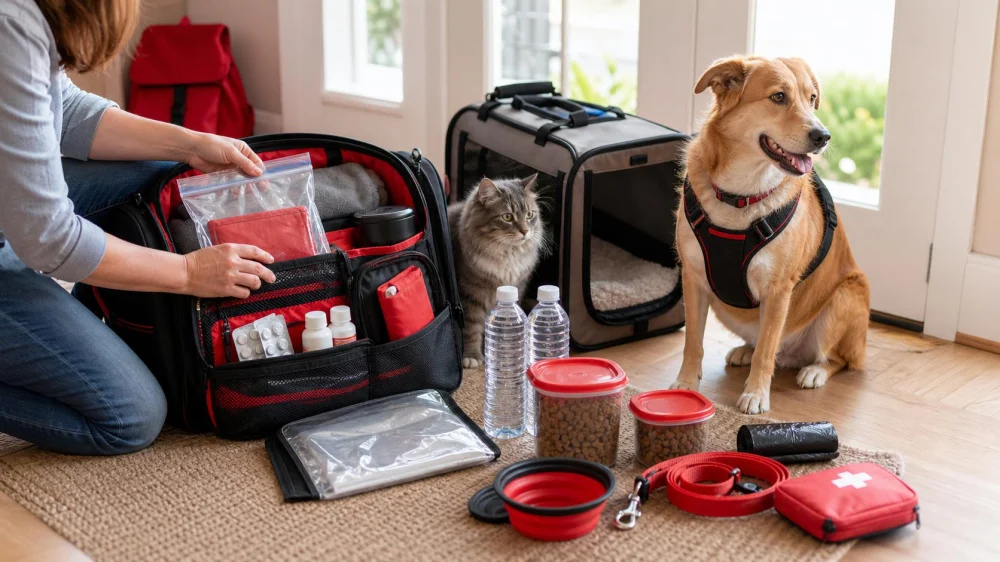
Keep a labeled pet evacuation kit beside the carrier or leash, and connect it to a practiced household plan. Pack identification, veterinary records, current photos, food, water, medications, feeding and dosing instructions, bowls, sanitation supplies, and species-appropriate control gear. Identify multiple places that accept animals, arrange a backup caregiver, and refresh the kit on a calendar so expired supplies or outdated contacts do not fail during a fast evacuation.
Start with an evacuation plan
A kit cannot solve the most important question: where will the pet go? Some public evacuation centers cannot accept household pets, so identify several options before an emergency.
- Call local emergency management about animal sheltering plans.
- List pet-friendly lodging outside each likely evacuation area.
- Ask relatives or friends beyond the hazard zone whether they can help.
- Record veterinary hospitals, boarding facilities, shelters, and animal-control contacts.
- Choose a trusted neighbor as a backup if nobody in the household is home.
- Plan transport for every animal, including large, aquatic, caged, or medically fragile pets.
Share keys, written authorization, animal hiding places, carrier locations, and contact details with the backup caregiver. Decide who collects each pet and who grabs the kit. Keep an evacuation destination outside the immediate neighborhood and a second option farther away.
Pack identification and records
Store paper copies in a waterproof pouch and encrypted digital copies where an authorized caregiver can reach them. Include:
- rabies and other vaccination certificates;
- a medical summary, current prescriptions, allergies, and medication instructions;
- microchip number, registry contact, and confirmation that owner details are current;
- proof of ownership or adoption records;
- recent clear photos of the pet alone and with the owner;
- species, breed, sex, color, weight, markings, and behavior notes;
- owner, backup caregiver, regular veterinarian, and emergency-clinic contacts; and
- feeding, boarding, and handling instructions.
Put the owner’s name and two reachable phone numbers on each carrier. A luggage tag can be torn away, so place a second waterproof label inside. Keep the pet’s collar identification and microchip registration current; one does not replace the other.
Store food, water, and medication
CDC’s pet disaster checklist recommends a two-week supply of food and water for each animal, a two-week medication supply when applicable, and a one-month supply of routine flea, tick, and heartworm preventive products. Adapt amounts to species, climate, medical needs, local guidance, and what can be transported safely.
Use waterproof, pest-resistant containers. Label each item with the pet, amount, instructions, and rotation date. Include non-spill bowls, a manual can opener if needed, measuring tools, and familiar food to reduce sudden diet changes.
Ask the veterinarian how to maintain an emergency medication supply legally and safely. Keep medicines in original labeled containers. Record dose, route, schedule, storage limits, prescribing clinic, and what to do after a missed dose. Do not stockpile, split, substitute, or use expired medicine without veterinary direction.
Some medicines require temperature control. Make a veterinarian-approved power-outage plan using an insulated container and temperature monitoring where appropriate; never place medicine directly against loose ice unless its storage instructions allow it.
Prepare carriers and control gear
Have a secure, appropriate-size carrier for each pet that needs one. Store carriers where they can be reached without entering a dangerous room or searching a garage. Keep leashes, collars, harnesses, and loading aids beside them.
A carrier should permit normal posture and safe containment while matching the animal and transport method. Check latches, doors, ventilation, fasteners, and sharp edges. Avoid improvised containers that collapse, overheat, or allow escape.
For dogs and cats, include a spare leash or slip lead and a properly fitted harness. For birds, reptiles, small mammals, fish, and other species, ask a veterinarian or experienced local emergency planner about temperature, ventilation, water quality, enclosure, and handling needs. Never mix unfamiliar or incompatible animals in one carrier.
Add hygiene and comfort supplies
Pack waste bags, paper towels, gloves, litter and a portable litter pan for cats, cleaning supplies, bedding, and a familiar washable item. Add a basic pet first-aid kit and a veterinary first-aid reference, but do not treat the kit as a replacement for veterinary care.
Include species-safe cleaning products and keep chemicals separated from food and medicine. If displaced animals share a facility, hand hygiene, waste control, parasite prevention, and separation from unfamiliar animals help reduce illness and injury.
A frightened or injured pet may bite or scratch. Pack handling equipment you already know how to use, keep your face away from an injured animal’s mouth, and do not force close contact when the pet becomes more agitated.
Practice the exit
Train pets to enter carriers before an emergency. Leave the carrier open in a familiar room, add bedding and rewards, and build short calm sessions. Practice locating every animal, securing it, collecting the kit, loading the vehicle, and reaching the household meeting point.
Time the practice without rushing or frightening the animal. Look for bottlenecks: a cat that hides, a carrier that does not fit through a door, a dog that backs out of a collar, stairs that block a mobility aid, or supplies too heavy for one person.
Run a second drill with the backup caregiver. If the household has no car, confirm current local transportation options and how animals must be contained.
Maintain the kit
Set a recurring inspection at least twice a year and after every use. Check:
- food, water, medicine, and preventive-product dates;
- medication doses and current veterinary instructions;
- vaccination, ownership, photo, and microchip records;
- phone numbers and evacuation destinations;
- carrier size, function, cleanliness, and labels;
- battery-powered equipment and temperature supplies; and
- the pet’s current mobility, behavior, diet, and medical needs.
Rotate usable food and medicine into normal use according to veterinary and label instructions rather than allowing the emergency supply to expire. Replace anything opened, damaged, wet, contaminated, or outdated.
During and after an evacuation
Follow local official instructions and evacuate early when directed. Keep pets secured on leash or in carriers. Do not leave them chained outdoors, and do not enter a dangerous area to retrieve an animal after authorities have closed it.
After a disaster, familiar landmarks and smells may be altered. Keep pets controlled even if they normally roam safely. Avoid floodwater, wildlife, downed lines, spilled chemicals, sharp debris, and damaged structures. Use safe water and prevent interaction with stray animals.
Contact a veterinarian if the pet is injured, ill, exposed to contamination, unable to eat or drink, or behaving abnormally. Report bites to appropriate medical personnel. If a pet is missing, notify local shelters, animal control, the microchip registry, and evacuation-site animal staff once people are safe.
Limitations and important notes
This guide is a general U.S. preparedness framework. Wildfire, flood, hurricane, earthquake, chemical release, extreme heat, and winter emergencies may require different sheltering and evacuation actions. Follow current local emergency instructions.
Service animals may have different access protections from household pets, but they still need food, water, medication, identification, and handling plans. Livestock and large animals require a separate evacuation plan, suitable vehicles, trained handlers, and earlier decisions.
Sources and evidence notes
CDC recommends planning where pets can stay, arranging a buddy system, keeping carriers or leashes near the exit, practicing evacuation, maintaining identification, and preparing records and supplies. Its detailed kit checklist supplies the document, food, water, medicine, carrier, and sanitation framework used here.
Frequently asked questions
How much food and water should I pack?
CDC lists a two-week supply for each animal. Adjust for species, climate, medical needs, portability, and current local emergency guidance.
Can I take my pet to any evacuation shelter?
No. Many centers cannot accept household pets. Identify current animal-friendly shelters, lodging, clinics, boarding facilities, and backup caregivers in advance.
Should I keep medication in the kit?
Ask the veterinarian how to maintain a labeled emergency supply, including storage and rotation. Do not change doses or use expired products without veterinary advice.
Is a microchip enough identification?
No. Use current collar identification, registered microchip details, photos, written descriptions, and ownership records together.
How often should I practice?
Practice often enough that every caregiver can locate, secure, and transport each pet calmly. Repeat after moving, changing carriers, adding a pet, or changing the household plan.
Next steps
Choose two evacuation destinations, name a backup caregiver, place working carriers and control gear near an exit, and assemble the record pouch first. Then add food, water, medicine, hygiene, and comfort supplies, schedule a six-month review, and practice one calm evacuation with every household member and pet.






 Gully Animal Hospital | Grand Prairie4.0 (467 reviews)
 Westfield Veterinary Hospital4.0 (177 reviews)
 Rockford Road Animal Hospital4.0 (451 reviews)
 Theravet4.0 (169 reviews)
 Eastford Veterinary Clinic4.0 (86 reviews)
 Dog & Cat Hospital4.0 (1315 reviews)
 How to Introduce a New Puppy or Kitten to Your Older Pet
 How to Keep Your Cat Entertained During Rainy Days
 How to Deal with Pet Aggression: Tips for Peaceful Behavior
 Best Cat Slow Feeders for Greedy Eaters: Puzzle Bowls and Mat Options Explained
 How to Choose the Best Pet Groomer for Your Pet’s Needs
 How to Introduce a New Puppy or Kitten to Your Older Pet: Tips for a Smooth Transition