
- -why-cats-eat-too-fast-and-what-it-means - Understanding greedy eating behavior in cats
- -how-slow-feeders-improve-digestion - Why slow feeding bowls support better health
- -puzzle-bowls-vs-feeding-mats-comparison - Differences between enrichment feeding tools
- -choosing-the-right-slow-feeder-for-your-cat - Matching feeder types to cat personality
- -real-life-cat-owner-experience-with-slow-feeders - A relatable transformation story
- -expert-opinions-on-feline-feeding-behavior - Veterinary insights into cat eating habits
Why Some Cats Eat Like They’ve Never Seen Food Before
Anyone who has lived with a cat that inhales food in seconds knows how chaotic mealtime can become. The behavior often looks funny at first, but over time it raises concerns—vomiting after meals, bloating, or even mild choking. This is where understanding cat slow feeders becomes essential rather than optional.
Greedy eating in cats is more common than many pet owners expect, especially in multi-cat households or rescue cats that have experienced food scarcity. When a cat eats too quickly, it is often driven by instinct rather than hunger. In the wild, competition for food pushes animals to consume quickly before others take it away.
Modern indoor cats, however, don’t face that same survival pressure, which means this instinct can become a health issue rather than an advantage. This is why tools like puzzle cat bowls and slow feeding mats are becoming increasingly popular in the United States among responsible pet owners.
How Slow Feeding Changes a Cat’s Eating Experience
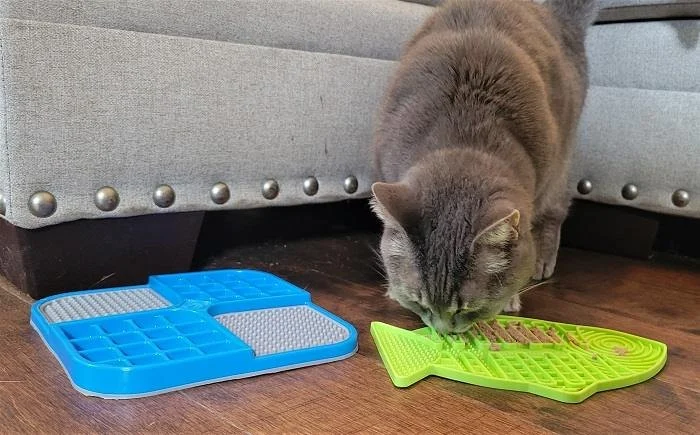
The purpose of a slow feeder is not to restrict food but to reshape how a cat interacts with it. Instead of swallowing large amounts in seconds, the cat is encouraged to “work” for its meal, which naturally slows down consumption.
1. Physical Barriers That Create Natural Slowdowns
Many anti gulp cat bowls are designed with raised ridges or maze-like patterns. These structures force the cat to navigate around obstacles, preventing rapid scooping of food. While simple in design, the impact on eating speed can be significant.
Pet owners often notice that their cats take two to three times longer to finish meals after switching to a slow feeder, which dramatically reduces post-meal vomiting episodes.
2. Mental Stimulation Through Feeding Design
Beyond physical slowing, slow feeders also provide mental engagement. Cats are natural hunters, and puzzle-style feeders simulate the challenge of “finding” food. This helps reduce boredom, especially for indoor cats that lack environmental stimulation.
3. Improved Digestion and Reduced Stress
When cats eat more slowly, their digestive system has more time to process food properly. This reduces air swallowing and helps prevent discomfort such as bloating or regurgitation.
Puzzle Bowls vs Feeding Mats: What Actually Works Better?
One of the most common questions among cat owners is whether puzzle bowls or feeding mats are more effective. The answer often depends on the cat’s personality and eating habits.
Puzzle Cat Bowls for High-Energy Problem Solvers
Puzzle bowls are ideal for cats that enjoy interaction or are highly food-driven. These bowls often include complex patterns, requiring cats to use their paws or tongues strategically.
Some owners report that their cats treat mealtime like a game, which turns feeding into a positive enrichment activity rather than a rushed necessity.
Slow Feeding Mats for Gentle and Anxious Eaters
Feeding mats spread food across a textured surface, encouraging cats to eat piece by piece. This design works particularly well for cats that are easily frustrated or intimidated by more complex puzzle feeders.
The softer, more open structure allows for a calmer feeding experience while still slowing down consumption effectively.
Which One Fits Better in Real Homes?
In many households, cat owners end up using both depending on the situation. Puzzle bowls are often used for breakfast when cats are more active, while mats are used for evening meals when cats tend to be more relaxed.
A Real-Life Story: When One Cat’s Eating Speed Became a Health Concern
A cat owner in New York shared a situation that many pet parents can relate to. Her tabby, Max, would finish meals in under 30 seconds and often vomit shortly afterward. At first, she thought it was just normal behavior.
However, after a vet visit, she learned that fast eating was causing unnecessary digestive stress. The veterinarian recommended switching to a interactive cat feeder to slow down meal consumption.
After introducing a puzzle bowl, Max’s eating time increased to nearly 10 minutes per meal. Within a week, vomiting episodes stopped completely. More interestingly, Max also became calmer after meals, no longer rushing around the house as if still “hungry.”
Why Cat Slow Feeders Are More Than Just a Trend
The rise in popularity of slow feeding tools is not just a social media trend. It reflects a growing awareness among pet owners about feline health and behavior enrichment.
Veterinary professionals often emphasize that feeding behavior is closely tied to emotional well-being. A cat that eats too quickly may not only experience digestive issues but also heightened anxiety around food.
The Connection Between Feeding Speed and Behavior
Cats that rush meals often display signs of food guarding or stress. By slowing down the feeding process, owners can indirectly reduce behavioral tension and create a more relaxed environment.
Preventing Long-Term Digestive Issues
Chronic fast eating can contribute to long-term gastrointestinal discomfort. While not always severe, repeated strain on digestion can reduce overall quality of life for cats over time.
How to Choose the Best Slow Feeder for Your Cat’s Personality
Selecting the right feeder requires more than just picking the most popular product. It involves understanding your cat’s temperament, eating habits, and even their level of curiosity.
1. For Food-Obsessed Cats
Cats that become highly excited during feeding time benefit most from structured puzzle bowls. These feeders slow down aggressive eating while providing mental stimulation.
2. For Sensitive or Nervous Cats
Cats that get frustrated easily may respond better to feeding mats, which provide a less restrictive experience while still encouraging slower eating.
3. For Multi-Cat Households
In homes with multiple cats, separate feeding stations using different slow feeders can help reduce competition and food-related stress.
Everyday Adjustments That Make Slow Feeders More Effective
Using a slow feeder is only part of the solution. Small adjustments in feeding routines can enhance its effectiveness significantly.
Meal Portion Control
Dividing daily food into smaller portions helps prevent overwhelming hunger, which can trigger rapid eating behavior.
Consistent Feeding Schedule
Cats thrive on routine. Feeding at consistent times reduces anxiety and helps regulate appetite naturally.
Environment Setup Matters
Feeding in a quiet, low-stress area can also influence how calmly a cat eats. Loud or high-traffic areas may encourage rushed behavior.
Expert Perspective on Feline Feeding Behavior
Animal behavior specialists often highlight that feeding enrichment is as important as nutrition itself. A well-designed feeding routine supports both mental and physical health.
In many cases, veterinarians recommend cat slow feeders as part of a broader behavioral enrichment plan, especially for indoor cats that lack hunting opportunities.
Why Enrichment Feeding Improves Quality of Life
When cats engage in problem-solving during meals, they experience a sense of satisfaction similar to natural hunting behavior. This reduces boredom and promotes healthier daily routines.
Where Pet Owners Are Finding Better Feeding Solutions
With so many feeding products available online, choosing the right one can be overwhelming. Many pet owners now rely on curated recommendations to avoid trial and error.
Platforms like Brothers Pets offer guidance on selecting the most suitable slow feeders, puzzle bowls, and feeding mats based on individual cat behavior and household needs. This makes it easier to match products to real-life situations instead of guessing what might work.
Building a Healthier Relationship Between Cats and Food
Feeding time is more than just a routine—it is a moment of connection between pets and their owners. When properly managed, it can improve health, reduce stress, and even strengthen behavioral balance.
By introducing thoughtful tools like puzzle cat bowls and slow feeding mats, cat owners can transform rushed eating into a calmer, more enriching experience that benefits both body and mind.





 Animal Health Center of Salisbury4.0 (127 reviews)
 Brinlee Vet Services4.0 (45 reviews)
 Animal Care Center of Huntington0.0 (0 reviews)
 Herwald Bruce T DVM4.0 (3 reviews)
 Kingdom Veterinary Clinic4.0 (373 reviews)
 Cottage Lake Veterinary Hospital4.0 (307 reviews)
 How to Help Your Pet Overcome Separation Anxiety: Effective Strategies
 Expert Advice on Parasite Prevention for Pets: Vet Tips and Seasonal Protection
 Tips for Training Dogs With High Energy Levels
 How to Spot and Treat Canine Distemper: A Complete Guide for Pet Owners
 Why Regular Vet Visits Are Crucial Even for Healthy Pets
 How to Recognize and Treat Heatstroke in Pets: A Comprehensive Guide