
Pet Sitter Handoff Checklist for Safer Care
On this page
Quick answer
A pet sitter handoff checklist should explain your pet’s normal routine, food amounts, medication schedule, behavior triggers, emergency contacts, vet information, home access, and where supplies are stored. The best checklist is short enough to use quickly but specific enough that a sitter does not have to guess during care.
Why a handoff checklist matters
A pet sitter handoff checklist is a practical set of instructions that helps another person care for your dog, cat, or other household pet while you are away.
Pets often behave differently when their owner is gone. Clear instructions reduce missed meals, medication confusion, door-dashing risk, litter box problems, and delays if veterinary help is needed.
Daily routine details
Start with the ordinary day. Most sitter questions come from simple routine gaps:
- Feeding: food type, amount, timing, treat rules, and foods that are not allowed.
- Water: bowl locations, fountain instructions, and how often to refresh.
- Walks and play: leash, harness, route, duration, fenced-yard rules, and weather limits.
- Bathroom habits: litter box location, scooping frequency, waste bags, puppy pads, or yard routine.
- Sleep and comfort: crate use, preferred bed, safe rooms, hiding spots, and noise sensitivities.
Health and safety notes
Write health information in plain, factual language. Include medication names, dose timing, allergies, chronic conditions, recent symptoms your veterinarian is monitoring, and what is normal for your pet.
This checklist is best for preventing avoidable confusion and helping a sitter contact the right professional. It is not ideal for diagnosing illness, changing medication, or deciding whether a symptom is serious without veterinary guidance.
Include instructions to contact your veterinarian or an emergency clinic if your pet has trouble breathing, collapses, cannot stand, has repeated vomiting, may have eaten a toxin, has severe bleeding, or seems rapidly worse.
Home access and supplies
A great pet care plan also covers the house. Tell the sitter how to enter, where keys are stored, alarm instructions, parking rules, trash day, thermostat boundaries, and what rooms or cabinets are off limits.
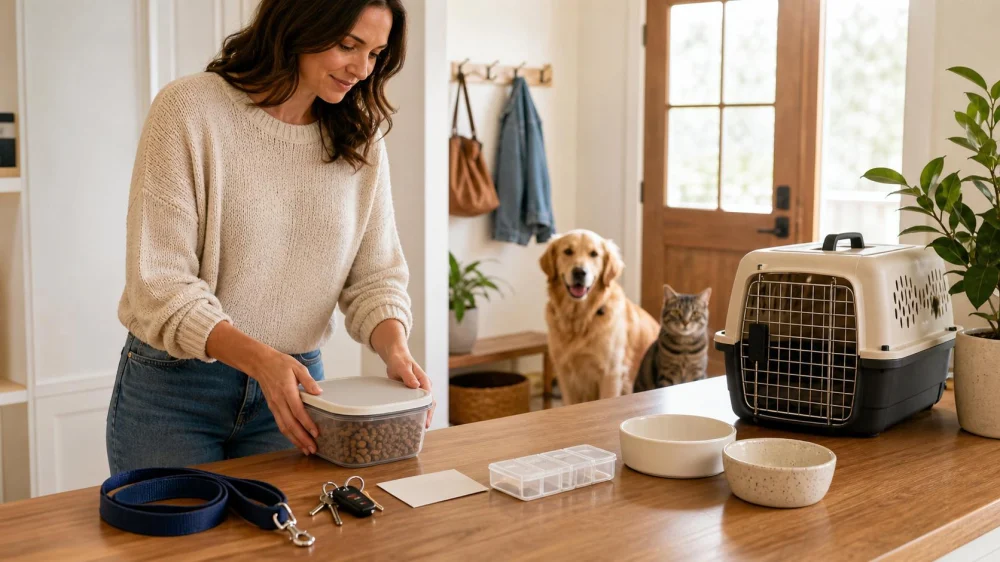
Place supplies together before you leave: food, scoop, bags, towels, carrier, leash, harness, cleaning products safe for pet areas, vaccination folder, and emergency contact sheet.
Handoff checklist
Before you leave, confirm each item:
- The sitter has your phone number and a backup contact.
- Your veterinarian and emergency clinic details are printed and saved digitally.
- Food, medication, and supplies are visible and labeled in a non-confusing way.
- The sitter watched or practiced any medication, harness, crate, or carrier routine.
- Doors, gates, windows, and pet-safe rooms were reviewed together.
- Behavior warnings are clear, including fear of strangers, dogs, storms, or handling.
- Photo updates, visit times, and permission for emergency care are agreed in advance.
Important limits
This article provides general pet care planning information for owners in the United States. It does not replace advice from your veterinarian, trainer, behavior professional, or emergency clinic.
Do not ask a sitter to perform medical tasks they are not comfortable or trained to do. If your pet needs complex medication, injections, mobility support, or close monitoring, consider a veterinary boarding facility, technician pet sitting service, or direct guidance from your veterinarian.
FAQ
How long should a pet sitter checklist be?
One to two pages is usually enough for routine care. Add a separate medical or behavior note only when your pet has special needs.
Should I leave written medication instructions?
Yes. Write the medication name, dose, timing, storage location, and what to do if a dose is missed. Confirm the plan with your veterinarian when unsure.
What should a sitter do in a suspected poisoning?
The sitter should contact your veterinarian, an emergency clinic, or a recognized animal poison control service immediately. They should not induce vomiting or give home remedies unless a professional instructs them to do so.
Is a friend enough, or should I hire a professional sitter?
A friend may be fine for simple care and easy pets. A professional sitter may be better for anxious pets, medication routines, multiple animals, special handling needs, or longer trips.
Evidence notes
This guide uses general pet-care preparedness principles: clear routines, current veterinary contacts, and fast access to emergency information. For poison-related situations, owners and sitters can refer to the ASPCA Animal Poison Control Center: ASPCA Animal Poison Control.
Next steps
Before your next trip, walk the sitter through the checklist in person or by video. Then place the printed copy near the supplies and send a digital version so the plan is available even if a paper gets misplaced.






 Houston Mobile Veterinary Surgery5.0 (2 reviews)
 Red River Animal Hospital4.0 (104 reviews)
 Travelling Vet4.0 (43 reviews)
 Francis Animal Hospital4.0 (487 reviews)
 Saratoga Horse RX4.0 (12 reviews)
 Vetco Vaccination Clinic4.0 (7 reviews)
 Top 11 Tips Every Owner Should Know for Optimal Pet Health
 Pet Aging: What Vets Want You to Know About Caring for Older Pets
 How to Manage Pet Stress: Tips for a Calmer Pet
 How to Help Your Pet Cope with Moving to a New Home
 How to Recognize and Treat Autoimmune Diseases in Pets
 How to Recognize and Treat Heatstroke in Pets: A Comprehensive Guide