
- 1- Understanding Pet Aggression Toward Other Animals
- 2- Common Causes of Pet Aggression
- 3- How to Manage Aggressive Behavior in Pets
- 4- Real-Life Examples of Handling Pet Aggression
- 5- Products and Services to Help Manage Pet Aggression
1. Understanding Pet Aggression Toward Other Animals
Pet aggression toward other animals is a common issue that many pet owners face. Whether it’s a dog lunging at other dogs or a cat hissing at another animal, aggressive behavior can be stressful for both the pet and their owners. Understanding why pets act aggressively and how to handle these behaviors is key to creating a peaceful home for everyone involved.
1.1- Types of Pet Aggression
Aggression can manifest in different ways depending on the species and the situation. Dogs might show aggression through barking, growling, or biting, while cats might swipe or bite when they feel threatened. Aggression can be triggered by territoriality, fear, frustration, or even a lack of socialization. Identifying the specific type of aggression in your pet is the first step in managing their behavior.
1.2- Aggression in Dogs vs. Cats
While aggression is common in both dogs and cats, the causes and manifestations can differ. Dogs may become aggressive due to dominance, territorial behavior, or anxiety around other animals. Cats, on the other hand, are often more territorial and may lash out to protect their space. Regardless of the species, both types of aggression can be addressed with proper training and management techniques.
2. Common Causes of Pet Aggression
Understanding the root cause of your pet’s aggression is essential for addressing the issue. Several factors can contribute to aggressive behavior in pets:
2.1- Fear and Anxiety
Pets that have had negative experiences with other animals or people may act aggressively out of fear. Fear-based aggression often manifests as defensive behavior when a pet feels threatened or cornered. Anxiety can also cause pets to react aggressively in unfamiliar situations, such as meeting new animals or traveling.
2.2- Territorial Behavior
Many pets, especially dogs and cats, are naturally territorial. They may become aggressive when they perceive another animal as a threat to their space, food, or family. Territorial aggression can be particularly noticeable when introducing a new pet into the home or when a pet encounters an unfamiliar animal outside.
2.3- Lack of Socialization
Pets that haven’t been properly socialized may struggle to interact peacefully with other animals. Early exposure to other pets, people, and environments is crucial in teaching pets how to behave in social situations. Without proper socialization, pets may react aggressively to unfamiliar animals or situations.
2.4- Pain or Illness
Aggression can sometimes be a sign of pain or illness. If a pet is feeling unwell or in discomfort, they may act aggressively to protect themselves. It’s essential to rule out medical conditions by consulting a veterinarian if you notice sudden changes in behavior, including aggression.
3. How to Manage Aggressive Behavior in Pets
Managing pet aggression requires patience, consistency, and the right techniques. Here are some steps you can take to address your pet’s aggressive behavior:
3.1- Positive Reinforcement Training
One of the most effective ways to manage aggression is through positive reinforcement training. Rewarding your pet for calm and non-aggressive behavior helps them associate positive outcomes with appropriate actions. Avoid punishing aggressive behavior, as this can lead to fear and worsen the problem.
3.2- Gradual Socialization
If your pet is aggressive due to fear or lack of socialization, it’s important to gradually expose them to other animals in controlled environments. Start with short, positive interactions and gradually increase the exposure to other animals as your pet becomes more comfortable.
3.3- Professional Behavior Training
If your pet’s aggression is severe or difficult to manage, it may be necessary to seek professional help. A certified animal behaviorist or trainer can assess the situation and develop a customized behavior modification plan to address your pet’s aggression. Professional training can provide you with the tools and strategies needed to safely and effectively manage aggression.
3.4- Medical Treatment for Aggression
If aggression is caused by underlying health issues, such as pain or neurological conditions, medical treatment may be necessary. Your veterinarian can help identify any physical problems and suggest treatments to alleviate discomfort, which may, in turn, reduce aggressive behavior.
4. Real-Life Examples of Handling Pet Aggression
Real-life experiences can provide valuable insights into how to effectively manage pet aggression. Here are a couple of stories from pet owners who successfully addressed aggressive behavior in their animals:
4.1- Case Study: Managing Dog Aggression
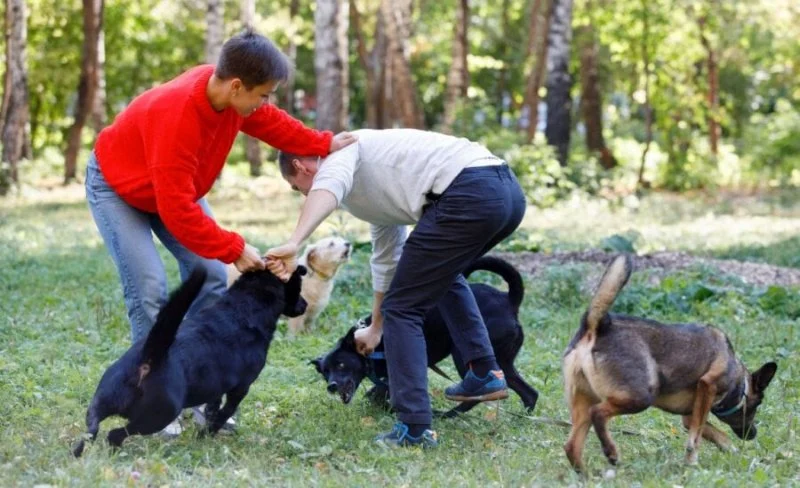
John, a dog owner, struggled with his dog’s aggression towards other dogs during walks. After seeking professional training, he began using positive reinforcement techniques, rewarding his dog for calm behavior around other animals. Over time, John’s dog became more comfortable and less aggressive, allowing for peaceful walks in the neighborhood.
4.2- Case Study: Socializing a Cat
Emma had adopted a cat that was fearful of other pets in the home, often hissing and swatting at them. With patience and gradual socialization, Emma started introducing her cat to the other pets in short, controlled sessions. After a few months, the cat became more accepting of the other animals, and the aggression reduced significantly.
5. Products and Services to Help Manage Pet Aggression
At Brothers Pets, we offer a variety of products and services designed to help you manage your pet’s aggression and improve their behavior:
5.1- Training Tools and Equipment
We offer a range of training tools, including harnesses, leashes, and muzzles, to help manage your pet’s behavior during walks and interactions. These products are designed to provide comfort and safety while allowing you to work on training and behavior modification.
5.2- Behavior Training Services
Brothers Pets provides professional behavior training services, including one-on-one consultations with certified trainers. Our trainers specialize in helping pets with aggression issues, offering customized plans to address specific behavioral challenges and create a peaceful home environment for everyone.
5.3- Calming Products
If your pet’s aggression is stress-related, we recommend calming products such as pheromone diffusers, anxiety wraps, and calming treats. These products can help reduce anxiety and make your pet feel more relaxed in stressful situations, improving their behavior around other animals.





 Payne Equine, PLLC4.0 (6 reviews)
 Paws Choose Us4.0 (7 reviews)
 Downtown St. Pete Vet Clinic4.0 (77 reviews)
 Morgan Equine Veterinary & Farrier Services5.0 (5 reviews)
 Hartschuh Veterinary Services4.0 (91 reviews)
 Reefocused, LLC3.0 (6 reviews)
 The Importance of Regular Grooming for Your Pet
 How to Handle Pet Loss: Coping Strategies for Grieving Pet Owners
 The Ultimate Guide to Parasite Prevention
 How to Provide Comfort for Pets with Cancer
 Top 7 Expert Tips for Ensuring Pet Safety at Home and On the Go
 Top 7 Tips for Pet Safety Every Owner Should Know