
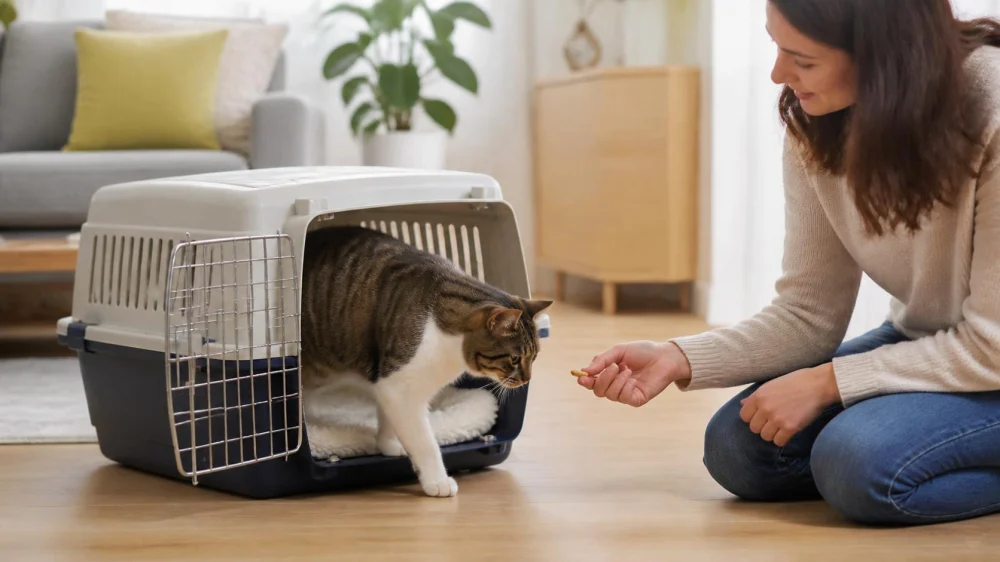
Pet Carrier Training: Prepare for a Calmer Vet Visit
On this page
Quick answer
Leave the pet carrier open in a familiar room, add comfortable bedding, and reward voluntary investigation. Progress from looking at the carrier to entering, resting with the door briefly closed, being lifted, and taking short rides. Keep sessions short and stop before panic. Secure the carrier in the vehicle and ask the veterinarian for an individualized plan when fear is severe or the pet has medical or mobility needs.
Carrier training is gradual positive exposure that teaches a pet the transport enclosure predicts safety and rewards rather than capture only. It is useful for routine appointments, emergencies, evacuation, and travel.
Choose and inspect the carrier
- Use the correct size for standing, turning, and resting.
- Check latches, seams, ventilation, handles, and the base.
- Prefer a design that opens easily; a removable top can simplify veterinary handling.
- Add a nonslip washable layer without blocking ventilation.
- Confirm vehicle restraint and airline requirements separately.
Replace damaged carriers. A soft carrier may suit a calm small pet; a rigid carrier may provide more structure and protection. The best choice depends on the animal and trip.
Gradual training steps
- Place the open carrier where the pet already relaxes.
- Reward looking toward or approaching it.
- Place treats or a favorite toy near the entrance, then gradually farther inside.
- Feed a small portion near or inside only if the pet remains comfortable.
- Once the pet rests inside, move the door gently without closing it.
- Close for one second, reward, and reopen; increase duration slowly.
- Practice at different calm times rather than only before appointments.
Never force the pet inside during practice, punish avoidance, or leave it confined beyond the trained duration.
Practice movement and travel
After calm door closure, lift the carrier a short distance while keeping it level. Set it down and reward. Progress to carrying it through the home, sitting in a parked climate-controlled vehicle, starting the engine, and taking a short smooth ride.
- Secure the carrier according to vehicle and carrier instructions.
- Keep temperature and ventilation safe.
- Do not open the carrier outdoors or in an unsecured vehicle.
- Clean accidents with a pet-safe method and resume at an easier step.
Vet visit day checklist
- Confirm appointment, fasting, medication, and sample instructions with the clinic.
- Prepare identification and current contact information.
- Use familiar clean bedding and approved rewards.
- Allow extra time so loading is not rushed.
- Cover part of the carrier only if ventilation remains clear and the pet finds it calming.
- Tell staff about fear, bite risk, escape risk, or handling needs before arrival.
Stress and safety boundaries
Pause for frantic escape attempts, persistent panting unrelated to heat, drooling, freezing, aggression, vomiting, or loss of bladder or bowel control. Return to an easier step after the pet recovers.
Contact the veterinarian before training or travel if the pet has breathing disease, heart disease, severe pain, motion sickness, recent surgery, or extreme fear. Never give human medication, sedatives, or supplements without veterinary direction.
Limitations and important notes
This article provides general pet-care guidance, not veterinary or behavioral treatment. Species, age, health, learning history, carrier type, and travel rules differ. Some pets need a veterinarian-guided behavior plan or prescribed medication.
In an emergency, immediate transport can take priority over gradual training. Protect people from bites and scratches and call the clinic for safe handling advice when possible.
Sources and evidence notes
The method reflects common low-stress animal-handling practice: voluntary approach, small exposure steps, rewards, secure transport, and stopping before panic. The pet’s veterinarian and qualified behavior professional are the primary sources for individualized guidance.
Frequently asked questions
How long does carrier training take?
It varies from days to weeks or longer. Progress depends on the pet’s history and comfort, not a fixed deadline.
Should the carrier stay out all year?
Often yes. A familiar resting place is less likely to predict only stressful trips.
What if my pet will not take treats?
Stress may be too high. Increase distance, shorten the session, and ask a professional about other rewards or a slower plan.
Can two pets share one carrier?
Usually separate secure carriers are safer unless a veterinarian or transport rule specifically advises otherwise.
Should I cover the carrier?
Some pets relax with a partial cover. Maintain ventilation and observe temperature and stress.
Conclusion and next steps
Inspect the carrier, leave it open in a familiar space, and reward one voluntary approach today. Build toward brief closure, gentle lifting, and short rides without rushing. If the pet panics, becomes ill, or has special needs, stop and ask the veterinary team for a tailored plan.




 Adirondack Veterinary Hospital4.0 (114 reviews)
 Anthracite Animal Clinic4.0 (480 reviews)
 Glenfair Veterinary Hospital4.0 (341 reviews)
 PetVet Vaccination Clinic0.0 (0 reviews)
 Heart and Soul Animal Urgent Care4.0 (669 reviews)
 Homestead Animal Hospital4.0 (947 reviews)
 Top 14 Tips for Pet Health | Expert Advice for Happier, Healthier Pets
 The Importance of Regular Exercise for Your Pet – Healthy Habits with Brothers Pets
 How to Spot and Treat Hypothyroidism in Dogs and Cats
 Dog Grooming Tips for Maintaining a Healthy Coat | Brothers Pets
 How to Recognize and Treat Pet Allergies and Sensitivities
 Dog Portosystemic Shunt Symptoms in Small Breed Puppies: Early Signs to Know