
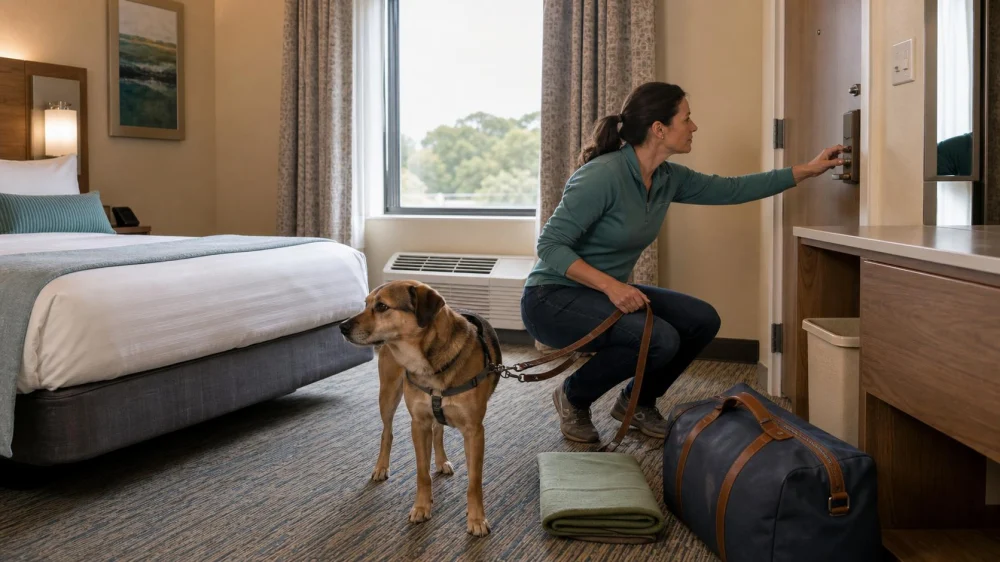
Pet-Friendly Hotel Rooms: Check Safety Before Unpacking
On this page
Quick answer
Keep your pet leashed or securely contained while you inspect a hotel room. Confirm the door closes and latches, test permitted windows and balcony access, scan floors and furniture edges for food, medication, sharp objects, cords, cleaners, and pest-control materials, then set up a familiar resting area. Tell the hotel how staff should handle entry, and never assume a “pet-friendly” room is automatically pet-proof.
This guide is for U.S. travelers staying with pets in hotels or similar lodging. Property policies differ, and health needs are individual. Confirm rules with the hotel and consult the pet’s veterinarian for travel or medical concerns.
Confirm the exact pet policies
A pet-friendly hotel permits specified pets under stated conditions; it does not guarantee that every room, shared area, or service is designed for every animal.
Before arrival, confirm species, number, size, fees, deposits, designated rooms, vaccination or documentation requirements, leash or carrier rules, relief areas, restricted spaces, and whether a pet may remain in the room unattended. Ask how housekeeping, maintenance, and emergency access work when a pet is present.
Record the exact property and reservation. Policies can vary between hotels that share a brand. Read the current agreement rather than relying on an old review or general chain page.
Secure doors and windows
Enter with the pet restrained and close the main door before setting anything down. Check that it latches without needing to be pulled, and use the available interior lock while occupied. Notice how close the pet can stand when the door opens to the hallway.
Inspect connecting doors, balcony doors, and operable windows. Keep them closed and secured unless the property permits use and you can supervise safely. Window screens are not reliable barriers for a determined pet.
Plan every exit: one person handles the pet while another manages luggage or room service. Do not prop the door open with the pet loose, even for a short trip to the vehicle.
Make a floor-level inspection
Look from the pet’s height before allowing exploration. Use a flashlight if needed and check:
- under beds, chairs, curtains, and the desk;
- behind doors and along baseboards;
- open wastebaskets and recycling containers;
- food, gum, pills, wrappers, broken glass, hooks, or small objects;
- exposed cords, loose batteries, remote controls, and charging devices;
- cleaners, toiletries, coffee supplies, and minibar contents;
- pest-control devices, powders, or unknown residues;
- gaps where a small animal could hide or become trapped.
Move hazards only when permitted and without damaging the room. Ask staff to remove or address anything uncertain. If you suspect the pet has eaten or contacted a harmful substance, contact a veterinarian or appropriate emergency resource promptly rather than waiting for symptoms.
Create a familiar pet zone
Choose a quiet part of the room away from the entrance and heating or cooling airflow. Place a familiar mat, bed, carrier, or crate where hotel rules allow. Add the pet’s usual water setup and keep food secured between meals.
Maintain familiar routines for walks, meals, medication, and rest as directed for the individual pet. Introduce the room gradually instead of immediately opening every bag and inviting excited exploration.
Reduce hallway triggers with distance from the door and calm background sound only if the pet already tolerates it. Do not block exits, vents, sprinklers, or hotel equipment.
Plan for staff entry and time alone
Tell the front desk that a pet is present and ask how to decline or schedule housekeeping. Use the property’s approved door notice, but do not rely on a sign as the only barrier. Maintenance or emergency entry may still be necessary.
If the hotel allows a pet to stay alone, follow containment rules and consider whether the individual pet can remain calm in an unfamiliar room with hallway noise. A pet that vocalizes, scratches, panics, or attempts escape needs a different plan, such as staying with a responsible person or using an appropriate verified service.
Never leave a pet unattended when policy forbids it or when room temperature, medical needs, behavior, or emergency access makes it unsafe.
Hotel room checklist
- Confirm the policy. Verify fees, pet limits, restricted areas, relief location, and unattended-pet rules.
- Restrain during entry. Close and latch the room before managing luggage.
- Check every opening. Inspect main, connecting, balcony, and bathroom doors plus windows.
- Scan at floor level. Remove or report food, medication, sharp objects, cords, chemicals, and unknown items.
- Secure room supplies. Put waste, toiletries, coffee items, and food outside the pet’s reach.
- Set up the familiar zone. Use known bedding, water equipment, and safe containment.
- Coordinate staff entry. Notify the front desk and follow approved housekeeping procedures.
- Recheck before leaving. Confirm identification, leash or carrier, route, weather, and room lock.
Limitations and important notes
- A visual inspection cannot identify every residue, pest treatment, structural gap, or previous occupant’s item.
- Balconies, elevators, shared hallways, and parking areas create risks beyond the room; keep the pet controlled.
- Hotel staff cannot evaluate an individual pet’s medical or behavioral fitness for travel.
- Never leave a pet in a parked vehicle as a substitute for an unsuitable room arrangement.
- Know the nearest appropriate veterinary contact before it is needed, especially when traveling far from home.
Frequently asked questions
Does pet-friendly mean the room is pet-proof?
No. It means the property accepts specified pets under its policy. Guests still need to inspect the room and supervise or contain their pets appropriately.
Can I leave my pet alone in the room?
Only if the hotel permits it and the individual pet can remain safely and calmly under the required containment. Confirm housekeeping and emergency-entry procedures first.
Should I let my dog inspect the room?
Inspect it yourself first while the dog remains leashed. After hazards are addressed, allow calm supervised exploration according to the pet’s comfort.
What should I bring from home?
Bring the usual food and water setup, leash or carrier, identification, waste supplies, familiar bedding, required medication, cleaning supplies approved for travel, and current care and emergency contacts.
What if I find a pill or unknown substance?
Keep the pet away, avoid handling it unnecessarily, and contact hotel staff. If exposure may have occurred, contact a veterinarian or appropriate emergency resource promptly with the available information.
Sources and evidence notes
This guide reflects common pet-travel and lodging practice: verify the exact policy, control entrances, inspect unfamiliar spaces, secure ingestible items, create a familiar rest area, and coordinate staff access. Property requirements come from the hotel; individual health and travel guidance comes from the pet’s veterinarian.
Settle in carefully
Keep the bags by the door and the pet restrained for the first room check. Secure openings, scan at floor level, remove or report hazards, establish the resting zone, and confirm staff-entry arrangements. Once those basics are complete, unpack while supervising the pet’s first exploration.




 St. Charles Veterinary Clinic: Dr. Liv Kismartoni0.0 (0 reviews)
 Ralston Vet4.0 (1147 reviews)
 McPhail Animal Hospital4.0 (287 reviews)
 Diamond Q Animal Hospital4.0 (90 reviews)
 Foxdale Equine Veterinary Services5.0 (1 reviews)
 Jackson Pet Hospital4.0 (178 reviews)
 How to Help Your Pet Adjust to a New Home: A Comprehensive Guide
 What Every Pet Owner Should Know About Pet Health
 How to Spot and Treat Chronic Skin Conditions in Pets
 Best Practices for Dog Grooming Between Vet Visits: Essential Tips for Pet Care
 How to Spot and Treat Skin Infections Caused by Fungi or Bacteria
 The Best Natural Remedies for Common Pet Health Issues