
Pet Heatstroke Warning Signs: Act Before It Gets Worse
On this page
Quick answer
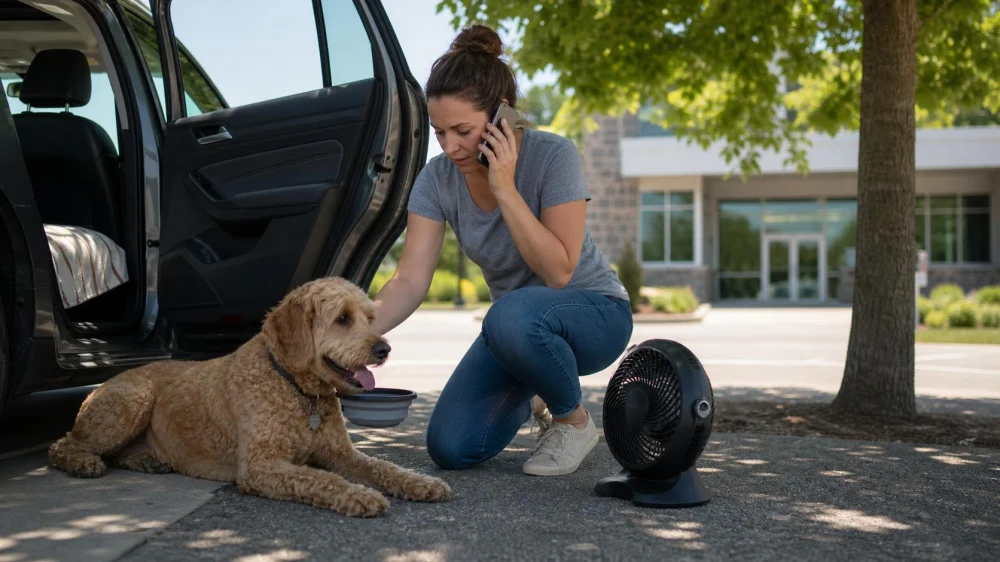
Suspected pet heatstroke is a veterinary emergency. Move the pet into shade or air conditioning, stop activity, and call the nearest veterinary hospital immediately while arranging transport. Follow the veterinary team's cooling instructions; cool or tepid water and airflow may be used during transport. Do not use ice, wrap the pet in wet towels, force water, or wait for recovery.
This guide is for dog and cat owners in the United States. It cannot determine a pet's temperature, severity, or safe treatment at home.
Recognize heat distress early
Heatstroke occurs when a pet cannot control rising body temperature and heat begins to damage the body. It can worsen rapidly and may continue causing internal problems even after the pet appears cooler.
Possible warning signs include:
- Heavy, excessive, or rapidly worsening panting.
- Fast, noisy, or difficult breathing.
- Thick or ropey drool and unusually dry or tacky gums.
- Restlessness followed by weakness, unwillingness to move, or collapse.
- Bright red, very pale, gray, or blue-tinged gums.
- Vomiting, diarrhea, or loss of bladder or bowel control.
- Stumbling, confusion, tremors, seizures, or reduced response.
- A rapid or irregular heartbeat.
Cats may hide, become quiet, breathe with an open mouth, drool, or seem weak rather than showing the same obvious early panting as a dog. Open-mouth breathing in a cat warrants prompt veterinary attention.
Do not wait for every sign or rely on touching the nose, ears, or coat. If heat exposure and abnormal breathing, behavior, or weakness occur together, call a veterinary hospital now.
Know which pets need extra caution
Any pet can overheat, but risk can rise with:
- Flat-faced dogs and cats or pets with narrow airways.
- Heart, lung, kidney, neurologic, or endocrine disease.
- Obesity, poor fitness, heavy coat, or previous heat illness.
- Very young, senior, pregnant, or medically fragile animals.
- Anxiety, excitement, struggling, seizures, or intense exercise.
- Hot vehicles, enclosed porches, sunrooms, garages, tents, carriers, or poorly ventilated rooms.
- High humidity, direct sun, hot pavement, limited shade, and inadequate water.
- Muzzles or equipment that restrict effective panting.
It does not need to feel extremely hot to be dangerous for a susceptible pet. Ask the veterinarian for individual activity, travel, grooming, and cooling limits before warm weather.
Take emergency steps without delaying care
- Stop exposure: Carry or guide the pet into shade, an air-conditioned space, or a cooled vehicle without adding exertion.
- Call immediately: Tell the veterinary hospital the species, signs, location, heat exposure, and travel time. Ask where to go and what cooling to begin.
- Start transport: Do not wait at home to see whether panting stops. Have another person drive while someone monitors the pet when possible.
- Cool as directed: Current veterinary guidance commonly uses cool or tepid water on the body with moving air to support evaporation. Keep the nose and mouth clear.
- Offer, do not force: If the pet is alert and able to swallow, the veterinary team may advise offering small amounts of cool water. Never pour water into the mouth.
- Continue to the hospital: Apparent improvement does not rule out internal injury, dehydration, clotting problems, organ damage, or recurrence.
Avoid ice, ice water, alcohol on the skin, or wrapping the pet in wet towels. Wrapped towels can trap heat and reduce evaporation. Do not give human fever medicine or another drug unless a veterinarian specifically directs it.
Prevent overheating before activity
- Never leave a pet alone in a parked vehicle, even briefly or with windows cracked.
- Check heat, humidity, sun exposure, pavement, route shade, and cooling access before leaving.
- Move walks and active play to cooler times and shorten them for high-risk pets.
- Carry enough water and a bowl; provide frequent shade and rest.
- Use air conditioning and verify that crates and carriers receive airflow.
- Avoid strenuous activity after illness, during poor air quality, or when the pet is not acclimated.
- Confirm that muzzles, clothing, life jackets, harnesses, and protective gear do not impair breathing or heat release.
- Know the route to the nearest open veterinary emergency hospital before travel.
For a pet with previous heat illness, breathing disease, or a flat face, ask the veterinarian for a written warm-weather plan and a lower threshold for stopping activity.
Hot-weather pet checklist
- Current weather and humidity checked.
- Pet's individual risk reviewed.
- Air-conditioned backup location available.
- Water, bowl, shade, and rest plan packed.
- Vehicle cooling confirmed before loading.
- Carrier ventilation unobstructed.
- Activity intensity and duration reduced.
- Emergency clinic location, phone, and route saved.
- Early warning signs known by every caregiver.
- Immediate transport planned if abnormal signs start.
Best for hot days: short, low-intensity exposure with continuous supervision and immediate access to cooling. Not ideal: isolated trails, long car waits, midday pavement, crowded events, or any setting where veterinary transport would be delayed.
Limitations and important notes
Home cooling is first aid during transport, not a substitute for veterinary examination. Overcooling, delayed transport, unsafe thermometer use, forced drinking, and unapproved treatments can cause harm.
Do not attempt a rectal temperature unless the veterinary team instructs you and it can be done without delaying travel or risking injury. Behavior and breathing can justify emergency action even when no temperature is available.
Call emergency services or animal control for a pet trapped in a hot vehicle and follow current local legal instructions. Do not put yourself or others in traffic or physical danger.
Frequently asked questions
Can a pet recover after resting in air conditioning?
Apparent improvement does not rule out heatstroke complications. Call a veterinary hospital and follow its examination and transport advice.
Should I use ice water?
Consumer veterinary guidance advises cool or tepid water with airflow rather than ice or very cold water. Follow the emergency veterinary team's instructions for the specific pet.
Can I wrap the pet in a wet towel?
Do not wrap the body in wet towels because they can trap heat and limit evaporation. The veterinary team may instead direct wetting plus airflow.
Should I force the pet to drink?
No. Forced water can enter the airway. Offer small amounts only if the pet is alert, able to swallow, and the veterinary team advises it.
Can cats get heatstroke?
Yes. Cats can overheat and may show hiding, weakness, drooling, open-mouth breathing, vomiting, or collapse. Treat abnormal breathing or behavior after heat exposure as urgent.
Sources and evidence notes
The emergency status, warning signs, immediate veterinary contact, cool-area movement, cool or tepid water, airflow, small voluntary drinks, and warnings against ice and wet-towel wrapping reflect current American Animal Hospital Association heatstroke guidance. The treating veterinary team should direct care for the individual pet.
Conclusion and next steps
Save the nearest veterinary emergency hospital before warm-weather activity and learn your pet's early warning signs. If abnormal panting, breathing, weakness, vomiting, confusion, or collapse follows heat exposure, move into cooling, call the hospital immediately, follow its first-aid directions, and transport without waiting for symptoms to resolve.




 Lakeland Animal Clinic3.0 (68 reviews)
 Scales 'N Tails Colorado Springs4.0 (864 reviews)
 Wheaton Animal Hospital4.0 (178 reviews)
 Hebron Cat Hospital4.0 (111 reviews)
 Vetco Vaccination Clinic3.0 (8 reviews)
 PETgrove Bird shop5.0 (146 reviews)
 Safe and Effective Diet Plans for Overweight Dogs Recommended by Veterinarians | Brothers Pets
 How to Keep Your Pet’s Coat Free from Mats and Tangles
 How to Spot and Treat Pet Urinary Issues
 How to Help Your Pet Adjust to a New Home: A Comprehensive Guide
 Best Pet Carriers for Air Travel Safety and Comfort: Top Picks for Your Furry Friend
 How to Keep Your Pet’s Environment Clean and Safe