
Pet Stool Sample: Collect, Label, and Bring It to the Vet
On this page
Quick answer
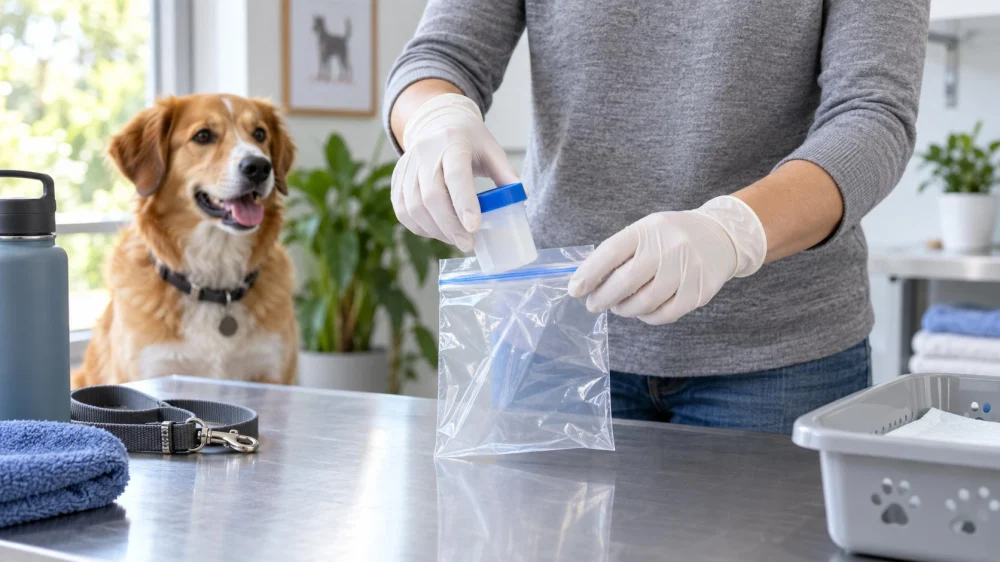
Ask your veterinary clinic whether it wants a stool sample, how much, and how fresh it must be. Collect a recent sample with clean disposable tools, avoid soil or litter when possible, seal it in a leak-resistant container, label the pet and collection time, and follow the clinic's storage instructions. Wash hands and keep the sample away from food.
Ask the clinic first
Different tests require different amounts, containers, freshness, and storage. Call before collecting when possible. Ask whether the clinic supplies a container, whether refrigeration is appropriate, and when the sample must arrive. Do not freeze, add liquid, or use a preservative unless instructed.
This guide is for routine dog and cat samples in the United States. Exotic pets, livestock, wildlife, and mailed laboratory samples need species- and test-specific instructions.
Collect safely
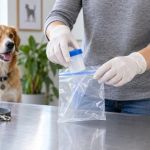
- Prepare gloves, a clean disposable scoop, and a clean leak-resistant container with a secure lid.
- Collect as soon after passage as practical. Take from a part that has not contacted chemicals or excessive dirt.
- For litter boxes, try to avoid collecting large amounts of litter. Never reach into litter or feces with bare hands.
- Close the container, place it in a separate sealed bag, and clean any reusable surface.
- Wash hands thoroughly with soap and water.
Keep children and other pets away during collection. Do not collect directly from the rectum unless a veterinarian performs or specifically directs the procedure.
Label and store
Write the pet's name, species, owner name, and collection date and time on the outer container or clinic label. Follow the clinic's temperature instructions. If refrigeration is requested, isolate the sealed, bagged sample from food in a clearly designated area and deliver it promptly.
Do not carry an open container, loose bag, or contaminated glove into the clinic. Tell staff what you are bringing at check-in.
Record useful details
- Stool frequency and timing
- Consistency, color, mucus, visible blood, or foreign material
- Vomiting, appetite, drinking, energy, weight, and pain changes
- Diet changes, treats, scavenging, travel, boarding, and wildlife exposure
- Current medicines, supplements, parasite preventives, and recent antibiotics
- Whether other pets or people have gastrointestinal symptoms
A clear photo may help describe an episode, but do not delay veterinary contact just to obtain a sample or image.
Urgent signs
Call a veterinarian promptly for repeated vomiting or diarrhea, pain, weakness, dehydration, black tarry stool, blood, suspected toxin or foreign-object ingestion, or symptoms in a very young, old, pregnant, or medically fragile pet. Blood or foreign material in vomit or stool may require immediate emergency assessment.
Do not give human anti-diarrheal medicine, antibiotics, or leftover pet medicine unless a veterinarian directs it.
Frequently asked questions
How fresh should the sample be?
Follow the clinic. UC Davis recommends a freshly collected sample within 24 hours for certain referral visits, but many clinics prefer sooner.
Can I use a household container?
Ask first. It must be clean, leak-resistant, disposable or approved, and never reused for food afterward.
What if I cannot get a sample?
Still attend or call. The veterinarian can decide whether a sample is essential and how to obtain one.
Can the sample diagnose the problem by itself?
No. Results must be interpreted with the exam, history, and other tests.
Sources and evidence notes
UC Davis Veterinary Medicine recommends bringing a fresh stool sample for pets with diarrhea or abnormal stool to certain internal-medicine visits. Its pet emergency guide identifies blood or foreign material in vomit or stool as an immediate concern.
Next steps
Call the clinic for its exact sample instructions, prepare a clean sealed container, and collect only when safe. Label the time, record symptoms and exposures, deliver promptly, and seek urgent veterinary care when red-flag signs are present.

 Animal Hospital of Waterville4.0 (298 reviews)
 Dirigo Veterinary Care4.0 (35 reviews)
 Hometown Veterinary Care4.0 (307 reviews)
 PetVet Vaccination Clinic0.0 (0 reviews)
 VIP Petcare Vaccination Clinic0.0 (0 reviews)
 PetVet Vaccination Clinic0.0 (0 reviews)
 Pet Eye Changes: Record, Protect, and Call the Vet
 Pet Stool Sample: Collect, Label, and Bring It to the Vet
 Pet Toy Inspection: Size, Damage, and Supervision
 Pet Collar Fit: ID Tags, Comfort, and Safety Checks
 Choosing a Pet Carrier: Fit, Ventilation, and Secure Travel
 Pet Poison Prevention: Store Common Hazards Out of Reach