
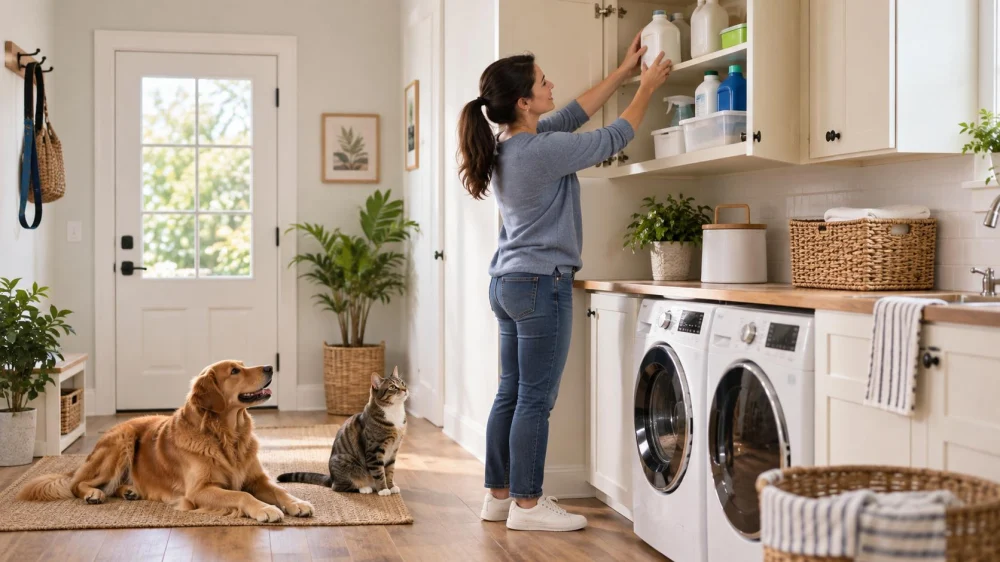
Pet Poison Prevention: Store Common Hazards Out of Reach
On this page
Quick answer
Prevent pet poisoning by storing medicines, cleaners, chemicals, foods, plants, pest products, and small hazardous items in closed containers inside secured cabinets your pet cannot open. Keep products in original labeled packaging, clean spills promptly, control bags and trash, and supervise new items. If exposure may have occurred, contact a veterinarian or animal poison service immediately and do not induce vomiting unless directed.
A pet hazard is anything that can cause harm when eaten, licked, inhaled, absorbed, or spilled onto the coat or skin. Risk depends on the substance, amount, species, size, health, and time since exposure. A product that is safe for one animal or person may be dangerous to another.
Map hazards room by room
Inspect the home from the pet’s level and include places reached by jumping, climbing, chewing, opening doors, or knocking items down. Cats may reach high shelves; dogs may open bags or trash; birds and small mammals have different sensitivities and access patterns.
- Kitchen: food, sweeteners, coffee products, alcohol, supplements, trash, compost, dish products, and hot spills.
- Bathroom and bedroom: prescription and over-the-counter medicines, topical products, cosmetics, nicotine, and dropped pills.
- Laundry and utility areas: detergents, pods, cleaners, batteries, solvents, and concentrated products.
- Garage and yard: automotive fluids, fuels, fertilizers, pesticides, rodent products, mushrooms, and treated materials.
- Living areas: houseplants, essential oils, craft supplies, guest bags, and small objects with residues.
This list is not exhaustive. Ask a veterinarian about species-specific hazards and review each product before bringing it into the home.
Build a secure storage system
Use closed cabinets with reliable latches where needed. “High shelf” is not enough for a climbing cat or determined dog. Keep hazardous products in original containers so ingredients, concentration, directions, and contact information remain available. Never transfer chemicals into food or drink containers.
Separate pet medicines from human medicines and medicines for other animals. Store each pet’s products together with clear identification and follow label conditions for temperature and light. Do not leave pill organizers, medicated creams, patches, or flavored medicines on a counter.
Secure trash, recycling, compost, purses, backpacks, grocery bags, and delivery packages. Check plants by exact name before purchase and place or remove them based on qualified guidance. “Natural” does not mean nontoxic.
Control daily routines and visitors
Most systems fail during transitions. Use a simple routine:
- Close the pet out of the area before using or decanting a hazardous product.
- Read the label and measure without distraction.
- Close the container immediately.
- Clean spills and account for dropped pills or pieces.
- Return the item to secured storage before the pet re-enters.
Tell guests not to feed the pet and give them a closed place for bags and medicines. During repairs, gardening, parties, or moves, use a separate safe room because unfamiliar products and open doors increase access.
What to do after a possible exposure
Move the pet away from the substance without putting yourself at risk. Prevent further licking or access. Contact a veterinarian, emergency clinic, or recognized animal poison service immediately, even if the pet appears normal; some effects can be delayed.
Have the package, ingredient list, estimated amount, exposure time, pet’s species, weight, age, conditions, medicines, and current signs ready. Follow professional instructions about transport or decontamination. Do not give food, milk, oil, salt, charcoal, hydrogen peroxide, or another home remedy unless specifically directed for that pet and exposure.
For breathing difficulty, seizures, collapse, severe weakness, major bleeding, or loss of consciousness, seek emergency veterinary care without delay. Call ahead if possible so the clinic can prepare.
Limitations and important notes
No general article can list every toxic substance or safe amount. Online symptom lists cannot rule out exposure. Product formulas, concentrations, and pet sensitivities vary, so use the actual packaging and professional toxicology guidance.
Human poison services may not provide animal-specific guidance. Keep current veterinarian, emergency clinic, and animal poison contact details accessible, including any consultation-fee information.
Sources and evidence notes
This guide follows common veterinary poison-prevention principles: restrict access, preserve labels, avoid unapproved home treatment, collect exposure facts, and seek prompt professional guidance. It intentionally avoids dose claims or a supposedly complete toxin list.
Frequently asked questions
Should I make my pet vomit?
Not unless a veterinarian or animal poison professional directs you. Vomiting can worsen some exposures and may be unsafe for certain animals or symptoms.
Is a childproof cap pet-proof?
No. Pets can chew containers, and caps may be left loose. Place the closed container inside secured storage.
Can I wait for symptoms?
Do not assume that is safe. Some toxins cause delayed signs, while early treatment may matter. Call promptly after a credible exposure.
Are pet products safe for every species?
No. Products intended for one species can be harmful to another. Use only as labeled and prescribed for the specific animal.
What should I bring to the clinic?
Bring the original package or clear photos when safe, plus the exposure timeline and pet information. Do not delay emergency transport to collect nonessential items.
Conclusion and next steps
Prevent poisoning with layers: identify hazards, preserve labels, lock storage, control daily use, and prepare emergency contacts. Review the system whenever a new product, plant, visitor, or pet enters the home. After a possible exposure, stop access and call qualified veterinary help rather than testing a home remedy.




 Animal Care Center-Lake Houston4.0 (369 reviews)
 My Cuteness DIY Pet Store5.0 (95 reviews)
 Oregon Humane Society - Community Veterinary Hospital4.0 (286 reviews)
 Veterinary Eye Specialist of Long Island4.0 (36 reviews)
 Johnson City Veterinary Hospital4.0 (212 reviews)
 LITTLE CREATURES5.0 (31 reviews)
 How to Spot and Treat Hip Dysplasia in Dogs: A Complete Guide
 Veterinary Waiting Room: Reduce Stress Before the Visit
 How to Introduce a New Puppy to Older Dogs: Tips for a Smooth Transition
 How to Manage Your Pet’s Health with Regular Monitoring Effectively
 Tips for Preventing Hairballs in Long-Haired Cats: Grooming, Diet, and Care
 How to Safely Handle Pet Emergencies: A First-Aid Guide