
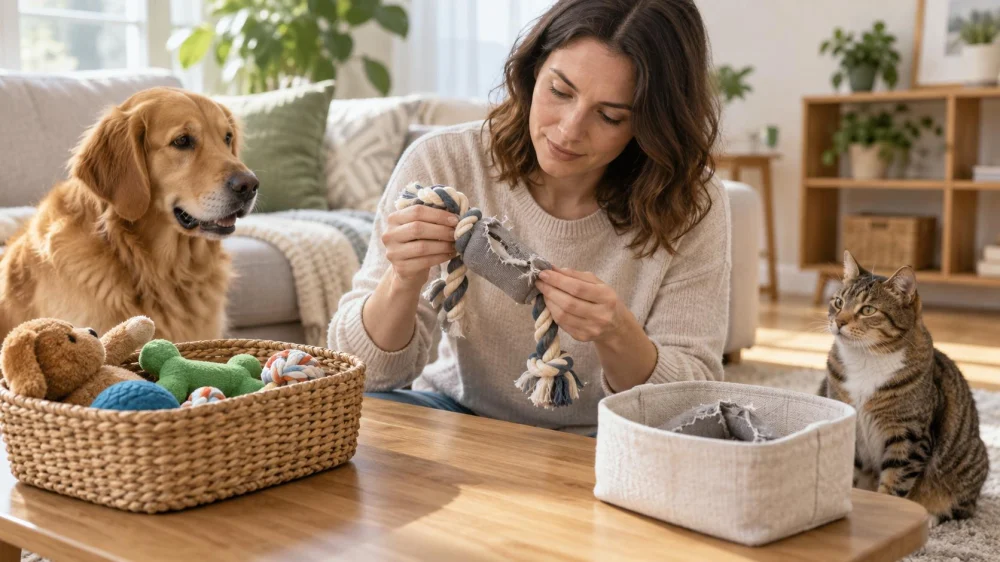
Pet Toy Inspection: Size, Damage, and Supervision
On this page
- Quick answer
- Match the toy to the individual pet
- Check size, shape, and intended use
- Inspect before and after every session
- Match supervision to behavior
- Clean and store without creating new hazards
- Know when to discard instead of repair
- When to contact a veterinarian
- Frequently asked questions
- Sources and evidence notes
- Conclusion and next steps
Quick answer
Choose toys sized for the individual pet and intended for that species, age, chewing style, and activity. Before each session, check for cracks, torn seams, exposed stuffing, loose bells or squeakers, sharp edges, and pieces small enough to swallow. Supervise new toys, interrupt destructive chewing, clean only as directed, and discard damaged items. Contact a veterinarian promptly if ingestion, choking, pain, or illness is suspected.
Match the toy to the individual pet
A suitable pet toy is large and durable enough for the animal's mouth and behavior, while still being usable for the intended activity. No toy is universally indestructible or safe without context.
This guide provides general checks for household cats and dogs in the United States. Species, size, age, dental health, medical conditions, play style, and supervision change the risk. Ask the veterinarian for individualized recommendations.
Check size, shape, and intended use
- Confirm the whole toy and every detachable part are too large to swallow.
- Avoid shapes that can wedge around the jaw, tongue, head, or limbs.
- Choose fetch toys that remain visible and retrievable without fitting behind the back teeth.
- Use food-dispensing toys only with treats and portions suitable for the pet.
- Keep children's toys, batteries, magnets, string, foam, and craft items separate from pet toys.
- Follow age, species, weight, and supervision guidance on the product.
Inspect before and after every session
- Flex the toy and look for cracks, splits, punctures, sharp edges, or brittle areas.
- Pull gently at seams, knots, glued parts, feathers, eyes, bells, and squeakers.
- Check whether stuffing, fibers, foam, or internal material is exposed.
- Compare the current size and shape with the original toy.
- Look for blood, unusual saliva, or tooth fragments that may indicate an oral injury.
- Set questionable toys aside where the pet cannot retrieve them.
Match supervision to behavior
Watch a pet closely with every new toy until you understand how it is used. A gentle carrier may need less intervention than a pet that shreds, swallows, guards, or becomes overexcited. Toys intended for interactive tug or fetch should be stored when the session ends if unsupervised access is not recommended.
Interrupt calmly before the toy breaks. Trade for a suitable treat or another object rather than chasing, pulling from the mouth, or creating a guarding conflict.
Clean and store without creating new hazards
- Follow the product's hand-wash, machine-wash, or surface-cleaning instructions.
- Remove food residue from grooves and openings.
- Rinse cleaning products completely and dry the toy before reuse.
- Discard items that retain mold, strong odor, residue, or moisture in inaccessible spaces.
- Store toys dry and separate from household chemicals, cords, and small objects.
- Rotate a manageable selection so wear is easier to notice.
Know when to discard instead of repair
Discard a toy when parts are missing, seams open, edges become sharp, the size is reduced, internal materials are exposed, or the toy no longer works as designed. Household glue, tape, staples, string, or improvised patches can add toxic, sharp, or ingestible hazards.
For durable products with manufacturer-approved replacement parts, use only the correct part and recheck the complete assembly. Do not donate a toy you would not give safely to your own pet.
When to contact a veterinarian
Seek emergency help for choking, breathing difficulty, collapse, repeated unproductive retching, severe distress, or a known ingestion involving batteries, magnets, sharp objects, toxic material, or large pieces. Do not induce vomiting unless a veterinarian or poison professional directs it.
Call the veterinarian promptly for missing toy pieces, vomiting, reduced appetite, abdominal pain, lethargy, straining, drooling, mouth bleeding, broken teeth, or a sudden behavior change after play.
Frequently asked questions
Is a toy safe if the label says indestructible?
No toy can account for every animal and behavior. Treat durability claims as product information, not a replacement for fit checks and supervision.
Can I leave puzzle toys out all day?
Only if the product, food, pet, and observed behavior make unsupervised use appropriate. Some puzzles can be chewed apart or trap jaws and paws.
Are sticks safe for fetch?
Natural sticks can splinter, puncture the mouth, lodge in tissues, or break into swallowed pieces. Use a purpose-designed fetch toy of suitable size instead.
Sources and evidence notes
This article uses general companion-animal injury-prevention principles: choose appropriate size and material, inspect repeated-use items, supervise unfamiliar behavior, avoid improvised repairs, and escalate suspected ingestion or choking. The pet's veterinarian, product instructions, and animal poison or emergency resources are the relevant sources for a specific event.
Conclusion and next steps
Gather the pet's current toys and sort them into keep, supervised-only, and discard groups. Photograph any missing section before calling the veterinarian, and save product details when possible. Going forward, pair each play session with a ten-second size and damage check rather than waiting for the toy to fail.



 Animal Hospital of Waterville4.0 (298 reviews)
 Dirigo Veterinary Care4.0 (35 reviews)
 Hometown Veterinary Care4.0 (307 reviews)
 PetVet Vaccination Clinic0.0 (0 reviews)
 VIP Petcare Vaccination Clinic0.0 (0 reviews)
 PetVet Vaccination Clinic0.0 (0 reviews)
 Pet Toy Inspection: Size, Damage, and Supervision
 Pet Collar Fit: ID Tags, Comfort, and Safety Checks
 Choosing a Pet Carrier: Fit, Ventilation, and Secure Travel
 Pet Poison Prevention: Store Common Hazards Out of Reach
 Pet First-Aid Kit: Build, Store, and Replace Supplies
 Pet Medication Routine: Labels, Timing, and Vet Checks