
Pet First-Aid Kit: Build, Store, and Replace Supplies
On this page
Quick answer
A pet first-aid kit should help you protect yourself, control a scene, transport the animal, and provide limited first aid while contacting a veterinarian. Start with emergency numbers and the pet's current medical information, then add species- and size-appropriate handling, wound-covering, cleaning, and transport supplies. Keep medicines only when a veterinarian approves them, label everything, and replace expired or damaged items.
Define what the kit should do
A pet first-aid kit is a bridge to professional care, not a portable veterinary clinic. Its job is to make basic supplies available during the minutes before or during transport and to keep critical information together. The correct response still depends on the animal, injury, location, and veterinary advice.
Plan for the pets actually in the household. A cat, small dog, large dog, bird, reptile, or other animal may need different handling and transport equipment. Consider age, mobility, medical conditions, behavior when frightened, and the places you travel.
Set clear limits: do not diagnose, give an unapproved drug, induce vomiting, force food or water, remove an embedded object, or perform a procedure you have not been trained to do. An injured animal may bite or scratch even when normally gentle, so human safety comes first.
Build the contact and veterinary plan first
The most important part of the kit is knowing whom to call and where to go. Verify details now rather than during an emergency.
- regular veterinarian name, phone number, address, and hours;
- nearest emergency animal hospital and an alternate route;
- animal poison-control contact and any fee or case-number process;
- local animal control and nonemergency public-safety contacts when relevant;
- pet name, species, breed or description, age, weight, identification, and photo;
- current medicines, allergies, health conditions, vaccination records, and insurance details; and
- an authorized caregiver and written treatment or financial instructions for times you are unavailable.
Save the information on paper and in a phone. During a suspected poisoning, overdose, severe injury, breathing problem, collapse, or rapidly worsening condition, call a veterinarian, emergency animal hospital, or animal poison-control service immediately. Do not wait to finish using the kit.
Choose practical supplies for the pet
Ask the veterinarian to review the list for your animal. Keep supplies in original packaging when directions, sterility, size, or expiration matter.
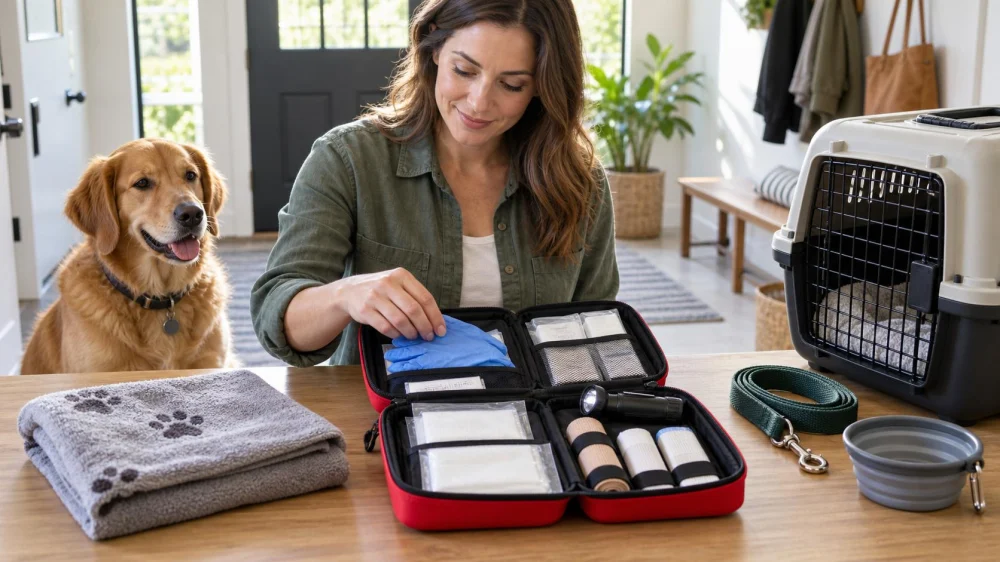
- disposable gloves and hand-cleaning supplies;
- clean towels and a blanket for padding, warmth, or controlled transport;
- sterile gauze pads, gauze roll, nonstick pads, and self-adhering nonstick wrap;
- adhesive tape and blunt-tip scissors stored safely;
- sterile saline for appropriate rinsing and a needle-free oral syringe or dropper;
- a digital thermometer and water-based lubricant if the veterinarian has shown how to use them;
- flashlight, spare batteries, tweezers, and a magnifier;
- spare leash, collar or harness, and a secure carrier with ventilation;
- medical records, emergency contacts, pen, waterproof notebook, and small waste bags; and
- any species-specific item recommended by the veterinarian.
A muzzle may reduce bite risk in some situations, but it is not appropriate for every animal or emergency. Never muzzle an animal that is vomiting or cannot breathe normally. Ask a veterinarian or qualified trainer to demonstrate safe use before an emergency.
Do not add hydrogen peroxide, activated charcoal, pain relievers, antihistamines, antibiotics, or other medicines for automatic use. If a veterinarian recommends a product for this specific pet, record the exact circumstances and instructions and monitor its expiration. Human medicines and doses can be dangerous to animals.
Store home and travel kits for fast access
Use a durable, water-resistant container that opens easily for an adult but stays secure from pets and children. Separate clean wound supplies from leashes, food, and used equipment. Put a contents list and the next inspection date where they can be seen without unpacking everything.
Keep the main kit near a practical exit, not behind seasonal storage. Every caregiver should know its location. A smaller travel kit can stay with the carrier or vehicle when temperature-sensitive items and medicines are removed after each trip. Do not store products in a hot or freezing vehicle unless their labeling allows it.
For evacuation planning, keep food, water, bowls, routine medicines, records, identification photos, waste supplies, and a carrier ready in addition to the first-aid items. Check shelter and lodging options because not every public shelter accepts pets.
Inspect, replace, and practice
Review the kit on a fixed schedule and before travel. Replace expired, opened, wet, dirty, brittle, rusted, leaked, or damaged supplies. Confirm that the carrier closes, the leash hardware works, gloves fit, batteries hold charge, and bandage packages remain sealed.
- Verify phone numbers, addresses, hours, and routes.
- Update the pet's weight, medicines, conditions, and current photo.
- Check every dated product and rotate replacements into the kit.
- Restock anything used, even during a minor event.
- Review how the container is organized with every caregiver.
- Take a pet first-aid course or ask the veterinarian to demonstrate basic handling and transport.
Evidence notes: the AVMA provides a current pet first-aid brochure and checklist that emphasizes emergency contacts, medical records, handling supplies, and prompt veterinary care. The FDA explains that a veterinarian, emergency animal hospital, or animal poison-control center is the appropriate source for urgent veterinary advice in its guide to pet emergency contacts.
Frequently asked questions
Can a family first-aid kit serve a pet?
Some basic supplies overlap, but the pet needs separate contact information, handling and transport equipment, sizes, and veterinary guidance. Keep pet items clearly organized.
Should the kit contain medicine?
Only products specifically approved for that pet and situation by a veterinarian. Keep the original label and written instructions, and never assume a human dose applies.
Where should the kit be kept?
Use a secure, dry, temperature-appropriate place that adults can reach quickly but pets and children cannot. Keep a smaller travel kit when needed.
How often should supplies be checked?
Use a regular schedule and check again before travel. Replace anything expired, opened, contaminated, damaged, or used.
What should I do first in an emergency?
Protect people from traffic, fire, electricity, frightened animals, and other hazards, then call the appropriate veterinary emergency resource. Follow its instructions while preparing transport.
Conclusion and next steps
Write the emergency contacts and pet medical summary first, then build a kit around safe handling, basic wound coverage, visibility, and transport. Ask the veterinarian to review any medicine or species-specific item. Store the kit securely, teach caregivers where it is, and set a recurring inspection date so the supplies are ready before an emergency begins.





 Petco4.0 (1036 reviews)
 PetVet Vaccination Clinic0.0 (0 reviews)
 Animals West Veterinary Hospital - James Greer DVM4.0 (241 reviews)
 Manor Veterinary Hospital4.0 (207 reviews)
 Modern Animal4.0 (38 reviews)
 VIP Petcare Vaccination Clinic0.0 (0 reviews)
 What Every Pet Owner Should Know About Pet Behavior – A Practical Guide
 How to Spot and Treat Hypothyroidism in Dogs and Cats
 Understanding Pet Hypertension: How to Manage High Blood Pressure in Pets
 How to Recognize and Treat Common Pet Poisonings
 Pet Travel Health Certificates: Build the Timeline First
 How to Manage Your Pet's Stress and Anxiety Levels