
Pet Stool Sample: How to Collect and Store It for the Vet
On this page
Quick answer
Ask the veterinary clinic what test it plans and how much stool it needs. Collect a fresh sample with gloves or an inverted bag, place it in a clean leak-proof container, label the pet and collection time, and deliver it promptly. Refrigerate rather than freeze only when the clinic instructs you to do so, because some tests need different handling.
This guide is for dog and cat owners in the United States preparing a routine or illness-related veterinary visit. The clinic's test-specific instructions override general collection advice.
Ask the clinic before collecting
A fecal sample can be used for different tests, including examination for parasite eggs or organisms, selected infectious-disease testing, or other laboratory work. The needed amount, freshness, container, temperature, and delivery time can differ.
Call and ask:
- What test is being requested?
- How much sample is needed?
- How fresh must it be?
- Should it be refrigerated, kept at room temperature, or handled another way?
- Should liquid diarrhea, mucus, blood, or a visible object be included?
- Does the clinic provide a sterile container or collection kit?
- When and where should the sample be delivered?
Do not add water, saline, preservative, litter, soil, paper, or another substance unless the clinic tells you to. Do not combine samples from different pets unless a veterinarian specifically requests a pooled sample.
Collect a dog sample safely
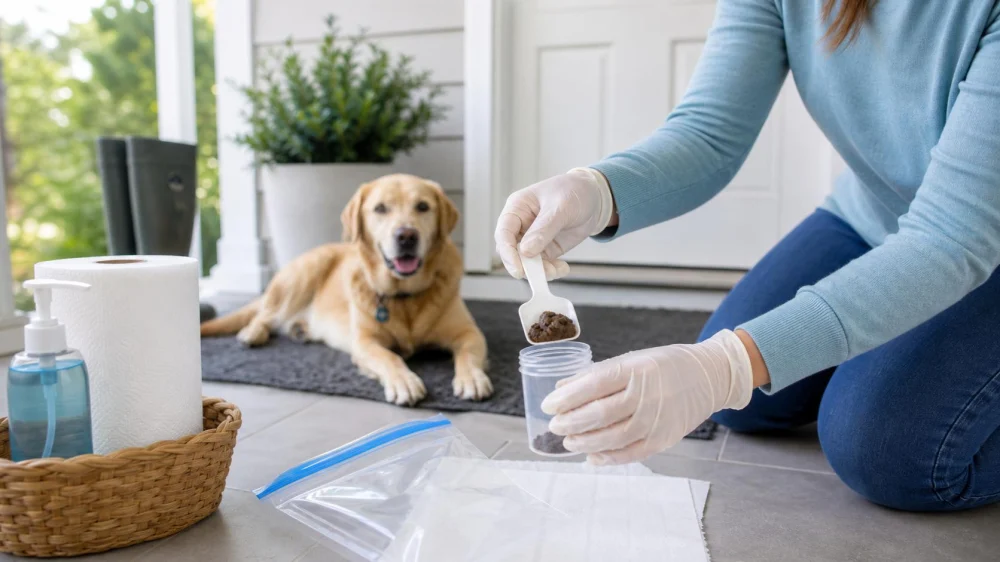
- Prepare disposable gloves, a clean disposable scoop or inverted collection bag, the requested container, a second sealed transport bag, and a label.
- Watch the dog closely so you know which stool belongs to that pet and can collect it soon after passage.
- Avoid soil, grass, puddles, deicer, fertilizer, and feces from another animal.
- Using a glove or inverted bag, collect the amount the clinic requested. Include an unusual soft, mucous, or visibly affected portion only if it can be handled safely and the clinic wants it.
- Place the sample into the container without touching the outside rim or lid interior.
- Close it securely, place it in the second bag, remove gloves, and wash hands thoroughly with soap and water.
Do not delay urgent care while waiting for the pet to produce a sample. The veterinary team can tell you whether it can collect one at the clinic.
Collect a cat sample with less contamination
Ordinary clumping litter can mix urine, absorb moisture, and make it hard to separate a usable stool sample. Ask the clinic whether it wants a fresh piece collected from the regular box or whether it recommends a clean box with a nonabsorbent collection material.
- Clean and dry a separate litter box using a pet-safe process, then rinse away any residue if the clinic advises a special collection setup.
- Use only the nonabsorbent material or collection method the clinic approves.
- Keep other cats away so the source is certain.
- Collect soon after the cat defecates, avoiding urine-soaked material.
- Seal, label, bag, and wash hands as for a dog sample.
Do not confine a cat without water or needed litter access simply to obtain a sample. If collection causes stress or the source cannot be identified in a multi-cat home, ask the veterinary team for another plan.
Label, store, and transport the sample
Write on the outer label:
- Pet's name and species.
- Owner's name or clinic record identifier.
- Date and exact collection time.
- Whether the sample was formed, soft, liquid, bloody, or mucous, if requested.
- Any handling instruction the clinic gave.
Fresh samples are generally preferred. University veterinary diagnostic laboratories commonly instruct clients to use fresh material in a leak-proof container and refrigerate it for many routine submissions, but exceptions exist. Some motile organisms, cultures, preservatives, or specialized tests need different handling. Follow the clinic's instruction rather than a universal time limit.
If told to refrigerate, keep the sealed primary container inside a second closed bag, separated from food and inaccessible to children and pets. Do not freeze unless specifically instructed. Transport it in a washable cooler or bag as the clinic directs and deliver it as soon as practical.
Sample and visit checklist
- Confirmed test, amount, container, temperature, and delivery time.
- Fresh sample from the correct pet.
- Minimal litter, soil, urine, grass, or water contamination.
- Clean, tightly closed, leak-proof container.
- Second sealed transport bag.
- Pet name, owner, date, and collection time on the label.
- Hands washed and collection area cleaned safely.
- Notes or photos of stool changes when useful.
- Current diet, medicines, supplements, preventives, travel, and exposure history ready for the veterinarian.
- Urgent symptoms reported rather than waiting for routine drop-off.
Bring a photo when the appearance changes between bowel movements or when the full volume, color pattern, or visible object cannot be represented safely in the sample.
Limitations and urgent signs
A stool sample alone cannot diagnose every cause of diarrhea, blood, vomiting, appetite change, or weight loss. The veterinarian may need an examination, bloodwork, imaging, repeat samples, or another test.
Contact a veterinarian promptly for repeated vomiting, significant or repeated blood, black tar-like stool, severe or frequent diarrhea, weakness, collapse, abdominal swelling or pain, dehydration, suspected toxin or foreign-object ingestion, or symptoms in a very young, old, pregnant, or medically fragile pet. Use emergency care when the pet is rapidly worsening or the clinic directs it.
Some intestinal organisms can infect people. Avoid bare-hand contact, clean contaminated areas carefully, wash hands, and take extra precautions around children, older adults, pregnant people, and immunocompromised household members.
Frequently asked questions
How much stool should I collect?
Ask the clinic. Different tests and laboratories need different quantities, and collecting the whole bowel movement is usually unnecessary.
Can I use a household food container?
Use the clinic's container when available. Otherwise ask whether a clean, dry, leak-proof disposable container is acceptable. Do not reuse it for food.
Should I refrigerate the sample overnight?
Only according to the clinic's timing and test instructions. Refrigeration is common for many routine samples, but some tests need faster or different handling.
Can I freeze a stool sample?
Do not freeze it unless the veterinary clinic or laboratory specifically tells you to. Freezing can make a sample unsuitable for some tests.
What if my pet does not produce a sample?
Keep the appointment and tell the clinic. Do not give a laxative, change food, or delay needed care simply to force a bowel movement unless a veterinarian directs it.
Sources and evidence notes
The fresh-sample, leak-proof-container, refrigeration, no-freezing, labeling, and prompt-submission principles in this guide reflect current specimen guidance from United States university veterinary diagnostic laboratories. The exact test and laboratory protocol determine the final instructions.
Conclusion and next steps
Call the clinic before collection and record its exact instructions. Prepare gloves, a clean scoop, leak-proof container, second bag, and label. Collect a fresh sample from the correct pet with minimal contamination, wash your hands, store it only as directed, and deliver it promptly with notes about symptoms and medications.
 PAW Veterinary Center4.0 (156 reviews)
 Vetco Vaccination Clinic4.0 (16 reviews)
 Chestnut Mountain Animal Hospital4.0 (188 reviews)
 Tabby Road Animal Hospital4.0 (148 reviews)
 Veterans Memorial Drive Animal Hospital4.0 (829 reviews)
 Bell Parkway Veterinary Hospital4.0 (62 reviews)
 Signs of Allergic Reactions to Vaccines in Pets
 How to Recognize and Treat Joint Pain in Older Pets: A Complete Guide
 Easy Homemade Cat Toys That Promote Exercise | Fun & Healthy Ideas for Your Cat
 How to Introduce a New Puppy or Kitten to Your Older Pet
 How to Prevent and Treat Dog Ear Mites Effectively in the US
 How to Safely Administer Medication to Your Pet