
Senior Pet Home Setup: Traction, Access, and Rest
On this page
Quick answer
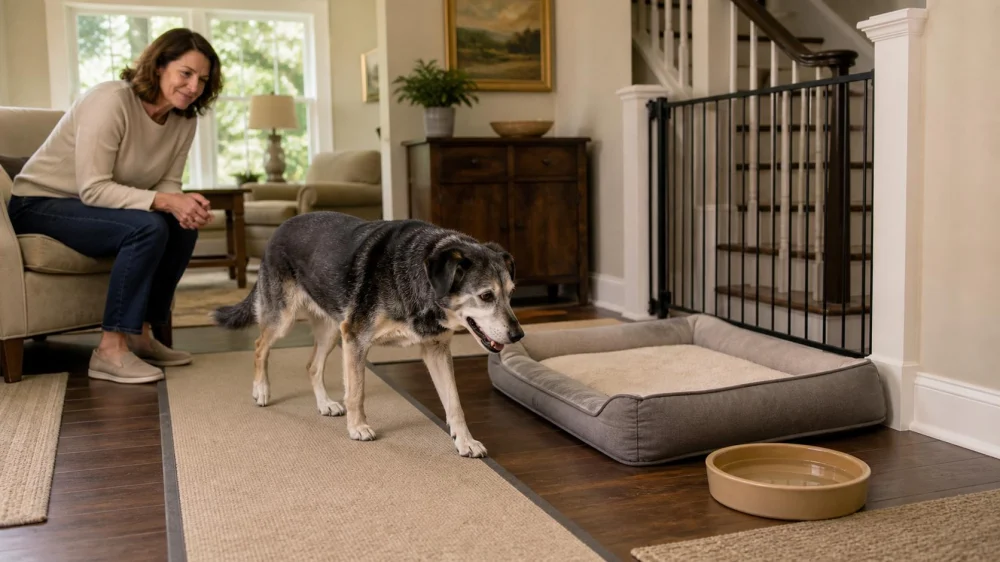
Help an older pet move at home by creating continuous nonslip routes, blocking unsafe stairs, keeping food, water, litter or toilet access convenient, and offering a supportive bed in a quiet temperature-comfortable area. Make one change at a time and watch how the pet responds. New difficulty standing, falling, pain, confusion, appetite change, or altered elimination needs veterinary evaluation rather than a home modification alone.
Observe daily movement
Watch the pet rise, turn, walk, eat, drink, eliminate, and settle without coaxing. Note where paws slip, where the pet hesitates, and which furniture or stairs require a jump. Record changes with dates and short videos when safe; patterns are more useful to a veterinarian than a general statement that the pet is “slowing down.”
Dogs and cats may hide discomfort or compensate until a task becomes difficult. Aging itself is not a diagnosis. Vision, nails, paw fur, pain, neurologic disease, cognitive change, weakness, and other medical issues can alter mobility.
Improve traction and pathways
- Connect essential areas. Run nonslip mats or secured runners between bed, water, feeding, and elimination routes.
- Secure every edge. A rug that curls or slides can create a new fall hazard.
- Clear clutter. Keep routes wide and consistent, especially at night.
- Manage stairs. Use a secure gate when unsupervised access is risky; do not rely on a loose barrier.
- Add gentle lighting. Stable night lighting can help pets navigate familiar paths.
- Review nails and paw care. Ask a veterinarian or groomer about appropriate maintenance rather than trimming aggressively.
Place daily resources
Offer a low-entry bed large enough for the pet to change position. Put it away from drafts, busy doorways, and isolated stairs. Keep water accessible in a stable bowl and ask the veterinarian before changing bowl height, feeding plan, or water access for a medical condition.
For cats, provide an easy-entry litter option in an accessible location while preserving privacy. For dogs, shorten or simplify the route outdoors and use ramps only when correctly sized, stable, nonslip, and introduced gradually. Never force a fearful or unstable pet onto new equipment.
Room-by-room checklist
- Continuous nonslip path across smooth floors
- Loose cords, clutter, and unstable rugs removed
- Stairs and drop-offs controlled
- Bed accessible without jumping
- Food and water stable and easy to reach
- Elimination area available without a difficult route
- Temperature, lighting, and noise appropriate
- Pet can leave resting space and is not trapped by barriers
Limitations and veterinary triggers
Contact a veterinarian for new or worsening lameness, repeated slipping, inability to rise, collapse, dragging limbs, vocalizing, breathing changes, confusion, altered appetite or thirst, or changes in urination or stool. Seek urgent help for sudden severe symptoms or inability to move safely.
This is general environmental guidance. Do not give human pain medicine or buy braces, supplements, ramps, elevated bowls, or mobility devices as a substitute for evaluation. The right intervention depends on the animal and cause.
Sources and evidence notes
The setup uses common senior-animal care principles: reduce slip and fall exposure, keep resources accessible, preserve predictable routines, observe function, and involve a veterinarian when capacity changes. Product makers govern installation; veterinary advice governs health-related changes.
Frequently asked questions
Are rugs enough for a slipping pet?
They may improve traction when securely fixed, but persistent slipping can signal a medical or nail-and-paw issue that needs assessment.
Should I move everything to one room?
Consolidation can reduce travel, but abrupt isolation may disrupt routine. Preserve choice and familiar access while making routes safer.
Is a ramp always better than stairs?
No. Slope, width, traction, stability, training, and the pet’s condition matter. Ask for guidance and supervise introduction.
How often should I reassess the setup?
Observe daily and review after any health or mobility change. Recheck mats, gates, beds, and paths for wear or movement.
Next steps
Film a short safe sample of daily movement, identify the first slippery or difficult route, and create a secured nonslip path. Bring your observations to the veterinarian, then adjust resting, feeding, water, and elimination access according to the pet’s actual needs.


 Harbor Veterinary Clinic4.0 (190 reviews)
 Sacopee Veterinary Clinic4.0 (166 reviews)
 Scout Veterinary Urgent Care - Old Orchard5.0 (30 reviews)
 Akin Hills Pet Hospital4.0 (296 reviews)
 Bergheim Pet Hospital & Clinic4.0 (163 reviews)
 Arlington Pet Hospital4.0 (340 reviews)
 Beginner’s Guide to Veterinary Advice for New Pet Owners
 Understanding Canine Hip Health and Exercise Needs: Key Insights
 How to Spot and Treat Endocrine Disorders in Pets
 Most Common Dog Health Problems You Should Never Ignore
 What Every Pet Owner Should Know About Pet Behavior – A Practical Guide
 How to Choose the Best Supplements for Your Pet’s Joint Health