
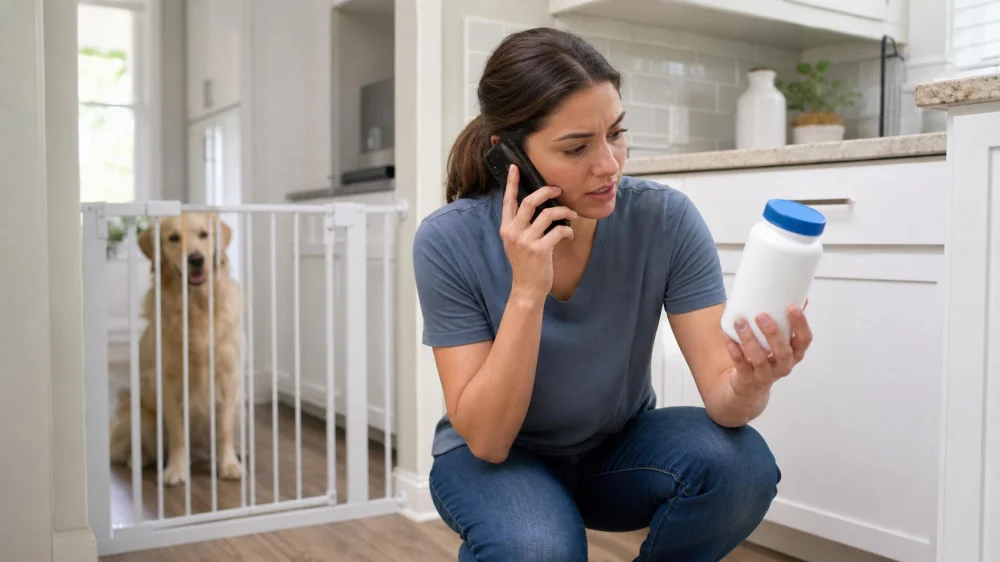
Suspected Pet Poisoning: Preserve Evidence and Call Fast
On this page
Quick answer
If a pet may have eaten, inhaled, or contacted a toxin, move it away from the source without exposing yourself, preserve the package or a photo, note the amount and time if known, and call a veterinarian or recognized animal poison service immediately. Do not induce vomiting, give food, milk, oil, charcoal, or human medicine unless a qualified professional specifically directs it.
Why it matters
Suspected pet poisoning is any possible exposure to a harmful plant, food, drug, chemical, animal product, or environmental substance. Rapid professional triage matters because treatment depends on the exact agent, amount, route, species, body size, time, and symptoms.
This U.S. guide supports the first phone call, not home treatment. Poison services may charge a fee, and emergency clinics differ in capability. Birds, reptiles, small mammals, cats, and dogs can respond differently to the same substance.
Practical checklist
- Move the pet away only if you can do so without entering fumes, touching chemicals, or being bitten.
- Call an emergency veterinarian or established animal poison service immediately; do not wait for symptoms.
- Bring the original container, label, plant sample, pill description, product name, or clear photos when safe.
- Estimate the earliest and latest possible exposure time and maximum missing amount without delaying the call.
- Know the pet's species, weight, age, conditions, medications, and current symptoms.
- Prevent other pets and children from reaching the area while preserving useful evidence.
- Follow transport and decontamination instructions exactly and write down the case or reference number.
Step-by-step plan
- Protect people first. Ventilate or evacuate only when safe and use emergency services for a dangerous spill, gas, fire, or human exposure.
- Separate the pet from the source. Avoid spreading powders or liquids across the coat, home, or vehicle and prevent grooming if instructed.
- Make the professional call. State symptoms first, then substance, amount, route, timing, and pet details. Keep the line available for instructions.
- Preserve evidence. Seal packaging or samples away from the pet and photograph front, back, ingredients, strength, and remaining quantity.
- Do not improvise. Vomiting can cause aspiration or additional injury and is dangerous for some substances and animals; household remedies can worsen exposure.
- Prepare transport. Use a secure carrier or restraint, bring records and evidence, protect the vehicle as directed, and have another adult call ahead when possible.
- Continue the handoff. Give the clinic the poison-service case number, instructions, symptom changes, and anything already administered.
Write a timeline of possible exposure, first symptom, calls, directions, and travel. Photograph labels before handing them over. Do not post the situation online instead of contacting professionals.
Limits and warning signs
A normal appearance does not rule out danger, and online lists cannot account for concentration, dose, delayed effects, or species differences. Product names can be similar while ingredients differ. Absence of vomiting is not proof the exposure was harmless.
Use emergency veterinary care immediately for collapse, seizure, severe breathing difficulty, loss of consciousness, uncontrolled bleeding, major burns, extreme agitation, repeated vomiting, or rapidly worsening signs. Call human poison control or emergency services for any person exposed.
Frequently asked questions
Should I make my pet vomit?
Not unless a veterinarian or recognized animal poison professional gives explicit directions for this exact exposure. Vomiting can worsen some poisonings.
Can I wait to see whether symptoms appear?
No. Some effects are delayed and early treatment options may be time-sensitive. Call immediately after a credible exposure.
What if I do not know how much was eaten?
Report the maximum possible amount, package size, remaining quantity, and time window. Do not delay while trying to calculate perfectly.
Is an internet search enough?
No. Use it only to locate a legitimate veterinary or poison service. Individual triage requires the exact product and pet information.
Sources and evidence
This guidance reflects common veterinary toxicology practice: secure the scene, identify the agent, call promptly, avoid unapproved home treatment, and transport with evidence. The treating veterinarian and recognized animal poison service direct the case.
Conclusion and next steps
Save your regular veterinarian, nearest emergency clinic, and a recognized animal poison service in your phone before an exposure happens. Store medicines and chemicals securely, but if a mistake occurs, call first and let the exact substance guide the response.





 Siameden Cattery3.0 (7 reviews)
 Banfield Pet Hospital4.0 (34 reviews)
 Vetco Vaccination Clinic5.0 (4 reviews)
 Clarion Animal Hospital4.0 (401 reviews)
 Nassau-Suffolk Animal Hospital4.0 (209 reviews)
 Sunshine Animal Hospital4.0 (374 reviews)
 How to Support a Dog Recovering from Surgery: Tips for Pet Owners
 Beginner’s Guide to Veterinary Advice for New Pet Owners
 Beginner's Guide to Pet Health | Essential Tips for New Pet Owners
 Expert Advice on Pet Vaccination Every Owner Should Know
 Best Ways to Treat and Prevent Hot Spots on Dogs and Cats
 How to Socialize Your Cat Without Stress – Tips for a Positive Experience