
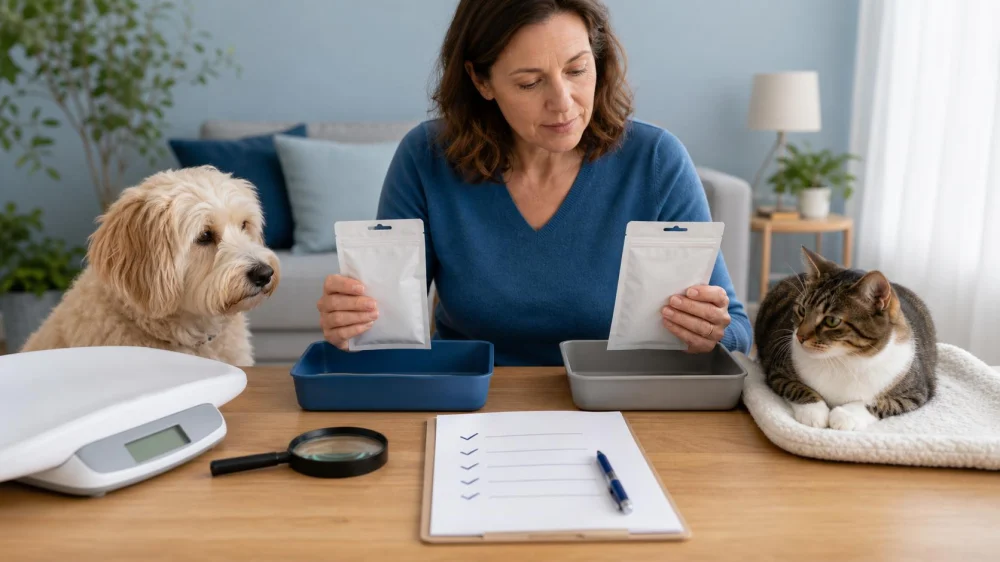
Flea and Tick Product Check: Match the Pet Before Use
Table of contents
Quick answer
Before using any flea or tick product, match the label to the exact pet species, current weight, age, and health status. A dog product can be dangerous or life-threatening to a cat. Confirm the dose range, route, interval, active ingredients, warnings, and expiration. Do not split packages, combine preventives, or substitute another pet's product without the veterinarian's instruction.
Start with the veterinarian
Ask the veterinarian which parasites matter in your location and lifestyle, and which product fits the pet. Share pregnancy or nursing status, seizure history, skin disease, allergies, current illness, medicines, supplements, and previous reactions. Mention every dog, cat, or other animal in the household because contact between treated pets can matter.
Flea and tick prevention includes oral medicines, spot-ons, collars, sprays, shampoos, dips, and other products. They are not interchangeable. The veterinarian can explain whether year-round use, testing, environmental treatment, or a different strategy is appropriate.
Match species, age, and weight
Read the front and back label for “dogs only,” “cats only,” or another species. Never judge by package color. Weigh the pet recently and select only the labeled range. Guessing, using a larger-dog tube across smaller animals, or applying a canine product to a cat can cause overdose or toxic exposure.
Check the minimum age and any breed, pregnancy, lactation, or health warnings. Growing puppies and kittens can move into another weight range quickly. If the pet is near a boundary, ask the veterinarian rather than rounding up or down.
Read the entire label
Confirm active ingredients, amount, route, application site, repeat interval, storage, expiration, bathing instructions, and human and animal precautions. For an EPA-regulated pesticide, look for the EPA registration information; for an FDA-approved animal drug, review the approval and prescribing information. Counterfeit products can imitate legitimate packaging.
Use the package insert from the current box because formulations and warnings can change. Keep the box, lot number, receipt, and application date until the treatment period ends.
Avoid unapproved combinations
Do not stack a collar, oral product, spot-on, spray, shampoo, or environmental pesticide without professional review. Two products may contain the same or interacting ingredients. “Natural” does not guarantee safe, and a human insect repellent is not a pet preventive.
Tell the veterinarian about products from another clinic, shelter, groomer, or store. If a dose was late, missed, vomited, washed off, or possibly applied twice, call before repeating it.
Prepare for safer use
Read directions before opening the package. Separate pets, use the product in a ventilated area when instructed, and wear any recommended protection. Apply only to the labeled site and route. Prevent licking, grooming, or contact between animals for the stated time.
Keep children away until the label says contact is safe. Wash hands as directed and store remaining product in original packaging, away from food and out of reach. Never transfer it to an unlabeled container.
Monitor after treatment
Watch the pet closely during the label's observation period and over the following days. Record appetite, behavior, walking, breathing, skin condition, vomiting, diarrhea, drooling, tremors, and seizures. Some products can cause mild temporary application-site changes, but only a veterinarian or product label can help interpret a sign.
Prevent other pets from touching or grooming the treated area. Check that a collar fits as directed and does not create skin injury. Do not assume lack of visible fleas means the product should be reapplied early.
Respond to a reaction
For any suspected bad reaction, call the veterinarian right away. For severe symptoms—collapse, seizure, trouble breathing, profound weakness, or another emergency—contact an emergency animal hospital immediately. Follow professional decontamination instructions; do not induce vomiting or apply another chemical unless directed.
Have the package, active ingredients, registration or approval number, lot, pet weight, application time, amount, and symptoms ready. FDA explains that problems may be reported to FDA or EPA depending on which agency regulates the product.
Product checklist
- Confirm the exact species.
- Use a current weight and labeled range.
- Check minimum age and health warnings.
- Read active ingredients and full directions.
- Review all other preventives and medicines.
- Use only the labeled route and amount.
- Separate pets until contact is safe.
- Record date, lot, and product.
- Call the veterinarian about any reaction or dosing mistake.
Limitations and veterinary note
This article is general education, not a product recommendation or veterinary diagnosis. Parasite risk, product regulation, species sensitivity, and medical suitability vary. Follow the current label and treating veterinarian. For suspected poisoning or serious symptoms, seek urgent veterinary help.
Frequently asked questions
Can I use a dog flea product on a cat?
No unless that exact label specifically includes cats and the veterinarian approves it. Some dog products can be life-threatening to cats.
Can I split one large tube between pets?
Do not. Concentration and dosing may not divide safely, and the label may prohibit it.
Can I combine a collar and chew?
Only with veterinary approval after reviewing active ingredients and the pets' health.
What if my pet licks the product?
Call the veterinarian or emergency animal poison service with the package in hand. Do not wait for symptoms.
Who regulates these products?
FDA regulates many oral or injected animal drugs, while EPA regulates many topical pesticides. Check the label and official reporting guidance.
Sources and evidence
- FDA: Safe Use of Flea and Tick Products in Pets — covers product types, species precautions, labels, and reactions.
- FDA: Reporting Problems With Flea and Tick Products — explains FDA and EPA roles and urgent contacts.
- FDA: Potentially Dangerous Items for Pets — warns that dog flea and tick products can be dangerous to cats and other animals.
Next steps
Before the next dose, place the pet beside the unopened package and verify species, current weight, age, active ingredients, dose range, and interval. Photograph the label and record the lot. If anything conflicts with the veterinary plan—or another preventive is already in use—pause and call the veterinarian.






 Lake Huron Veterinary Clinic4.0 (665 reviews)
 Beecher Veterinary Clinic4.0 (314 reviews)
 Elite Puppies5.0 (1 reviews)
 DeLand Cat Cafe4.0 (266 reviews)
 Farms Veterinary Clinic4.0 (123 reviews)
 Fur & Feather veterinary hospital4.0 (160 reviews)
 How to Help Your Pet Overcome Separation Anxiety
 Why Pet Insurance Can Save You Thousands in Emergency Vet Bills
 How to Recognize and Treat Common Pet Injuries - Expert Guide
 Beginner's Guide to Pet Safety | Essential Tips for a Safe Pet Home
 How to Recognize Signs of Heartworm in Dogs and Protect Them
 Senior Dog Joint Health: Supplements, Gentle Exercises, and Home Care for Better Mobility