
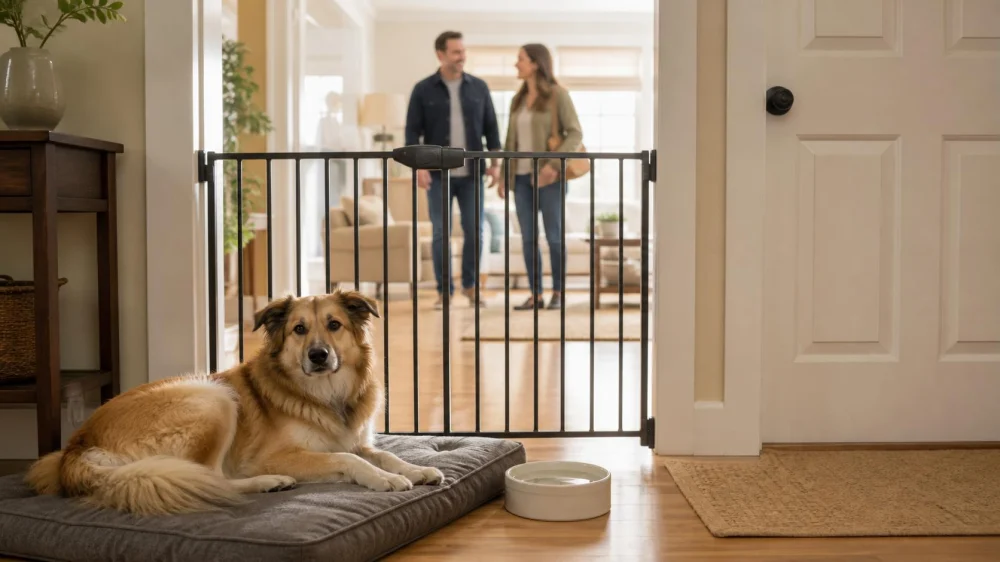
Household Guests and Pets: Doors, Food, and Retreats
On this page
Quick answer
Before guests arrive, decide who controls exterior doors, prepare a quiet pet-only retreat, put food and medicines out of reach, and tell visitors the household rules. Let the pet choose distance during greetings and supervise every interaction with children. Separate the pet early if arousal rises, and keep identification and veterinary contacts current in case of escape or illness.
Why guest visits change a pet's risk
A guest plan is a short set of controls for entrances, food, contact, and quiet space during a visit. Even a social pet may react differently to unfamiliar voices, luggage, children, mobility aids, open doors, or a changed routine. Planning reduces preventable choices in the busiest moments and gives the animal a predictable place to disengage.
This guide is for dog and cat households in the United States preparing for routine visitors or small gatherings. It does not replace individual veterinary or behavior advice, and it is not a protocol for a pet with a bite history, severe fear, contagious illness, or escape behavior. Those situations need a plan from an appropriate veterinary or qualified behavior professional before guests enter.
Practical checklist
- Choose one adult to manage exterior doors, gates, and the pet whenever people arrive or leave.
- Set up a quiet retreat with water, familiar bedding, ventilation, and an appropriate litter or toileting plan.
- Move guest bags, medicines, food, alcohol, nicotine products, cannabis products, rubbish, and fragile objects out of reach.
- Tell guests not to feed, chase, hug, corner, wake, or pick up the pet without the responsible adult's approval.
- Ask children to remain seated or calm during introductions and keep active play in a separate area.
- Check collars, microchip contact records, doors, screens, gates, and fences before the first arrival.
- Keep the regular feeding, exercise, medication, and toileting schedule as consistent as practical.
Step-by-step plan
- Exercise or engage the pet normally before the visit without exhausting it, then allow time to settle before the doorbell activity begins.
- Place the pet in the prepared retreat before opening an exterior door. Confirm every person is inside and the entrance is secured before deciding whether to introduce the pet.
- Brief guests using simple rules: ignore the pet at first, avoid direct reaching, keep food away, and let the animal approach or leave freely.
- For a calm introduction, use distance and a loose, supervised setup appropriate to the pet. Reward relaxed behavior without forcing contact.
- Watch posture, movement, vocalization, hiding, panting, lip licking, pinned ears, tail position, and attempts to leave. Interpret patterns rather than one signal alone.
- Return the pet to the retreat at the first sustained signs of stress or overexcitement, before serving food, and whenever exterior doors will open.
- At departure, secure the pet first, account for food and medicines, close every door and gate, then restore the normal routine.
For recurring visits, note the number and age range of guests, visit length, introduction method, food or door problems, stress signals, recovery time, and what helped. A short record can reveal whether the pet copes better with shorter visits, fewer people, more distance, or remaining comfortably separated throughout.
Limits and important notes
A quiet retreat is protective only when it is comfortable and guests respect it; it should not be used for punishment or opened casually. Supervision does not make unsafe contact acceptable. A pet can become overwhelmed quickly, and familiar people may miss subtle warning signs. Do not test tolerance around infants, active children, valuable food, pain, or known triggers.
Keep the pet fully separated and contact a veterinarian promptly for suspected toxin ingestion, breathing trouble, collapse, repeated vomiting, injury, or another acute change. If the pet has threatened, snapped, bitten, repeatedly escaped, or shown intense fear around visitors, stop informal introductions and seek individualized veterinary and qualified behavior guidance before the next gathering.
Frequently asked questions
Should every guest meet my pet?
No. Comfortable separation can be the safest and least stressful choice, especially for short visits, large groups, children, or a pet that prefers distance. A successful visit does not require physical contact.
Can guests give treats to help my pet relax?
Only if the responsible adult approves the exact treat and method. Diet restrictions, allergies, guarding, overfeeding, and unsafe ingredients matter. Calm distance is often more useful than repeated food from many hands.
What should be in the retreat room?
Provide fresh water, familiar bedding, suitable temperature and ventilation, and species-appropriate toileting. Remove hazards, food, medicines, cords, and objects the pet may swallow. Use familiar enrichment only when safe without direct supervision.
What if my pet barks or hides?
Increase distance and reduce stimulation instead of forcing an introduction. Allow hiding in a safe place. Persistent distress, inability to settle, or escalating behavior calls for separation and professional guidance before another visit.
How do I prevent an escape when guests leave?
Secure the pet behind a closed interior barrier before coats, luggage, deliveries, or departures begin. Assign one adult to confirm the pet's location and keep exterior doors controlled until everyone is gone.
Sources and evidence
Use current primary guidance from your veterinarian, veterinary behavior team, microchip registry, food and medicine labels, and local emergency veterinary service. General animal-welfare practice supports choice, distance, predictable routines, secure barriers, and early separation when stress increases; the safe plan depends on the individual pet and household.
Conclusion and next steps
Write the door, food, greeting, and retreat rules before the next visit and share them with every guest. Prepare the quiet space, secure the pet during arrivals and departures, and treat separation as a valid plan rather than a failure. If the pet cannot relax or has a history of aggressive or escape behavior, arrange individualized help before testing another gathering.






 APAWS Veterinary Hospital4.0 (190 reviews)
 Beacon Veterinary Clinic5.0 (8 reviews)
 Cornerstone Animal Hospital4.0 (659 reviews)
 Huston Vet Services: Deverell Luke DVM5.0 (37 reviews)
 Tender Loving Care Animal Hospital4.0 (215 reviews)
 All Pets & Paws Animal Hospital4.0 (432 reviews)
 The Dos and Don'ts of Pet Behavior: Expert Tips for Training and Bonding
 The Dos and Don’ts of Dental Care for Pets Every Pet Owner Should Know
 How to Prevent and Treat Giardia in Pets: A Comprehensive Guide
 How to Spot and Treat Pet Intestinal Worms: A Guide for Pet Owners
 How to Socialize Your Cat Without Stress: A Guide to Cat Socialization
 How to Keep Your Pet Safe from Household Poisons