
- 1. Importance of Dental Care for Dogs
- 2. How Often Should You Brush Your Dog’s Teeth?
- 3. Signs Your Dog Needs Dental Care
- 4. Best Tools for Dog Dental Care
- 5. Maintaining Good Dental Health in Dogs
1. Importance of Dental Care for Dogs
Just like humans, dogs need regular dental care to ensure their overall health and well-being. Poor oral hygiene can lead to a variety of dental problems in dogs, including tartar build-up, gum disease, and bad breath. In the worst-case scenario, untreated dental issues can lead to more serious health problems like heart disease or kidney issues.
Keeping your dog’s teeth clean not only prevents dental disease but also helps them avoid painful conditions like gingivitis and periodontal disease. By starting a regular brushing routine, you can ensure that your dog enjoys a long and healthy life. Just as we prioritize our own dental health, we must give the same attention to our furry friends.
2. How Often Should You Brush Your Dog’s Teeth?
The American Veterinary Medical Association (AVMA) recommends brushing your dog’s teeth at least three times a week to maintain optimal oral health. However, for the best results, brushing daily is ideal. Daily brushing helps to remove plaque before it hardens into tartar, which is much harder to clean.
It’s important to note that some dogs may require more frequent brushing, depending on their breed, age, and overall oral health. Dogs that are prone to dental issues, such as small breeds like Chihuahuas or Yorkies, may benefit from more frequent brushing. On the other hand, larger breeds with sturdier teeth might not need daily brushing but still benefit from regular care.
In addition to brushing, it’s a good idea to incorporate dental chews or treats that help reduce plaque buildup. These should be used as a supplement to regular brushing, not a replacement.
3. Signs Your Dog Needs Dental Care
It’s crucial to monitor your dog’s dental health for signs of trouble. If your dog is showing any of the following symptoms, it may be time for a visit to the vet:
- Bad Breath: Persistent bad breath (halitosis) is one of the first signs of oral disease in dogs. While occasional doggy breath is normal, foul odor could indicate the presence of plaque, tartar, or gum disease.
- Red or Bleeding Gums: Gums that are inflamed, swollen, or bleed when you brush your dog’s teeth could be a sign of gingivitis or periodontal disease.
- Excessive Drooling: If your dog is drooling more than usual, it may indicate a dental issue or oral pain.
- Difficulty Eating: Dogs with oral pain may have trouble chewing their food, leading to a decrease in appetite or a reluctance to eat certain foods.
- Pawing at Mouth: If your dog frequently paws at their mouth or face, it could be a sign that something is bothering them in their mouth.
4. Best Tools for Dog Dental Care
To ensure proper dental care, it's important to use the right tools for brushing your dog’s teeth. Here are some of the best tools for effective dental hygiene:
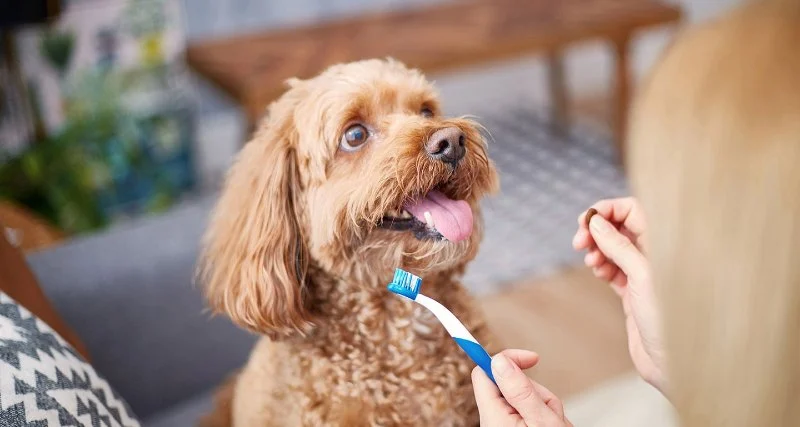
- Dog Toothbrush: A toothbrush designed specifically for dogs is ideal. These typically have softer bristles and are angled to fit comfortably into your dog’s mouth. Some dog toothbrushes even have dual ends to reach different areas of the mouth.
- Dog Toothpaste: Never use human toothpaste for dogs, as it contains ingredients that are harmful to them. Use dog-specific toothpaste that is safe to swallow and comes in flavors that dogs enjoy, like poultry or peanut butter.
- Dental Chews and Treats: Dental chews are an excellent supplement to brushing. They help scrape off plaque and tartar and freshen your dog’s breath.
- Dental Wipes: If your dog doesn’t like having their teeth brushed, dental wipes can be a good alternative. They can help remove plaque buildup and are easy to use for quick cleaning sessions.
5. Maintaining Good Dental Health in Dogs
Besides regular brushing, there are several other ways to help maintain your dog’s dental health:
- Routine Vet Checkups: Regular visits to the vet allow for professional dental cleanings and exams. Your vet can check for any underlying dental issues that may not be immediately obvious.
- Healthy Diet: A well-balanced diet with the right nutrients can support your dog’s overall health, including their teeth. Some dog foods are formulated to help reduce plaque and tartar buildup.
- Regular Chewing: Allowing your dog to chew on appropriate items, such as chew toys or dental bones, helps strengthen teeth and gums while reducing plaque.
By staying on top of your dog’s dental care, you’ll help them avoid painful conditions and ensure they lead a happy, healthy life. If you’re unsure about how to start brushing your dog’s teeth, consider asking your veterinarian for guidance on the best approach for your pet's specific needs.





 Hartford Animal Clinic4.0 (397 reviews)
 Mt Holly-Bantam Small Animal4.0 (23 reviews)
 Lakewood Veterinary Center4.0 (222 reviews)
 UrgentVet4.0 (145 reviews)
 Aboite Animal Clinic & House Call Practice4.0 (391 reviews)
 PetVet Vaccination Clinic5.0 (1 reviews)
 How to Spot and Treat Canine Hip Dysplasia: A Comprehensive Guide
 How to Prevent and Treat Pet Allergies to Food and Environment
 How to Spot and Treat Kidney Disease in Pets
 Top 7 Expert Tips for Ensuring Pet Safety at Home and On the Go
 How to Support a Dog Recovering from Surgery: Tips for Pet Owners
 Expert Advice on Emergency Pet Care Every Owner Should Know