
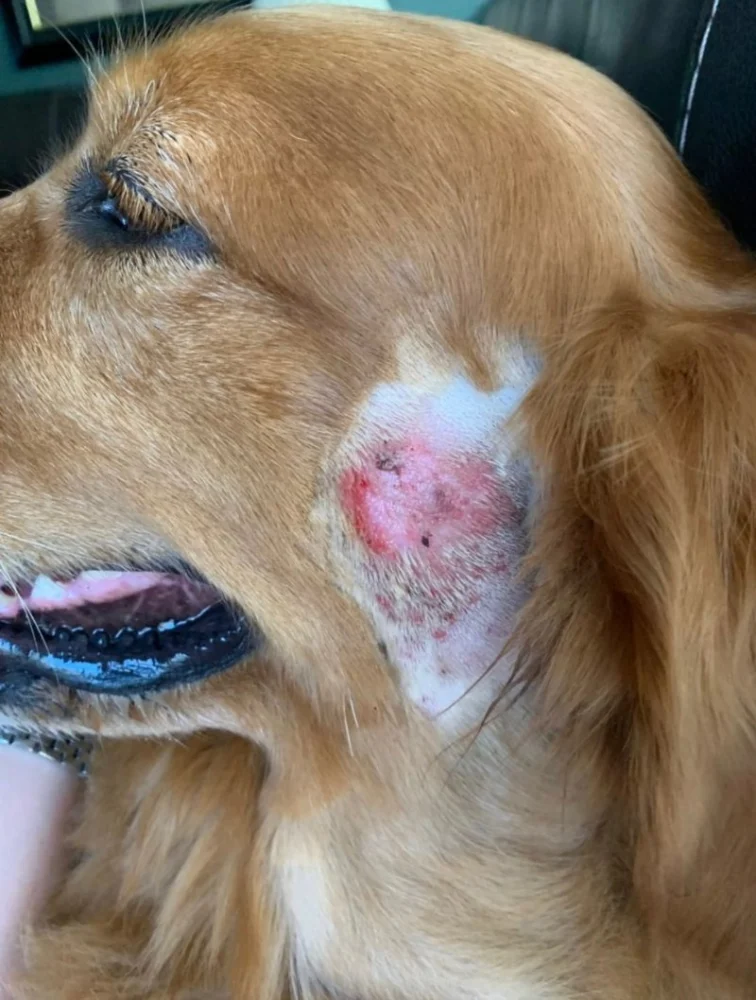
1. Understanding Hot Spots on Dogs
Hot spots, also known as acute moist dermatitis, are areas of a dog’s skin that become inflamed, irritated, and infected. These areas are typically red, moist, and sometimes oozing, which can cause significant discomfort for your dog. Hot spots can appear suddenly and grow quickly, leading to further skin damage if left untreated. Understanding what hot spots are, why they occur, and how to manage them is essential for every dog owner.
2. Symptoms of Hot Spots in Dogs
It’s important to recognize the signs of hot spots early to ensure your dog receives the necessary treatment. Here are some common symptoms:
1. Red, Inflamed Skin
The most noticeable sign of a hot spot is the presence of red, inflamed skin. These areas are often moist to the touch, and the skin may appear shiny. The hot spot can be localized or spread out across the body, depending on the severity of the infection.
2. Excessive Scratching or Licking
Dogs with hot spots will often scratch or lick the affected area constantly. The irritation caused by the hot spot can be intense, and the dog may try to relieve the discomfort by licking or chewing at the area.
3. Hair Loss Around the Affected Area
Hot spots often cause the fur around the infected area to fall out. This occurs due to the irritation, constant licking, and infection, which damage the hair follicles and prevent hair from growing back in that spot.
4. Foul Odor
Infected hot spots may emit a foul smell due to the bacteria present in the wound. If you notice an unpleasant odor, it’s a strong indication that the hot spot is infected and requires prompt treatment.
3. Common Causes of Hot Spots in Dogs
Hot spots can be triggered by a variety of factors, and understanding the root cause of your dog’s skin irritation can help prevent future occurrences. Some common causes include:
1. Allergies
Dogs with allergies to certain foods, pollen, or environmental factors may develop hot spots as a result of constant itching and scratching. Allergies cause the dog’s immune system to overreact, leading to irritated skin.
2. Fleas or Parasites
Fleas and other parasites are one of the most common causes of hot spots in dogs. The flea bite causes intense itching and irritation, leading the dog to scratch, lick, or bite the affected area, which can cause the skin to break and become infected.
3. Poor Grooming
Dogs with long or thick coats are more prone to hot spots, especially if they are not groomed regularly. Lack of grooming can cause matting, which traps moisture and bacteria against the skin, leading to the development of hot spots.
4. Moisture and Humidity
Hot spots often develop in areas of the body that are more prone to moisture, such as under the ears, between the paws, or on the belly. Excess moisture combined with warmth and humidity provides an ideal breeding ground for bacteria, which can lead to hot spots.
4. Treatment Options for Hot Spots
If your dog develops a hot spot, prompt treatment is essential to prevent the infection from worsening and spreading. Below are some effective treatments for managing hot spots:
1. Cleaning the Area
The first step in treating a hot spot is to clean the affected area. Use a mild antiseptic solution or a vet-recommended cleaning product to gently clean the wound. This helps remove bacteria and debris that may be causing the infection.
2. Topical Treatments
After cleaning the area, apply a topical treatment to soothe the skin and reduce inflammation. There are many over-the-counter creams and sprays specifically designed for hot spots. Be sure to consult your vet to ensure you're using the right product for your dog.
3. Medications
In some cases, your vet may prescribe oral medications or antibiotics to treat the infection and reduce inflammation. These medications help speed up the healing process and prevent the infection from spreading.
4. Prevent Licking and Scratching
One of the most difficult aspects of treating hot spots is preventing your dog from licking or scratching the affected area. To avoid further irritation, your vet may recommend using an Elizabethan collar (cone) to stop your dog from reaching the hot spot.
5. Bathing and Grooming
Regular bathing with a gentle, soothing shampoo can help keep your dog’s skin clean and free from irritants. If your dog has long fur, regular grooming is essential to prevent mats and tangles that can trap moisture and lead to skin problems.
5. Preventing Hot Spots in Dogs
Prevention is key to keeping your dog healthy and avoiding painful hot spots. Here are a few tips to prevent your dog from developing hot spots:
1. Regular Grooming
Regular grooming is essential to keep your dog’s skin and coat healthy. Brush your dog’s fur regularly to prevent matting and remove dirt and debris that can cause irritation. If your dog has a long coat, consider scheduling regular grooming appointments with a professional.
2. Flea and Parasite Prevention
Keep your dog on a flea and parasite prevention program. Flea bites are one of the most common causes of hot spots, so using a high-quality flea treatment is essential for protecting your dog.
3. Address Allergies
If your dog suffers from allergies, talk to your vet about an allergy management plan. This might include changing their diet, using allergy medications, or avoiding specific allergens to help prevent skin irritation and hot spots.
4. Avoid Moisture Traps
Keep your dog’s environment clean and dry, especially in areas prone to moisture. After baths or swimming, make sure to dry your dog thoroughly to prevent excess moisture from building up and causing skin issues.
6. Real-Life Success Stories
Many dog owners have successfully treated and prevented hot spots by following the right care routine. Here are a few success stories to highlight the importance of timely treatment:
1. Bella's Recovery
Bella, a 3-year-old Golden Retriever, had a hot spot on her back after a day of playing in the yard. Her owner cleaned the area, applied an antiseptic, and made sure Bella couldn’t reach the spot by using an Elizabethan collar. With prompt care, Bella’s hot spot healed quickly, and she returned to her normal, happy self within a week.
2. Max's Hot Spot Prevention
Max, a Border Collie, had recurrent hot spots due to flea allergies. After switching to a high-quality flea treatment and maintaining a regular grooming schedule, Max hasn’t had any more hot spots. His owner now stays vigilant about grooming and flea prevention, and Max enjoys healthy, itch-free skin.
In conclusion, hot spots are a common yet treatable issue in dogs. Early detection, prompt treatment, and prevention are key to ensuring that your dog remains comfortable and healthy. If you notice any symptoms of hot spots, consult your vet immediately. For pet care products and more information, visit Brothers Pets for the best solutions for your dog's skin health.




 Dairyland Animal Clinic SC3.0 (23 reviews)
 Commerce Village Veterinary Hospital4.0 (274 reviews)
 Faithful Friends Veterinary Clinic4.0 (122 reviews)
 Animal Care Services4.0 (210 reviews)
 Sheppard's Superior Labs0.0 (0 reviews)
 Fullerton Pet Clinic4.0 (46 reviews)
 How to Recognize and Treat Infections in Your Pet’s Mouth
 How to Spot and Treat Vomiting in Dogs
 Common Mistakes in Pet Vaccination and How to Avoid Them
 Prevent Overfeeding and Ensure Healthy Meals for Your Dog | Dog Feeding Tips
 Understanding Signs of Urinary Issues in Dogs: Symptoms and Solutions
 Best Methods for Crate Training a Puppy Successfully: Tips and Techniques