
Pet Drinking More or Less? Measure Before the Vet Call
On this page
Quick answer
If a pet suddenly drinks much more, much less, or cannot keep water down, contact a veterinarian. Do not restrict water unless the veterinarian specifically directs it. Measure what is offered and what remains over a set period, note spills and other water sources, and track urination, appetite, food type, medicines, activity, weather, and symptoms. These observations help triage but do not diagnose the cause.
This guide is for U.S. dog and cat households. Normal intake varies with body size, diet moisture, activity, environment, life stage, and health. Ask the pet’s veterinary team for individual thresholds.
Why drinking can change
A pet may drink more after exercise, warm weather, a change from wet to dry food, salty food exposure, nursing, or certain medicines. Increased thirst can also accompany kidney, hormonal, urinary, gastrointestinal, infectious, and other medical problems.
Drinking less may reflect a switch to wetter food, reduced activity, stress, mouth pain, nausea, weakness, limited access, a dirty bowl, or illness. Cats may drink from places people do not observe, while dogs can empty or spill a bowl quickly.
The pattern matters: sudden versus gradual, one unusual day versus persistent change, and thirst with increased urine versus thirst with little or no urine. Do not use one generic daily number to rule a problem in or out.
Signs that need urgent care
Seek prompt or emergency veterinary advice when altered drinking occurs with:
- Repeated vomiting or inability to keep water down
- Collapse, severe weakness, confusion, seizures, or marked distress
- Trouble breathing, a swollen or painful abdomen, or pale or abnormal-looking gums
- Straining to urinate, frequent attempts with little or no urine, crying in the litter box, or suspected urinary blockage
- Possible toxin, medication, salt, antifreeze, plant, or chemical exposure
- Heat exposure with heavy panting, weakness, vomiting, or altered behavior
- Very young, elderly, pregnant, nursing, or medically fragile status with rapid change
Call before forcing water. Aspiration, vomiting, obstruction, and other conditions can make unsupervised syringing unsafe.
How to measure water intake
- Ask the veterinarian about timing. Do not delay care to complete a log when symptoms are concerning.
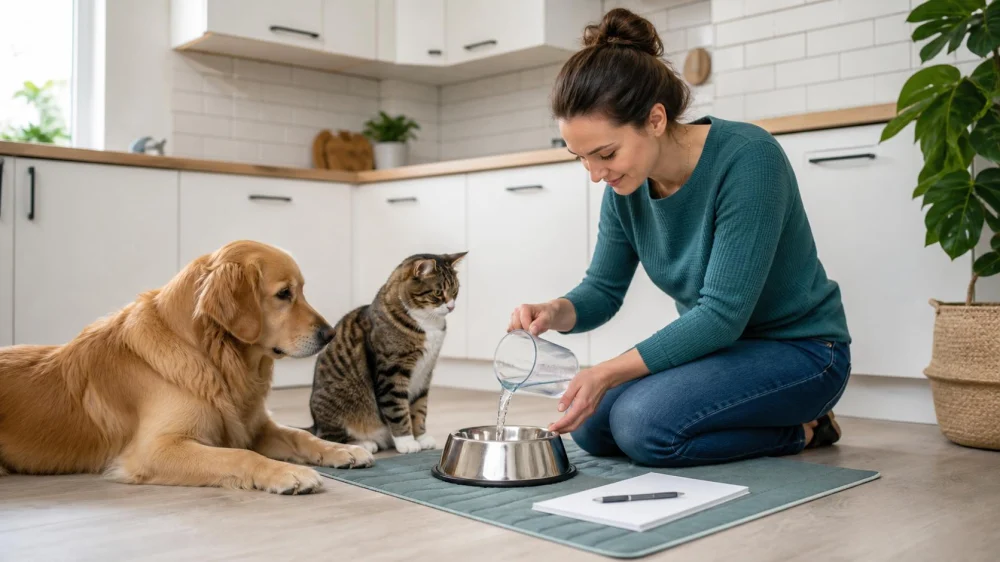
- Use a known container. Measure the amount placed in a clean bowl with a kitchen measuring vessel.
- Record the start time. Keep normal access unless the veterinary team instructs otherwise.
- Track additions. Measure every refill and note ice, broth, fountain reservoirs, outdoor water, and water mixed with food.
- Measure what remains. At the chosen endpoint, subtract the remaining amount while noting spills and evaporation.
- Repeat consistently. Use the same bowl and interval for a short veterinary-directed monitoring period.
- Report body weight. A recent accurate weight helps the veterinarian interpret the amount.
Do not change food, exercise, bowl placement, or flavoring solely to create a “clean” measurement unless the veterinarian advises it. The goal is to describe ordinary intake safely.
Track the full context
Water data is more useful with a brief daily record:
- Food brand and form, including dry, canned, fresh, or mixed diet
- Meals eaten, appetite changes, treats, and possible scavenging
- Urination frequency, volume impression, accidents, color changes, and straining
- Vomiting, diarrhea, stool change, drooling, coughing, or mouth discomfort
- Energy, sleep, exercise, panting, and environmental temperature
- All prescriptions, supplements, parasite products, and recent dose changes
- Recent travel, boarding, household changes, or access to another water source
Photographs of urine or vomit may help describe appearance, but keep the pet and household safe and do not handle bodily fluids without appropriate hygiene.
Methods for multi-pet homes
A shared bowl cannot show which pet drank. If individual measurement is needed, ask the veterinarian about safe short-term separation with separate bowls, meals, litter boxes, and normal comfort. Separation must not create stress, overheating, missed medication, fighting, or restricted access.
Microchip-reading bowls or cameras may help observe patterns, but devices can misread, malfunction, or change behavior. Do not let technology delay a veterinary call.
For cats, count litter-box clumps only as a rough trend because litter type, box sharing, cleaning schedule, and urine concentration affect appearance. For dogs, supervised leash breaks can help identify frequency and straining without forcing the pet to wait.
Prepare for the veterinary call
Provide the pet’s species, age, breed or type, current weight, medical conditions, medicines, usual diet, when the change began, measured intake if available, urination pattern, and all accompanying symptoms. Mention possible toxin access and recent medication changes immediately.
Ask whether the pet needs emergency care, a same-day exam, laboratory testing, a urine sample, or continued home monitoring. Confirm whether normal water access and regular medicines should continue.
If collecting a urine sample is requested, use the clinic’s container, method, storage, and timing instructions. Do not improvise a sample when it could be contaminated or delay needed care.
What to avoid
- Do not restrict water to reduce urination or make a pet “drink normally.”
- Do not add salt, sugar, flavoring, electrolyte products, or broth without veterinary approval.
- Do not give human medicines or another pet’s prescription.
- Do not force water by syringe when the pet is weak, vomiting, resisting, or unable to swallow normally.
- Do not wait for a complete 24-hour log when urgent signs are present.
- Do not assume increased thirst is behavioral until medical causes are considered.
Limitations and important notes
- Diet moisture can change bowl drinking without changing total water intake in the same way.
- Spills, fountains, toilets, outdoor bowls, and prey can make measurements inaccurate.
- Urination and drinking must be considered together, especially when urine output falls.
- Home hydration checks cannot reliably rule out dehydration or disease.
- Sudden urinary obstruction signs are emergencies, particularly in cats.
Sources and evidence notes
This article reflects broad veterinary triage practice: do not restrict water without direction, document intake and output with context, identify urgent symptoms, and seek examination for persistent or sudden change.
Use the pet’s veterinary team, animal emergency service, or animal poison service for case-specific decisions. No intake amount, diagnosis, or home treatment is prescribed here.
Frequently asked questions
How much water should my pet drink?
There is no single amount for every pet. Weight, food moisture, activity, weather, and health matter. Ask the veterinarian for an individual range and measurement plan.
Should I remove water overnight to measure intake?
Not unless a veterinarian specifically directs it. Restricting access can be unsafe and can distort the pattern you are trying to observe.
Does wet food explain less bowl drinking?
It can contribute because the food contains water, but a sudden or concerning change still deserves veterinary discussion.
What if my pet drinks from the toilet?
Prevent access because cleaning chemicals and contamination may be harmful. Tell the veterinarian that unmeasured water was available.
Can stress change drinking?
It can affect behavior, but medical causes should not be dismissed. Record the context and ask the veterinary team.
Conclusion and next steps
A drinking change becomes useful clinical information when paired with timing, measured access, urine pattern, diet, medicines, environment, and symptoms. Keep normal water available unless directed otherwise, document without delaying care, and call promptly for sudden changes, urinary difficulty, vomiting, weakness, heat exposure, or possible toxin ingestion.

 Countryside Animal Clinic PC4.0 (71 reviews)
 Petco4.0 (909 reviews)
 Petco4.0 (677 reviews)
 Higley Groves Animal Hospital4.0 (523 reviews)
 Avalon Veterinary Hospital4.0 (738 reviews)
 PetVet Vaccination Clinic0.0 (0 reviews)
 How to Help Pets Cope with Separation Anxiety: Tips and Solutions
 How to Provide Comfort for Pets with Cancer
 Is Your Pet’s Mental Health on Track? Signs, Causes & What to Do
 Preventing Obesity in Indoor Dogs with Daily Exercise – Effective Tips
 How to Recognize and Treat Infections in Your Pet’s Mouth
 How to Safely Clean Your Pet’s Ears and Prevent Infections: Expert Tips