
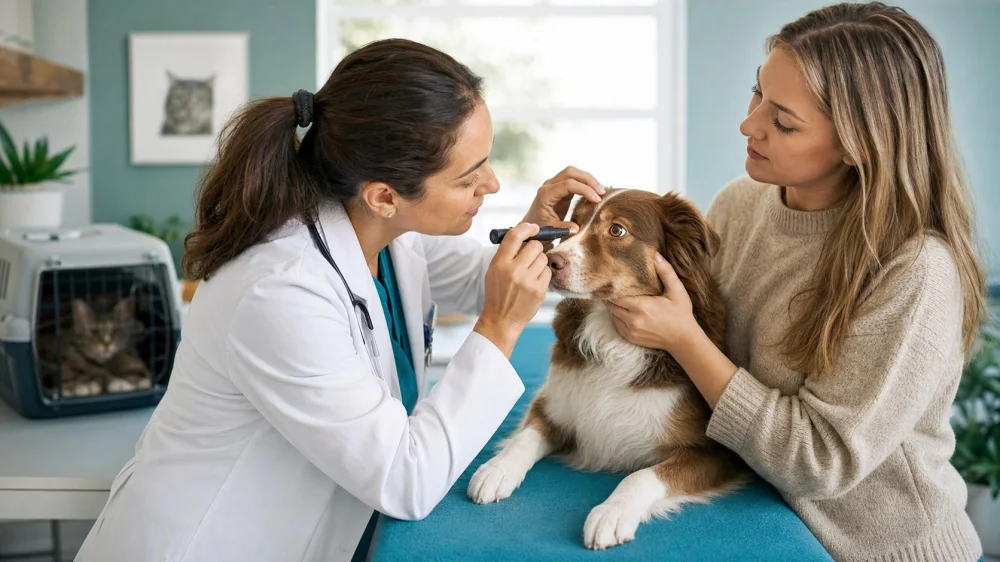
Pet Eye Problems: When to Seek Urgent Veterinary Care
On this page
Quick answer
Contact a veterinarian promptly for a red, painful, cloudy, injured, bulging, or suddenly vision-impaired eye. Go to emergency care for major trauma, a displaced eye, chemical exposure, penetrating object, sudden blindness, severe swelling, or uncontrolled bleeding. Do not use leftover drops or human eye medicine; some products can worsen an ulcer or delay essential treatment.
Why eye problems can be urgent
Pet eye disease can look minor while threatening comfort or vision. Dogs and cats may continue eating or playing despite significant eye pain. Conditions that share similar signs—such as surface injury, infection, inflammation, pressure problems, dry eye, or a foreign body—require different treatment, so appearance alone cannot provide a safe diagnosis.
Veterinarians may need to examine the cornea, measure tear production or eye pressure, stain the surface, and inspect structures inside the eye. Delaying that examination can allow a treatable problem to progress.
Emergency signs
Seek an emergency veterinary hospital now, or follow your veterinarian’s immediate instructions, when you see:
- An eye displaced from its socket, an obvious puncture, or a foreign object embedded in the eye.
- Severe blunt trauma, an animal bite near the eye, uncontrolled bleeding, or a torn eyelid.
- Chemical, cleaning-product, or irritating powder exposure.
- Sudden inability to see, disorientation, or pupils that are newly unequal with other abnormal signs.
- A rapidly enlarging or bulging eye, marked swelling, or severe pain.
- Eye signs combined with collapse, difficulty breathing, seizure, or major head trauma.
Call while traveling if possible so the clinic can prepare and give transport instructions. Do not press on the eye or remove an embedded object.
Signs for a same-day examination
The American College of Veterinary Ophthalmologists identifies redness, squinting, an elevated third eyelid, tearing, and rubbing as signs of ocular discomfort and advises prompt veterinary care. Other reasons to request a same-day examination include:
- Keeping one eye partly or fully closed.
- Cloudiness, a blue or hazy surface, a visible spot, or a change in eye color.
- New thick, yellow, green, bloody, or excessive discharge.
- Repeated pawing or rubbing at the face.
- A pupil that remains unusually large, small, or different from the other pupil.
- Light sensitivity, reluctance to move, or bumping into objects.
- Any new eye change in a flat-faced breed whose eyes are more exposed.
Even mild squinting matters because it is a pain signal. Waiting several days to see whether pain resolves is not ideal for an eye.
What to observe and record
- Note when the change began and whether it was sudden or gradual.
- Record one eye or both, and photograph them in the same neutral light without flash.
- Describe discharge by color and amount without wiping away all evidence before the visit.
- List possible trauma, outdoor debris, shampoo, cleaners, sprays, or recent grooming.
- Note rubbing, squinting, appetite, energy, navigation, and response to light.
- Bring all current medications and the package for any possible chemical exposure.
Do not force the eyelids open for a photograph. A short video of blinking or navigation may be helpful if it can be recorded without stress.
Safe first steps
Prevent rubbing by keeping the pet calm and using a correctly fitted protective collar if one is already available and can be placed safely. Dim bright light and separate the pet from other animals. For chemical exposure, contact a veterinarian or emergency clinic immediately and follow the product-specific and professional rinsing instructions while arranging care.
Transport cats in a secure carrier and dogs with controlled movement. If the eye is displaced or severely injured, avoid pressure around the neck and face and follow the emergency clinic’s directions.
What to avoid at home
- Do not use redness-relief drops, contact-lens solution, ointment, or human medication unless a veterinarian directs it.
- Do not reuse a previous pet prescription; the current problem may be different.
- Do not place ear medicine in an eye. The FDA warns that using medication by the wrong route can cause harm.
- Do not pull out an embedded object or probe under the eyelids.
- Do not apply pressure, patch the eye, or let the pet rub it on furniture.
- Do not give human pain medicine unless a veterinarian specifically prescribes it for that animal.
Veterinary visit checklist
- Timeline, photos, and videos.
- Medication and supplement list.
- Possible exposure package or product name.
- Known allergies and previous eye conditions.
- Protective collar and secure carrier or leash.
- Questions about medication route, frequency, storage, recheck timing, and warning signs.
Important notes and limitations
This article is general triage information for pet owners in the United States. It cannot determine the cause or severity of an individual eye change and is not a substitute for examination. Species, breed, age, trauma, medications, and underlying disease alter risk. Follow the treating veterinarian’s instructions, including where and how quickly to seek care.
Evidence and sources
The urgency guidance is based on veterinary ophthalmology education from the American College of Veterinary Ophthalmologists and medication-safety information from the U.S. Food and Drug Administration. The sources support recognizing discomfort and avoiding medication-route errors; the exact diagnosis and treatment still require a veterinarian.
- ACVO: Signs of Ocular Discomfort in Your Pet
- ACVO: Blunt Ocular Trauma
- FDA: Medications for Your Pet—Questions for Your Vet
Frequently asked questions
Is a red pet eye always an emergency?
Not every red eye needs a middle-of-the-night visit, but redness can accompany painful or vision-threatening disease. Contact a veterinarian promptly for triage, especially with squinting, cloudiness, trauma, discharge, or vision change.
Can I rinse my pet’s eye with water?
For a suspected chemical exposure, immediate professional guidance is important because the substance affects the response. For other problems, do not delay examination by repeatedly rinsing or treating at home.
Can I use leftover antibiotic eye drops?
No unless a veterinarian examines or specifically advises treatment for this episode. Some eye medicines are inappropriate when the cornea is damaged, and an opened bottle may be contaminated or expired.
Why is my pet acting normal despite squinting?
Pets can remain active and eat while an eye hurts. Squinting itself is a meaningful discomfort sign and should not be dismissed because other behavior seems normal.
Should I clean discharge before the appointment?
You may gently remove material from surrounding fur if directed and if the pet tolerates it, but do not rub the eye. A photo before cleaning can help document the amount and appearance.
Next steps
Compare both eyes in neutral light without touching them, record the signs and timeline, prevent rubbing, and call a veterinarian for triage. Choose emergency care immediately when trauma, chemical exposure, displacement, sudden blindness, severe pain, or rapid swelling is present.




 Fox Run Equine Center3.0 (26 reviews)
 Midlothian Veterinary Clinic4.0 (359 reviews)
 Animal Medical Center: Roussel Amy DVM4.0 (26 reviews)
 Puppy Dreams - Arlington4.0 (2182 reviews)
 Rock Road Animal Hospital4.0 (272 reviews)
 Banfield Pet Hospital4.0 (218 reviews)
 What Every Pet Owner Should Know About Pet Behavior
 Understanding Pet Grooming Tools: What You Need for Effective Care
 Tips for Keeping Indoor Cats Happy and Stimulated
 Parasite Prevention: What Vets Want You to Know - Expert Tips for Pet Care
 Best Practices for Crate Training Your Puppy
 Dog Fibrotic Myopathy Symptoms in German Shepherds Explained