
Pet First Aid Kit: Supplies, Limits, and Monthly Checks
On this page
Quick answer
A useful pet first aid kit contains clean wound-covering supplies, gloves, simple handling and transport items, current medical information, and verified emergency contacts. Build it with your veterinarian because species, size, health conditions, and travel plans change what is appropriate. First aid is temporary support while you contact a veterinary professional; it is not a home diagnosis or a substitute for urgent treatment.
This guide is for dog and cat caregivers in the United States preparing for everyday incidents or travel. Owners of birds, reptiles, rabbits, small mammals, horses, and other animals need species-specific advice. Ask your regular veterinarian what to include, what never to use, and which clinic can help when the practice is closed.
What a pet first aid kit can do
A pet first aid kit is a portable set of supplies and information for safer handling, simple temporary protection, and faster communication during an animal health emergency. Its most important functions are often to help prevent further injury, keep essential details together, and make transport to veterinary care more organized.
It is best for limited actions that a veterinarian has explained in advance. It is not ideal for choosing medicines, treating poisoning without instructions, closing deep wounds, setting fractures, or deciding that an injured animal is safe to remain at home.
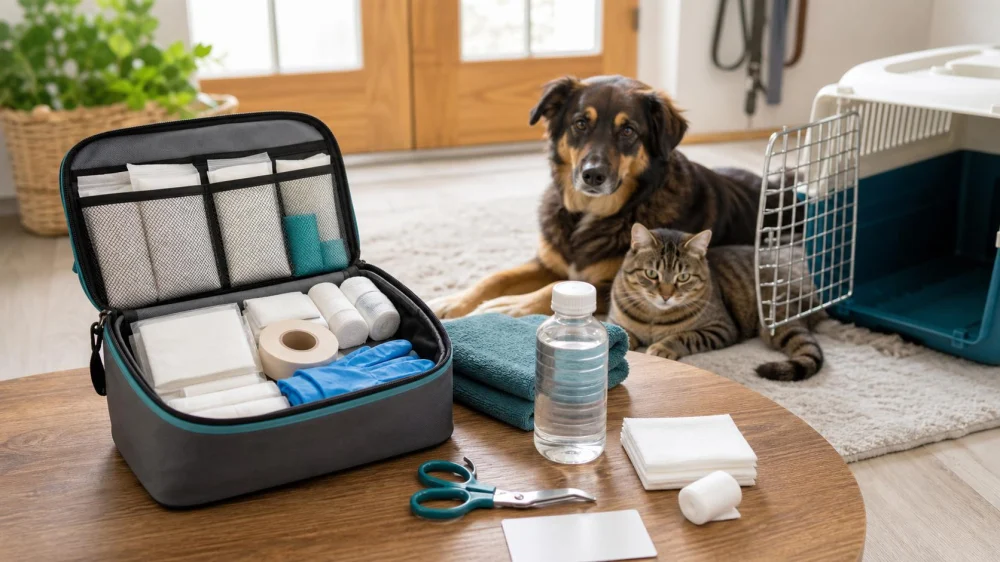
Keep the kit easy for an adult caregiver to reach but secured from pets and children. A bright, water-resistant container with internal pouches makes supplies easier to find. Mark the outside as pet first aid without placing sensitive personal information where it is publicly visible.
Core supplies to discuss with your veterinarian
The exact list should reflect your pet and your veterinarian's guidance. Common categories include:
- Disposable non-latex gloves: Use them as a hygiene barrier when handling blood, body fluids, or contaminated material. Gloves do not replace handwashing.
- Sterile gauze pads and gauze rolls: These can help cover an area or support direct pressure when a professional has told you how. Avoid wrapping so tightly that circulation is reduced.
- Non-adherent pads: These may protect a wound surface during transport without sticking as readily as ordinary fabric.
- Self-adhering bandage material and medical tape: These can hold padding in place, but an incorrectly applied wrap can cause serious pressure injury. Practice only under veterinary instruction.
- Blunt-tip bandage scissors: Choose a size you can control and store them with the blades protected.
- Clean towels or cloths: They may help with gentle restraint, warmth, transport, or direct pressure. A frightened or painful pet may bite or scratch even if normally calm.
- Sterile saline: Ask your veterinarian which plain product is appropriate for rinsing and how it should be used. Do not substitute medicated eye products or homemade mixtures.
- Tweezers: They may be useful for visible surface debris, but digging into tissue can worsen injury. Leave embedded or uncertain objects for a veterinary professional.
- Instant cold pack: Store it so it cannot rupture. Place a cloth barrier between a cold pack and the pet, and ask a veterinarian when cold application is suitable.
- Oral syringe without a needle: Include one only if your veterinarian has explained a specific safe use. Never force water, food, or medicine into an animal that cannot swallow normally.
Do not add a drug, antiseptic, vomiting agent, ointment, pain reliever, or supplement simply because it appears on a generic checklist. A product that is common in human first aid may be unsafe for a pet, and safe choices can differ by species, weight, disease, and exposure. Store prescribed medication separately in its original labeled container and follow the prescribing veterinarian's instructions.
Information and safe transport items
Information can save more time than an extra tool. Keep a printed card and a protected digital copy containing:
- your regular veterinarian's daytime and after-hours instructions;
- the nearest appropriate emergency veterinary hospital and an alternate;
- an animal poison control contact chosen with your veterinarian, including any fee expectations;
- the pet's name, species, breed or type, age, weight, microchip number, medical conditions, allergies, current medicines, and veterinarian-approved handling notes;
- your contact details and an authorized backup caregiver;
- a current photo and concise vaccination or medical summary; and
- your pet insurance details, if applicable.
Add a secure leash or slip lead for a dog, a familiar carrier for a cat or small dog, and a towel or blanket appropriate to the animal. Store the carrier where it can be reached quickly. Transport equipment must allow ventilation and must not compress the chest, neck, or an injured area.
For road trips, identify veterinary hospitals along the route before departure. A clinic listed online may have changed its hours or service scope, so confirm contact details directly. Never leave the kit or prescribed medicines in a vehicle where heat or freezing conditions could damage them.
Build and check the kit
- Ask for a pet-specific review. Bring a draft list to your veterinarian and discuss your animal's conditions, behavior, size, and likely travel situations.
- Choose a secure container. Use compartments or sealed bags to separate clean supplies, documents, and items that could leak or cut.
- Label contents and limits. Add plain instructions supplied by your veterinarian. Do not rely on memory during a stressful event.
- Practice safe handling. Learn how to approach an injured pet, use the carrier, and protect yourself. Do not practice painful procedures on a healthy animal.
- Check the kit monthly. Confirm that contact details are current and inspect seals, packaging, batteries, and expiration dates.
- Refresh after use. Replace opened, contaminated, wet, expired, or missing supplies immediately.
Keep a short inventory on top so another caregiver can identify missing items. If you maintain home and travel kits, check both; copied documents and forgotten supplies can drift out of date.
What not to improvise
Do not give a human pain medicine, leftover prescription, another animal's drug, or a changed dose unless a veterinarian explicitly directs it for that pet. Do not induce vomiting or give charcoal, milk, oil, food, salt, or any other substance after a suspected poisoning unless a veterinarian or animal poison control professional tells you to do so.
Do not pull out an embedded object, probe a deep wound, straighten a limb, apply a tourniquet without professional direction, or place a muzzle on an animal that is vomiting, struggling to breathe, unconscious, or has facial injury. These situations need immediate professional guidance and careful transport.
Home first aid should never delay a call. When contacting a clinic, be ready to describe what happened, when it happened, the pet's current behavior and breathing, any bleeding, the exact product or substance involved, and what you have already done.
When to seek urgent veterinary help
Contact a veterinarian or emergency veterinary hospital promptly for breathing difficulty, collapse, unconsciousness, seizure, uncontrolled bleeding, severe pain, major trauma, suspected poisoning, heat illness, serious burns, eye injury, abdominal swelling, inability to urinate, repeated unproductive retching, sudden weakness, paralysis, or rapid deterioration. This list is not exhaustive.
The U.S. Food and Drug Administration advises pet owners seeking veterinary advice during an emergency to call their veterinarian, an emergency animal hospital, or an animal poison control center. If you cannot reach your regular clinic, use the emergency plan you verified in advance. If a person is injured or exposed to a pet medication or toxin, seek human medical or poison-control help as appropriate.
Sources and evidence notes
This article uses general preparedness principles from the American Veterinary Medical Association pet first aid checklist and emergency-contact guidance from the FDA Center for Veterinary Medicine. Product instructions and your veterinarian's advice take priority because safe contents and techniques depend on the individual animal. The sources do not make a generic kit a substitute for examination or treatment.
Frequently asked questions
Can I use a human first aid kit for my pet?
Some basic physical supplies may overlap, but a human kit may also contain medicines or products that are inappropriate for animals. Build a pet-specific inventory with your veterinarian, separate it clearly, and prevent accidental access.
Should I keep hydrogen peroxide in the kit?
Do not use it to induce vomiting or on a wound unless a veterinary professional gives explicit, situation-specific instructions. Inducing vomiting can be dangerous for certain substances and symptoms, and a product may cause harm when used incorrectly.
Where should the kit be stored?
Keep it dry, temperature-controlled, secured from animals and children, and easy for an adult to reach. Do not store it long-term in a hot or freezing vehicle. Make sure backup caregivers know its location.
How often should emergency numbers be checked?
Review them at least monthly and before travel. Confirm hours and services directly because websites and map listings can be outdated. Keep both printed and offline digital copies.
Does having a kit mean I can treat minor injuries at home?
Not automatically. An apparently minor injury can hide pain, contamination, or deeper damage. Call your veterinarian for advice, especially when the cause is uncertain, symptoms change, or you cannot examine the pet safely.
Next steps
Schedule a first aid kit review at your pet's next veterinary visit. Verify an after-hours clinic, place current medical information in the container, and practice getting your pet calmly into the carrier. Set a monthly reminder to check contacts, seals, expiration dates, and missing supplies. The goal is not to become the veterinarian; it is to make safer decisions and reach appropriate care without avoidable delay.





 Langley Animal Clinic4.0 (290 reviews)
 SoCal Pet Hospital4.0 (140 reviews)
 Banfield Pet Hospital3.0 (248 reviews)
 Churchman Animal Hospital4.0 (145 reviews)
 50 Fathoms Pet Shop4.0 (964 reviews)
 Metairie Small Animal Hospital4.0 (326 reviews)
 Pet Medication Refill Planning: Avoid Unapproved Dose Changes
 How to Manage Your Pet’s Chronic Pain with Alternative Therapies
 How to Spot and Treat Chronic Skin Conditions in Pets
 How to Tell If Your Dog Has Heart Disease — Coughing, Tiredness and Fainting Signs
 How to Provide Safe and Effective Flea Treatment for Your Pet" — Optimized for the target audience and search engines.
 Pet Bedding Hygiene: A Wash-and-Inspect Routine