
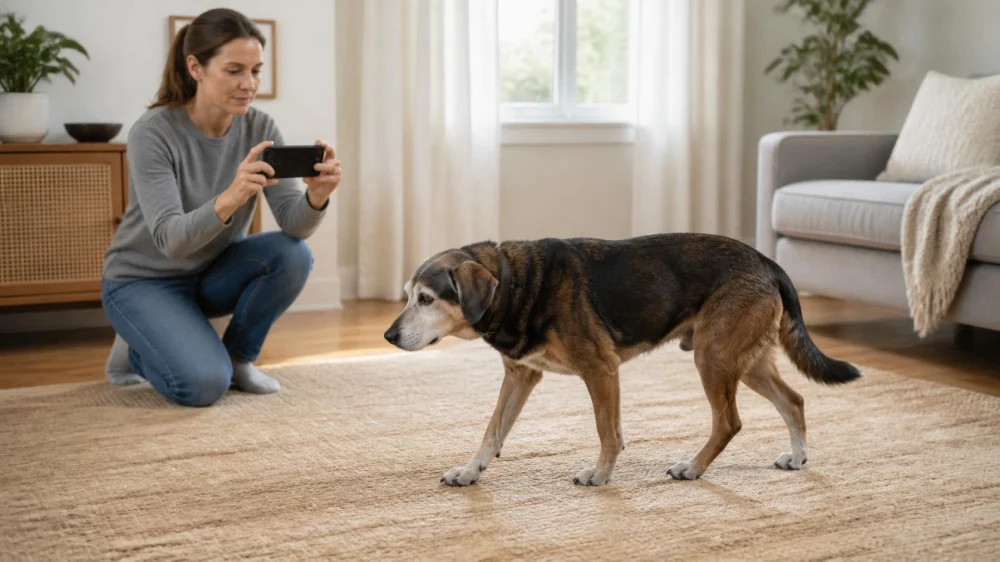
Pet Symptom Videos: Record Useful Clips for Your Veterinarian
On this page
Quick answer
A short pet symptom video can show your veterinarian what happens at home when the behavior is absent in the clinic. Record only naturally occurring signs, keep the pet and people safe, show the whole body and environment, capture sound when relevant, and note the date, duration, trigger, and recovery. Contact the veterinary team promptly; never delay urgent care or provoke a symptom to improve the footage.
This guide is for pet owners in the United States preparing information for a veterinarian. A video is supporting history, not a diagnosis, triage decision, or substitute for an examination. Ask the clinic how it accepts files before sending health information.
When a video may help
A pet symptom video is a brief recording of a naturally occurring behavior or physical sign intended to help the veterinary team understand what the owner observes outside the clinic. It can be useful when a sign is intermittent or changes in an unfamiliar setting.
- Changes in walking, standing, rising, using stairs, or posture
- Unusual breathing sounds, cough-like events, sneezing, or voice changes
- Episodes of shaking, staring, imbalance, collapse, or unusual movement
- Changes around eating, drinking, swallowing, litter-box use, or elimination
- Repetitive scratching, licking, head movement, or discomfort behavior
- Behavior or interaction changes that occur in a specific home context
These examples do not identify a cause. Similar-looking events can have different meanings, and some require immediate care. Contact the veterinarian or emergency service for triage rather than using online labels.
What to note before recording
Write down the observation first when it is safe:
- Date and approximate start time
- What the pet was doing immediately before the event
- Whether the sign began suddenly or gradually
- How long the event lasted and whether it fully stopped
- What happened afterward, including recovery or continued change
- Recent food, medication, supplement, activity, travel, injury, exposure, or routine changes
- Whether another pet or person in the household has similar signs
Use the actual medication label when reporting name, strength, and directions. Do not guess from pill color or an old list. Do not change, repeat, stop, or share a medication based on a video unless the prescribing veterinarian directs it.
How to record a useful clip
- Stay at a safe distance. Do not crowd a frightened, painful, disoriented, or aggressive pet. Keep children and other animals away.
- Use steady framing. Hold the phone horizontally when that shows the whole body, or rest it on a stable surface. Avoid rapid zooming.
- Show context first. Begin with the pet's full body and the relevant area, such as the normal floor, bed, litter box, food station, or walking path.
- Capture the sign naturally. Let the event happen without calling, touching, feeding, exercising, or positioning the pet solely to reproduce it.
- Keep sound on. Breathing, vocalization, footfall, or environmental sound can provide context. Turn off music or television when safe.
- Include scale. A normal doorway, floor tile, or familiar object can help show movement distance, but do not place an object beside a distressed pet.
- Record the recovery. When the situation is not urgent, a brief view of what happens immediately after the event may be useful.
- Stop promptly. End the recording when safety, urgent care, or the pet's comfort requires your full attention.
Short focused clips are usually easier to review than a long video containing little relevant activity. Keep the original file when possible; heavy editing, filters, slow motion, or removed audio can hide context.
What not to do for a video
- Do not make a limping pet run, jump, use stairs, or walk on a slippery floor.
- Do not offer food or water to provoke swallowing, vomiting, coughing, or another event.
- Do not restrain a pet to expose pain, force a joint to move, open the mouth, or press a swelling.
- Do not recreate a suspected toxin, food, exercise, sound, or environmental exposure.
- Do not put your hands near a pet that may bite or scratch because of pain, fear, confusion, or neurologic change.
- Do not film instead of moving the pet away from traffic, water, stairs, heat, fire, chemicals, or another immediate hazard.
Organize and share the file
Give the file a simple private name with the date and sequence, such as “2026-08-17-event-1.” In a separate note, include the pet's name, species, age if known, event timing, duration, and the key observation. Keep interpretations separate: “left rear foot did not touch the floor for five steps” is more useful history than “hip injury” when no veterinarian has made that diagnosis.
Ask the clinic whether it accepts a patient portal upload, secure email, text, or another system, and whether file-size limits apply. Do not post the video publicly to obtain a diagnosis. Public sharing can expose your location, home interior, family members, conversations, and medical information.
Veterinary appointment checklist
- Original video files and a one-line description of each
- Timeline of the first event, most recent event, frequency, and change over time
- Current medication and supplement containers or accurate label photos
- Food, treat, and feeding information relevant to the concern
- Previous records or test results not already held by the clinic
- Two or three questions about next steps, monitoring, and return precautions
- Carrier, leash, restraint, and arrival plan requested by the clinic
Urgent-care boundaries
Call a veterinarian or emergency clinic immediately when a pet has trouble breathing, repeated collapse, uncontrolled bleeding, severe injury, suspected poisoning, inability to urinate, prolonged or repeated seizure-like activity, severe distress, or another rapidly worsening sign. This is not a complete triage list. Follow the clinic's instructions and local emergency resources.
If a short video can be captured without delaying the call, transport, or first-aid direction, it may help. Otherwise describe what you saw. The lack of a video should never prevent you from seeking care.
Limitations and important notes
- Camera angle, frame rate, lighting, background sound, and compression can change how movement or breathing appears.
- A video cannot provide a physical examination, vital signs, laboratory testing, imaging, or full environmental history.
- Veterinary teams may be unable to review unsolicited files before an appointment or emergency call.
- Pet species differ greatly. Advice appropriate for a dog or cat may not apply to a bird, reptile, rabbit, or other animal.
- Protect other people from appearing or speaking in the recording without permission.
Frequently asked questions
How long should a pet symptom video be?
Capture enough to show the start, relevant action, and immediate recovery when safe. A focused short clip is often easier to review, but ask the clinic if it has a preferred length or file size.
Should I narrate the video?
Briefly state timing or context if it does not cover important sound. A separate written note may be better when breathing, coughing, footfall, or vocalization needs to remain clear.
Can a veterinarian diagnose from the video?
The veterinarian may use it as part of the history, but diagnosis often requires examination and additional information or testing. Do not expect the clip alone to identify the cause.
What if the symptom stops before I can record it?
Write down exactly what you observed, the timing, duration, trigger, and recovery. Contact the veterinary team; a clear description is still valuable.
Should I use slow motion?
Keep the normal-speed original. The veterinary team can decide whether a slower review is useful. Do not replace the source with an edited version.
Evidence notes
AAHA guidance for specialist and senior-pet visits notes the value of owner observations, timelines, questions, records, and home photos or videos, while emphasizing that the veterinary team performs diagnosis and care decisions. See AAHA's specialist-visit preparation guide, AAHA's senior appointment guidance, and AAHA's guidance on veterinary diagnosis.
Next steps
Save the clinic's contact and file-sharing instructions now. If a sign occurs, protect the pet first, record only when safe, preserve the original clip, write a factual timeline, and call the veterinary team. Bring the video, medication labels, and focused questions to the visit.






 Beaumont Animal Clinic4.0 (345 reviews)
 Vinegar Hill Veterinary Group- Dumbo4.0 (499 reviews)
 Harrison Animal Hospital4.0 (10 reviews)
 Aeolus Animal Hospital & Equine4.0 (108 reviews)
 Greenville Animal Hospital4.0 (290 reviews)
 Vetco Vaccination Clinic3.0 (7 reviews)
 The Benefits of Regular Exercise for Your Pet's Overall Health: Why It's Essential
 How to Spot and Treat Vomiting in Dogs
 Pet Bedding Hygiene: A Wash-and-Inspect Routine
 The Importance of Dental Chews for Cats and Dogs: Keeping Pets’ Teeth Healthy
 How to Build a Pet-Friendly Garden: Tips for Safe Outdoor Spaces
 How to Spot and Treat Pet Urinary Issues