
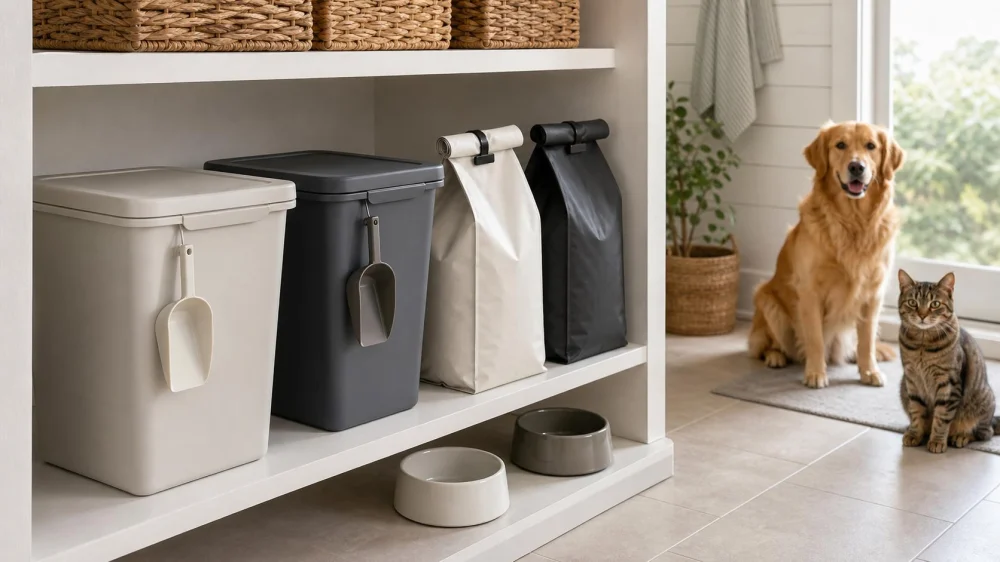
Pet Food Storage: Protect Freshness and Prevent Mix-Ups
On this page
Quick answer
Store pet food according to the package: keep dry food cool and dry in its original bag inside a clean sealed container when practical, refrigerate opened wet or fresh food promptly, and preserve lot, expiration, and feeding information. Use a dedicated clean scoop, wash bowls and storage containers, keep products away from pests and children, and never top new food onto old crumbs that can hide spoilage.
This guide is for U.S. dog and cat households. Product instructions differ, especially for therapeutic diets, raw products, frozen foods, supplements, and multi-pet homes. The manufacturer and veterinarian are the appropriate sources for product-specific storage and feeding directions.
Keep the original product information
The original bag, can, tray, or box connects the food to its ingredient list, feeding guide, expiration or best-by date, lot code, manufacturer contact, and recall information. Throwing away that packaging can make a product complaint, reaction review, or recall check harder.
If you use a storage bin, place the closed original bag inside rather than pouring food loose when the container design permits. This preserves the barrier and product identity while the outer bin adds protection. If the package must be removed, photograph or retain the full label and lot code and mark the bin clearly before filling.
Do not rely on memory to distinguish similar foods. A prescription or veterinary therapeutic diet should remain clearly identified and separated from ordinary food.
Store dry food carefully
- Choose a cool, dry location. Avoid direct sun, high humidity, garages with extreme temperatures, and areas near cleaning chemicals.
- Close the bag after every use. Roll or seal it according to the packaging and close the outer container.
- Use a dedicated scoop. Keep hands and wet utensils out of the food. Do not use the scoop for different diets without cleaning it.
- Finish one batch before adding another. Topping off can leave old crumbs and oils at the bottom and mix lot codes.
- Wash between bags. Empty crumbs, clean with an appropriate food-safe method, and dry the container completely before adding a new sealed bag.
- Inspect regularly. Look for moisture, insects, damage, unusual odor, oiliness, mold-like growth, or a broken seal.
Buy a package size the household can use within the product's recommended period after opening. A very large bag may cost less per unit but can lose quality or become difficult to protect before it is finished.
Handle wet, fresh, and frozen food
Unopened cans and shelf-stable trays should be stored according to the label, protected from temperature extremes, rust, puncture, swelling, and damaged seams. Refrigerate opened portions promptly in a clean covered container as directed. Do not leave wet food at room temperature beyond the product or veterinary guidance.
Fresh refrigerated and frozen products depend on temperature control. Keep the cold chain during transport, follow thawing instructions, and do not refreeze unless the manufacturer says it is safe. Mark the opening or thawing date when the package does not provide an easy way to track it.
Raw pet foods can contain pathogens that affect animals and people. Follow current veterinary and public-health guidance for handwashing, surface separation, thawing, bowl cleaning, and household members at higher risk. Do not wash raw products in a way that splashes contaminated liquid around the kitchen.
Prevent pet and product mix-ups
Multi-pet homes need a simple identity system. Assign each food a location, scoop, and feeding station. Use the pet's name and clear product description on a card or bin, but preserve the original label. If colors are used, pair them with words or shapes so the system does not rely on color alone.
Keep medications and supplements separate from food unless a product is intentionally mixed for immediate feeding. Prepare one animal's meal at a time and check the bowl before serving. Remove uneaten food so another pet cannot consume a therapeutic diet or medicine.
Caregivers, pet sitters, and children should receive written amounts and product identification. A “full scoop” is ambiguous when multiple scoop sizes exist; specify a measured quantity using the method the veterinarian or label recommends.
Storage-area checklist
- Original package, lot code, and date remain available.
- Food is protected from heat, sun, moisture, pests, and chemicals.
- The container closes securely and is clean and fully dry.
- Each food has a dedicated clean measuring tool.
- Old and new batches are not mixed.
- Opened, thawed, and prepared dates are visible where needed.
- Therapeutic diets are separated and clearly identified.
- Children and pets cannot access bulk food or packaging.
- Bowls and feeding mats are cleaned on an appropriate schedule.
When to discard food or contact someone
Do not feed food from a swollen, leaking, severely dented, punctured, unsealed, wet, pest-damaged, moldy, or unusually odorous package. Discard food exposed to cleaning chemicals, floodwater, excessive heat, or unknown contamination. Keep the label and lot information if you need to report the problem.
Contact the veterinarian promptly if a pet develops repeated vomiting, diarrhea, weakness, refusal to eat, swelling, breathing difficulty, tremors, or another concerning change. For possible poisoning in the United States, contact a veterinarian or animal poison-control service; fees may apply. An emergency requires an emergency veterinary clinic.
Check official recall information when a product problem is suspected. Do not rely only on social-media screenshots. Follow the manufacturer's or regulator's instructions about disposal, refund, and cleaning.
Frequently asked questions
Should I pour kibble into a plastic bin?
Keeping the closed original bag inside a clean outer bin often preserves product information and the bag's barrier. If you pour it out, confirm the container is food-suitable, retain the label and lot code, and clean and dry the bin between batches.
Can I mix the end of one bag with a new bag?
It is better to finish and remove the old batch, clean and fully dry the container, then begin the new bag. Mixing can hide old residue and complicate lot tracking.
How long is opened canned food safe in the refrigerator?
Follow the product's current label or manufacturer direction because formulas and packaging differ. Mark when it was opened and discard it when the time or temperature history is uncertain.
Can pet food stay in the garage?
Only if the product instructions allow the actual temperature and humidity conditions and the food is protected from pests and chemicals. Many garages become too hot, cold, or damp.
Do I need to wash the scoop?
Yes, on a suitable schedule and whenever it is contaminated or moved between foods. Dry it completely before returning it near dry food.
Sources and evidence notes
This article reflects common pet-food manufacturer, veterinary, and food-safety practice: preserve lot information, limit heat and moisture, prevent cross-contamination, refrigerate perishables promptly, and clean containers between batches. The product label controls specific storage time and temperature.
Next steps
Inspect the pet-food area today. Photograph every label and lot code, remove stale crumbs, separate therapeutic products, and assign each food a clean scoop. Write opening dates on perishable items and give caregivers unambiguous feeding directions. A simple storage system protects both the food and the information needed if something goes wrong.



 Magnolia Creek Animal Hospital4.0 (71 reviews)
 Hambrick Animal Clinic4.0 (116 reviews)
 The Alpaca Group5.0 (1 reviews)
 Riverside Veterinary Clinic4.0 (151 reviews)
 Athens Veterinary Service4.0 (59 reviews)
 Riverbound Veterinary Clinic4.0 (154 reviews)
 How to Help Your Pet Adjust to a New Home or Family Member
 Dog Elbow Dysplasia Symptoms in Large Breed Puppies
 How to Prevent and Treat Pet Allergies to Food and Environment
 Human Foods That Are Surprisingly Safe for Dogs: A Guide for Pet Owners
 How to Help Pets Cope with Separation Anxiety: Tips and Solutions
 How to Spot and Prevent Pet Obesity – Tips for Healthy Weight Management