
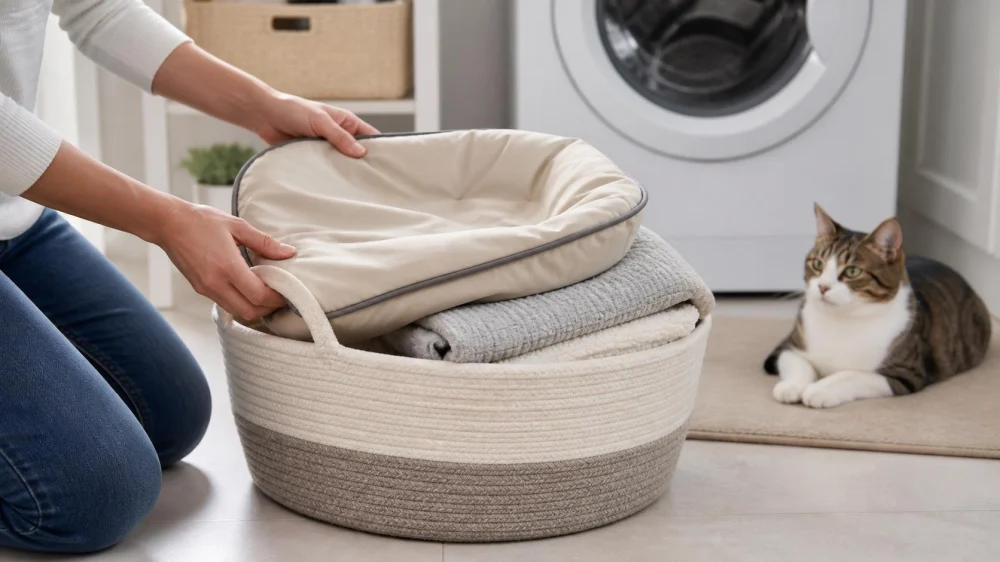
Pet Laundry Routine: Wash Bedding Without Mix-Ups
On this page
Quick answer
Sort pet laundry by item and soil level, follow each care label, remove loose hair, and use the warmest safe wash setting with a measured amount of suitable detergent. Rinse and dry every item completely before reuse. Keep heavily contaminated items separate, clean the washer afterward when needed, and ask a veterinarian about persistent odors, skin irritation, parasites, or infectious-disease precautions.
What a pet laundry routine should accomplish
A pet laundry routine removes hair, dirt, body oils, moisture, and ordinary household contamination from washable bedding, towels, covers, and toys without damaging the item or leaving irritating residue. It also prevents clean and dirty supplies from being confused. Laundry supports hygiene, but it does not diagnose or treat skin disease, parasites, urine problems, vomiting, or diarrhea.
This guide is for dog and cat households in the United States handling routine washable items. Follow the product care label, washing-machine instructions, detergent directions, and veterinary advice for the individual animal. Specialty fabrics, heated beds, foam inserts, leather, electronic items, and products without clear washing directions may need a different method or replacement.
Practical checklist
- Read the sewn-in or packaging care instructions before washing, and confirm which covers or inserts are removable.
- Wear gloves when appropriate and remove solid waste with disposable material before laundry handling.
- Shake or brush off loose hair outdoors or in an easy-to-clean area without spreading dust through the home.
- Separate routine bedding from items heavily soiled with urine, feces, vomit, blood, chemicals, or parasite debris.
- Use a detergent and measured dose suitable for the fabric, machine, household, and individual pet; avoid unapproved additives and fragrances when sensitivity is a concern.
- Inspect seams, stuffing, fasteners, heating elements, and chew damage before and after washing.
- Have a clean spare bed or towel available so damp items are never returned to the pet.
Step-by-step plan
- Collect dirty items in a dedicated washable container and keep them away from food preparation, clean laundry, children, and other pets.
- Remove covers and discard or isolate anything that is unsafe to wash, leaking stuffing, electrically damaged, or too deteriorated for continued use.
- Pre-treat only with a product and method compatible with the material and pet. Never mix cleaning chemicals, and do not create fumes in an enclosed area.
- Load the washer without overfilling it. Select the label-approved cycle and temperature, add the measured detergent, and use an extra rinse only when instructions and machine capacity permit.
- Dry on the approved setting or air-dry in a clean, ventilated place until seams, filling, and hidden layers are fully dry. Damp interiors can retain odor and support unwanted growth.
- Check for detergent residue, odor, damaged fasteners, loose threads, clumped filling, or exposed foam before returning the item.
- Wipe the laundry area and clean the machine according to its manufacturer guidance when hair or heavy soil remains, then wash hands and store clean items separately.
Note the item, wash date, detergent or special instruction, drying method, and reason for unusual soiling. This is useful when several people share pet care and when a veterinarian asks whether itching, odor, urinary accidents, diarrhea, or parasite signs changed after a product or routine changed.
Limits and important notes
No single temperature, detergent, or schedule fits every fabric, machine, pet, or health situation. Hot water and high heat may damage materials, while cold or short cycles may not meet a veterinarian's infection-control plan. Fragrance-free does not mean risk-free, and homemade mixtures can damage fabrics, irritate animals, or create hazardous chemical reactions.
Contact a veterinarian when laundry is repeatedly soaked with urine, blood, vomit, or diarrhea; when odor returns immediately; or when the pet has itching, hair loss, sores, coughing, lethargy, parasite evidence, or another health change. Ask for specific cleaning and isolation instructions when ringworm, parasites, or another contagious condition is suspected or diagnosed.
Frequently asked questions
How often should I wash pet bedding?
Use condition rather than a universal calendar: wash when the item is visibly dirty, damp, odorous, or contaminated, and often enough for the individual pet's shedding, outdoor exposure, health, and household needs. Follow veterinary directions during illness.
Can pet bedding go in the same machine as household laundry?
Often it can when item and machine instructions allow, but heavily contaminated loads need separate handling and may require machine cleaning afterward. Use veterinary guidance for infectious disease and protect food-contact textiles and sensitive household members.
Should I use fabric softener or scent boosters?
Do not assume they are suitable. Residue and fragrance may bother some animals, and the item label may prohibit them. Use only products compatible with the fabric, machine, and pet, and rinse as directed.
Why does a bed still smell after washing?
The load may have been too full, hidden filling may remain damp, soil may persist inside foam, or the item may be damaged. Recheck instructions and drying. Recurring strong odor or repeated accidents also warrants veterinary discussion.
When should a pet bed be replaced instead of washed?
Replace it when seams, zippers, foam, heating parts, or covers cannot be made safe; when filling will not dry; when contamination cannot be removed as directed; or when the pet can reach and swallow loose material.
Sources and evidence
Use the current care label, product manufacturer instructions, washing-machine manual, detergent directions, and your veterinarian's individual infection-control advice. Broad hygiene practice supports separating heavy contamination, avoiding chemical mixtures, drying thoroughly, and preventing clean items from contacting dirty handling areas.
Conclusion and next steps
Create two clearly separated zones for dirty and clean pet laundry, keep one safe spare item ready, and write down any special care instructions. Inspect before washing, follow the label, measure products, dry fully, and check again before reuse. When unusual soiling or skin and health signs persist, stop treating the issue as laundry alone and contact the veterinary team.

 DeZavala-Shavano Veterinary Clinic4.0 (351 reviews)
 Nichols Hills Pet Clinic4.0 (96 reviews)
 Jarrettsville Veterinary Center4.0 (525 reviews)
 Animal Health Center4.0 (248 reviews)
 East River Veterinary Clinic5.0 (2 reviews)
 Sugarcreek Veterinary Clinic4.0 (393 reviews)
 Expert Advice on Pet Fitness: Keep Your Pet Healthy and Active
 How to Help Your Pet Adjust to a New Environment
 Recognizing Signs of Liver Problems in Dogs: What Every Pet Owner Should Know
 How to Prevent Cat Urinary Tract Issues Naturally | Effective Tips
 Maintaining Healthy Weight for Indoor Cats: Essential Tips
 How to Help Your Pet Recover After Surgery: A Step-by-Step Guide