
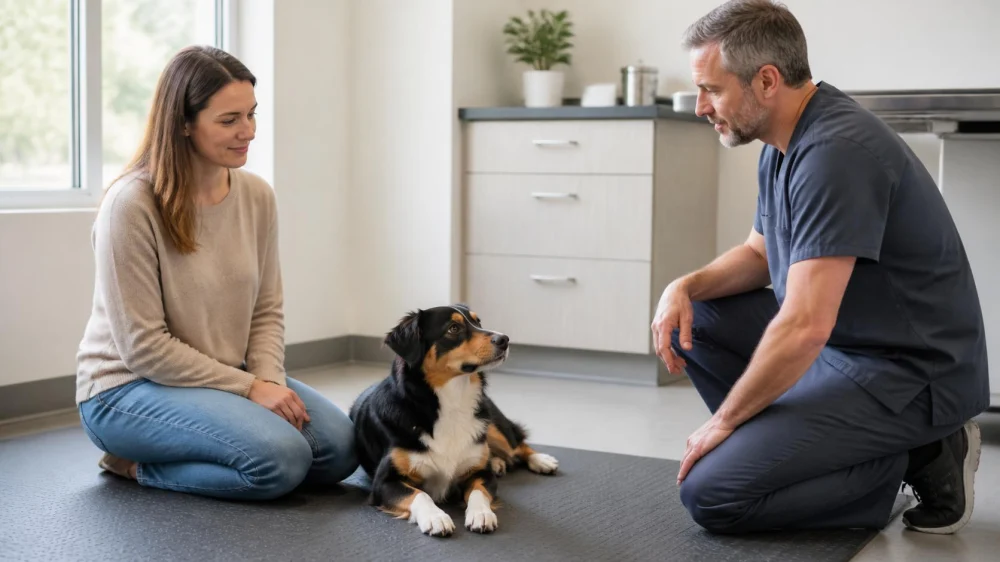
Pet Limping: Observe Safely and Know When to Call
On this page
Quick answer
Limping means a pet is changing how it bears weight, usually because of pain, weakness, or impaired movement. Keep the pet quiet, prevent stairs and jumping, and observe without repeatedly testing the limb. Call a veterinarian for new or persistent limping, and seek urgent care for severe pain, trauma, deformity, bleeding, or inability to stand.
What limping can and cannot reveal at home
A limp is a visible change in gait, weight bearing, stride, or posture; it is not a diagnosis. Paw injuries, nails, muscles, joints, bones, nerves, wounds, infection, and illness can create similar movement changes. Cats may hide pain, and excitement can briefly mask a problem. The same limp can have different causes and urgency in different animals.
This guide is for dog and cat caregivers in the United States deciding how to observe a new limp and communicate with a veterinary team. It cannot replace an examination, diagnostic imaging, or individualized advice, especially after trauma or in very young, old, or medically fragile pets.
Practical checklist
- When the limp began, whether it was sudden or gradual, and any witnessed fall, collision, rough play, bite, or sharp-object exposure.
- Which limb appears affected and whether the pet places full, partial, or no weight on it; do not force walking to make this clearer.
- Changes in appetite, energy, breathing, posture, grooming, vocalization, hiding, sleep, elimination, or willingness to be touched.
- Visible paw-pad injury, broken nail, swelling, bleeding, discharge, heat, or foreign material seen without squeezing or probing.
- Recent exercise, grooming, nail trimming, vaccination, procedure, travel, tick exposure, medication, or previous orthopedic problem.
- A short video of natural movement only when the pet chooses to move and recording does not delay care or create risk.
- The regular clinic and nearest emergency veterinary contact, transport plan, carrier or leash, medical record, and current medicine list.
Step-by-step plan
- Move the pet to a small quiet area with non-slip footing. Block stairs and furniture and separate energetic housemates without causing distress.
- Observe at rest first: breathing, alertness, posture, limb position, and whether there is bleeding or obvious deformity. Call before handling when severe pain or trauma is possible.
- From a safe position, look at the paw and limb only if the pet allows it. Stop for tension, growling, hissing, escape attempts, or pain; even gentle pets may bite when hurt.
- Contact the veterinary practice and report species, age, size, medical conditions, medicines, onset, weight bearing, trauma, other symptoms, and what you can see.
- Follow the veterinarian's activity, transport, and timing instructions. Use a carrier for cats and small pets; support larger dogs only as directed and without pulling the affected limb.
- Do not massage, stretch, splint, bandage, ice, heat, or remove embedded objects unless a veterinary professional gives specific instructions for this pet.
- Monitor the written plan. Record changes and return or escalate when pain, swelling, weight bearing, behavior, or general health differs from the expected course.
Write a brief timeline with date and time, activity before onset, limb, weight bearing, rest behavior, visible findings, video filename, veterinary advice, medicine instructions, and recheck time. Keep observations separate from guesses such as sprain or arthritis so the clinician receives usable facts.
Limits and important notes
A normal-looking paw does not rule out injury higher in the limb, and temporary improvement does not prove healing. Do not give ibuprofen, acetaminophen, aspirin, leftover veterinary medicine, or another animal's prescription unless the veterinarian directs it; common human pain medicines can be dangerous to pets. Avoid delaying care while searching for a cause online.
Seek urgent veterinary care for inability to stand, dragging a limb, severe or increasing pain, obvious deformity, uncontrolled bleeding, open wound over a joint or bone, major swelling, a cold or discolored paw, vehicle trauma, fall from height, bite, collapse, breathing difficulty, pale gums, or other whole-body illness. Call ahead while arranging safe transport.
Frequently asked questions
Should I make my pet walk so I can identify the bad leg?
No. Observe voluntary movement only. Repeated walking can worsen pain or injury and may not reliably identify the source.
Can I check between the toes?
Only if the pet remains calm and the paw can be viewed without force. Do not dig, squeeze, or pull an embedded object; contact the veterinary team.
What if the limp disappears after rest?
Record the episode and ask the veterinarian if it was new, recurrent, related to trauma, or paired with pain or other changes. Temporary improvement does not identify the cause.
Can I give a human pain reliever?
No unless a veterinarian specifically directs the exact product and dose for this pet. Several common human medicines can cause severe poisoning.
How should I transport a large dog that cannot walk?
Call the veterinary team or emergency service for handling instructions and help. Improvised lifting can injure the dog or caregiver and worsen some conditions.
Sources and evidence
Use direct veterinary triage and examination for the individual pet, plus the clinic's discharge instructions and current medication record. General veterinary practice supports activity restriction, low-stress observation, avoidance of human medicines, and prompt assessment of trauma, severe pain, or inability to bear weight.
Conclusion and next steps
Treat limping as useful evidence that deserves a calm response, not a home diagnosis. Restrict risky movement, record the onset and weight-bearing pattern, and call the veterinary team with concise facts. Prepare safe transport before the pet worsens, and follow the clinic's monitoring and recheck instructions rather than repeatedly testing the limb.




 Swimming Creatures Tropical Pet Store4.0 (46 reviews)
 MICHIGAN BISCUIT COMPANY5.0 (13 reviews)
 Better Lives Animal Hospital / Dr. Edward Decort4.0 (111 reviews)
 Vinny Parrots Home ,Buy African Grey Parrots0.0 (0 reviews)
 Martinsburg Animal Hospital4.0 (241 reviews)
 Aqua Dreams4.0 (224 reviews)
 How to Recognize and Treat Anemia in Pets
 How to Keep Your Pet’s Ears Healthy and Free from Infection
 The Dos and Don’ts of Parasite Prevention Every Pet Owner Should Know
 How to Care for a Pet with Special Medical Needs
 The Dos and Don’ts of Pet Health Every Owner Should Know
 Safe Fruits and Vegetables for Dogs: Toxic-Free Guide