
Pet Food Transition Log: Portions, Stool, and Symptoms
On this page
Quick answer
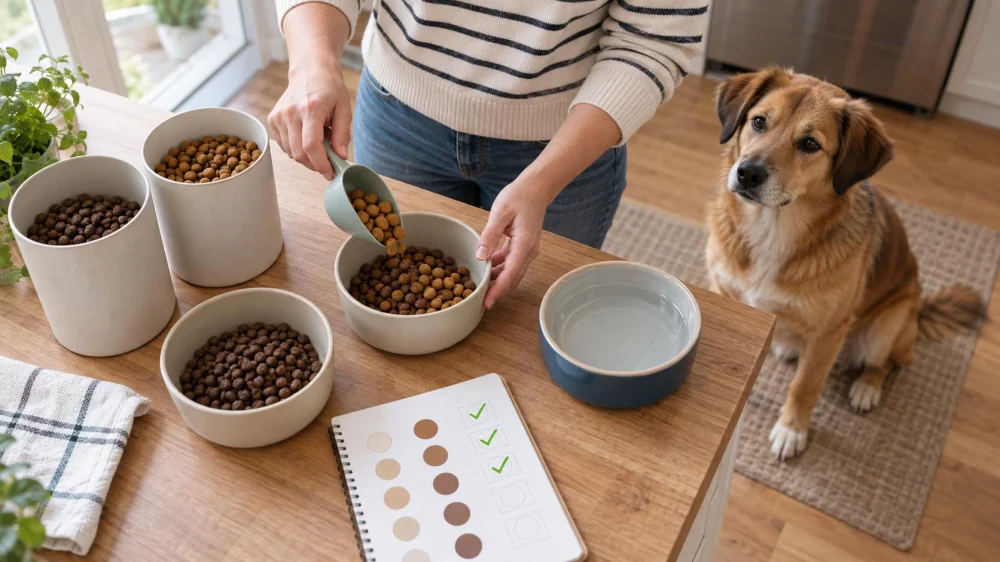
A pet food transition log records the old and new foods, measured portions, timing, appetite, water intake, stool, vomiting, skin changes, behavior, medicines, treats, and weight trend. Use the transition schedule recommended by your veterinarian or food manufacturer, change one major variable at a time, and call the veterinary team for concerning symptoms. Do not continue a routine transition through repeated vomiting, marked lethargy, breathing trouble, collapse, or inability to eat or drink.
This guide is for U.S. dog and cat caregivers planning a non-emergency food change. Puppies, kittens, senior pets, pregnant animals, and pets with medical conditions need individualized veterinary guidance.
Before changing food
Record the exact current product, recipe, form, amount, schedule, treats, supplements, and medications. Ask why the change is being made and what outcome should be observed. A food trial for a medical question is different from switching for convenience.
Confirm that the new diet is appropriate for the species and life stage. Do not use a label claim, online review, or ingredient trend as a substitute for veterinary advice.
Measure consistently
Use the same clean measuring method each day. Record the amount offered and the amount left, not only the planned portion. Keep treats, table food, flavored medicines, and food used for training in the record because they can change intake or interfere with a veterinary food trial.
Follow storage and food-safety instructions. Keep dry scoops clean and dry, refrigerate opened wet food as directed, and discard food left in unsafe conditions.
Build the daily log
- Date, meal time, and old/new food proportion.
- Amount offered and eaten.
- Appetite, water intake, energy, and behavior.
- Stool frequency and a simple consistent description.
- Vomiting, regurgitation, gas, itching, ear or skin changes.
- Treats, chews, supplements, medicines, and unusual exposures.
- Weight only on a consistent, suitable schedule.
Use photos only when they help the veterinary team and can be stored privately. A short consistent log is more useful than dramatic labels.
Make only planned adjustments
- Use the advised schedule.
- Keep meal timing and measurement consistent.
- Avoid introducing another new treat or supplement.
- Review trends rather than reacting to one minor variation.
- Contact the veterinary team before speeding up, slowing down, or abandoning a medically directed trial.
Never restrict water to manage stool or accidents. Do not give human medicines unless a veterinarian specifically directs them for that pet.
Stop signals
Call the veterinary team for persistent digestive changes, refusal to eat, weight loss, worsening skin signs, pain, or symptoms that concern you. Seek urgent or emergency veterinary care for collapse, breathing difficulty, repeated unproductive retching, a swollen abdomen, blood, severe weakness, suspected toxin exposure, or another rapidly worsening problem.
Small pets and animals with certain conditions can deteriorate quickly. Follow the veterinarian's emergency threshold rather than waiting for the log to look complete.
Important limits
A log can show timing and trends but cannot diagnose allergy, intolerance, infection, obstruction, pancreatitis, or another disease. Stool appearance alone does not identify a cause.
Calorie needs and safe transition speed vary. Packaging directions are a starting point, not an individualized prescription. Veterinary examination and tests may be needed.
Frequently asked questions
How long should a transition take?
Use the schedule from your veterinarian or the product instructions. Health history and symptoms can require a different plan.
Should I weigh every meal?
A scale can improve consistency when advised, but the same measuring method and accurate leftovers are most important.
Can I add pumpkin or probiotics?
Ask the veterinarian first. Additions can alter calories, symptoms, and interpretation of a food trial.
What if my pet refuses the new food?
Contact the veterinary team, especially if intake is markedly reduced. Do not force-feed without instruction.
Sources and evidence notes
This article applies broad veterinary nutrition practice: controlled changes, accurate intake records, one variable at a time, and prompt review of concerning symptoms improve interpretation. Exact diet, calories, schedule, and emergency actions must come from the pet's veterinarian and current product instructions.
Conclusion and next steps
Confirm the transition purpose and schedule, record the starting diet, and prepare a simple daily log. Measure consistently, keep other foods stable, and share trends with the veterinarian. Stop routine experimentation and seek help when intake, behavior, or symptoms cross the veterinary plan's limits.



 Dr. Brian Loveless5.0 (1 reviews)
 Howard Veterinary Services4.0 (26 reviews)
 Hillside Veterinary Clinic4.0 (1964 reviews)
 The Scaredy Cat Hospital4.0 (211 reviews)
 Montrose Animal Health Center4.0 (93 reviews)
 Dr. Angela Butler Martin4.0 (13 reviews)
 How to Compare Pet Groomers for Your Animal's Needs
 Best Dog Bowl Mats to Stop Sliding — Silicone and Bamboo Options With Non-Slip Backing | Pet Feeding Guide
 How to Handle a Pet Emergency: Quick Response Tips for Every Situation
 Parasite Prevention: What Vets Want You to Know for Your Pet's Health
 The Benefits of Regular Exercise for Your Pet's Overall Health: Why It's Essential
 Top 12 Tips for Pet Diseases