
Pet Microchip Check: Verify Registration and Contact Info
On this page
Quick answer
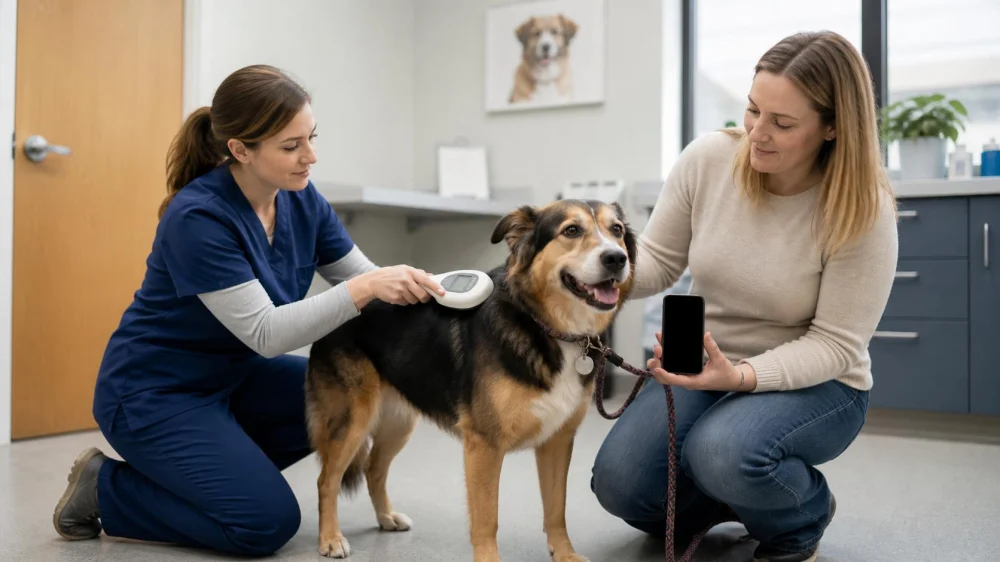
Ask a veterinary clinic or shelter to scan your pet's microchip, record the number accurately, identify the registry, and confirm that your current phone, email, address, backup contact, and pet details are attached. Update information after a move, phone change, adoption, or ownership transfer. A microchip is identification—not GPS—so pair it with a readable collar tag and current photos.
This guide is for pet owners in the United States. Registry processes, fees, privacy settings, local licensing, and ownership documentation vary, so use current instructions from the chip registry, veterinarian, shelter, and local authority.
What a microchip does
A pet microchip is a small implanted identification device that can return a unique number when read by a compatible scanner. The number is used to locate registry contact information. The chip generally does not broadcast a location, track movement, store a full medical record, or notify an owner automatically when a pet leaves home.
The useful system has three parts: a readable chip, an accurate number, and a registry record that leads to reachable people. If any link fails, recovery can slow down even though the pet was chipped.
Microchips support identification but do not replace visible tags, secure housing, leashes, fences, carriers, licensing, or prevention of escape.
Verify the scan and number
Ask the veterinary team to scan during a routine visit or schedule a quick verification based on clinic policy. The scan is noninvasive. Staff may sweep more than one area because a chip can be difficult to detect or may not sit exactly where expected.
Compare the displayed number with your adoption, veterinary, or registration records. Copy it carefully and avoid posting the full number publicly. If the number differs, more than one chip is detected, or no chip is found, ask the veterinarian or shelter what documentation and next steps are appropriate.
A chip that does not scan should be evaluated by professionals rather than assumed absent or defective after one quick attempt. Scanner compatibility, technique, records, and the pet's history may need review.
Check registration details
Identify the registry connected with the chip and use its official channel. Confirm the owner's name, primary and backup phone numbers, email, mailing address, emergency contact, and pet description. Test whether you can sign in and recover the account without exposing passwords or full chip data.
After adoption or transfer, registration may still show a prior owner, rescue, breeder, or shelter. Follow the registry's ownership-transfer process and provide requested documents. Do not create competing records without understanding how they will be used during recovery.
Review privacy choices and contact-release procedures. A finder or shelter may contact the registry rather than receiving your personal information directly. Know how after-hours notifications work and add a backup contact likely to answer.
Pet identification checklist
- Scan the pet. Use a veterinary clinic or shelter and confirm the entire displayed number.
- Match the records. Compare the scan with adoption, veterinary, and registry documents.
- Find the correct registry. Use trusted lookup and official registry channels rather than random search ads.
- Update every contact. Check phone, email, address, backup contact, and preferred communication.
- Confirm ownership status. Finish adoption or transfer steps and retain supporting documents securely.
- Review the pet profile. Update name, species, color, markings, photo, and relevant recovery notes.
- Add visible identification. Use a readable tag and comply with local license or rabies-tag rules.
- Set a reminder. Recheck at least when contact information or household ownership changes.
Build layers beyond the chip
A collar tag can let a neighbor contact you without visiting a scanner. Use a secure, well-fitted collar appropriate to the animal and situation, with information that remains readable. Discuss breakaway collars for cats and other safety considerations with a veterinarian or qualified professional.
Keep recent photos showing the pet's face, body, markings, and scale. Store vaccination, license, adoption, and veterinary information securely. A current written description helps when stress makes details hard to recall.
Prepare a lost-pet plan: local shelters and animal control contacts, veterinary clinics, trusted neighbors, current social-media privacy choices, and a safe way to verify someone claiming to have found the pet. Avoid sending money or sensitive codes to an unverified caller.
Limitations and important notes
- A standard microchip is not a live GPS tracker.
- Registration is not automatically updated when you move, change numbers, or transfer ownership.
- Do not publish a full chip number, account password, verification code, or sensitive ownership document.
- A found pet still needs safe handling and an appropriate scanner location.
- Microchip implantation, replacement, and medical questions belong with a veterinarian.
- Local licensing and rabies-identification requirements can apply in addition to microchipping.
Frequently asked questions
Can I scan a pet microchip with a phone?
Ordinary phones generally do not replace a compatible pet microchip scanner. Contact a veterinary clinic, shelter, or animal-control service.
Does a microchip expire?
The device is intended for long-term identification, but scan verification and current registration remain important. Registry services and contact details can change.
What if I do not know the registry?
Start with the full chip number and ask a veterinary clinic, shelter, or trusted registry-lookup resource to identify likely registration contacts.
Can a pet have two microchips?
It can occur. Ask the veterinary team to document both numbers and obtain guidance on keeping registry records clear rather than assuming one should be removed.
Should indoor pets be microchipped?
Indoor pets can escape during moves, repairs, emergencies, or open-door moments. Discuss identification layers suited to the pet with your veterinarian.
Sources and evidence notes
This article reflects common veterinary and animal-shelter identification practice: scan the animal, match the number, maintain current registry contacts, document ownership, and combine permanent and visible identification.
Use the veterinarian's scan, official registry instructions, adoption records, and local licensing requirements for a specific pet.
Conclusion and next steps
Make the chip useful before an emergency: schedule a scan, match the number to the correct registry, update every contact, and add a reachable backup person. Then inspect the collar tag and save current photos and records. The device under the skin is only one part of the recovery chain; accurate, reachable information completes it.





 Penn South Pet Clinic4.0 (163 reviews)
 Lynwood Dog and Cat Hospital4.0 (453 reviews)
 VO Vets4.0 (105 reviews)
 CodaPet - At Home Pet Euthanasia of Oklahoma City5.0 (13 reviews)
 Ironsides Animal Health (formerly Wellfarm Veterinary Consultants)4.0 (15 reviews)
 Banfield Pet Hospital4.0 (165 reviews)
 Benefits of Microchipping Your Pet for Safety and Recovery
 Top 12 Tips for Pet Diseases Every Pet Parent Should Know
 htmlCopy codeHow to Keep Your Pet Safe from Household Poisons
 Dog Immune Mediated Hemolytic Anemia Symptoms and Emergency Warning Signs
 Expert Advice on Parasite Prevention for Pets That Works
 How to Properly Handle and Manage Pet Health Records – A Complete Guide