
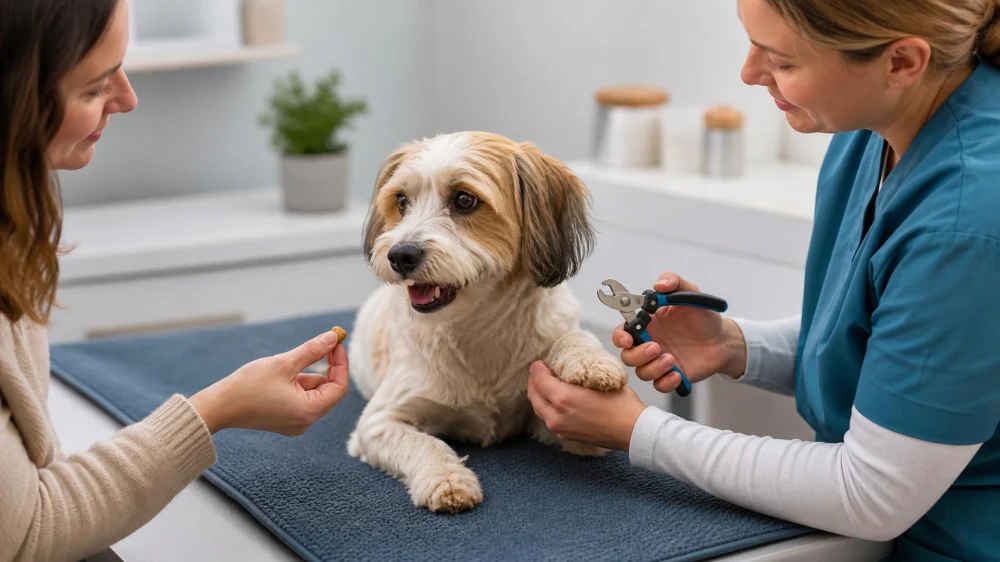
Pet Nail Trimming: Safe Setup, Small Steps, and Stop Signs
On this page
Quick answer
Trim pet nails only when the animal is calm, the paw can be handled without force, the nail anatomy is visible enough for a conservative cut, and the correct tool and bleeding-control plan are ready. Remove tiny amounts, reward pauses, and stop for struggling, fear, pain, uncertain nail structure, splitting, bleeding that does not stop promptly, or any bite risk.
This guide offers general preparation for dogs, cats, and similar companion animals in the United States. Species, age, health, nail color, prior experience, and behavior change the safest approach; ask a veterinarian or qualified groomer to demonstrate for your individual pet.
Decide whether home trimming fits
Home trimming is best for a pet that tolerates gentle paw handling and an owner who can see or reliably judge a conservative cutting zone. It may not fit animals with severe fear, aggression, painful paws, deformed nails, active infection, bleeding disorders, mobility limitations, or a history of traumatic trimming.
Look at every paw before starting. Note dewclaws, curled nails, cracked or split nails, swelling, redness, discharge, odor, lodged material, limping, and sensitivity. A nail growing toward or into a pad needs veterinary attention rather than routine clipping.
Do not use force, punishment, or multiple people to overpower an animal. Restraint raises injury and bite risk and can make future care harder. A veterinarian can help design a lower-stress plan and determine whether medical support is appropriate.
Prepare the pet, tools, and space
Choose a quiet, well-lit room with a nonslip surface and an easy exit for the pet. Keep children and other animals out. Position the pet on the floor or another secure surface; avoid heights from which the animal could fall.
Use sharp, species- and size-appropriate clippers or a grinder designed for pet nails. Learn how the tool locks, opens, and contacts the nail before bringing in the pet. Keep treats or another veterinarian-approved reward ready and have the recommended product and instructions for minor nail bleeding accessible.
Practice without cutting: touch the shoulder or hip, slide the hand down the leg, briefly hold a paw, touch one nail with the closed tool, reward, and release. Several short sessions may be better than completing every nail at once.
Use small, controlled steps
The quick contains blood vessels and nerves. Cutting it causes pain and bleeding. In light nails it may be more visible; in dark nails it can be difficult to judge. Clip only a very small amount from the tip when you are confident, then reassess the cut surface before deciding whether to continue.
Support the toe without twisting it and keep fur clear of the tool. Work where you can see both the pet's body language and the nail. With a grinder, introduce sound and vibration gradually, avoid hair entanglement, and limit contact to prevent heat buildup.
Watch for lip licking, yawning, turning away, tucked posture, stiffening, pulling the paw, wide eyes, growling, hissing, swatting, or attempts to leave. These signals mean reduce difficulty or stop; they are not misbehavior to correct.
Nail-trim checklist
- Inspect first. Check paws and nails for pain, damage, swelling, infection, and unusual shape.
- Set the floor. Use bright light, nonslip footing, low height, and no interruptions.
- Test the tool. Confirm sharpness, size, lock, power, and manufacturer instructions.
- Prepare for bleeding. Keep the veterinarian-recommended control product and contact plan ready.
- Ask for consent behaviorally. Touch briefly, reward calm participation, and release when the pet withdraws.
- Trim less than you think. Remove a tiny tip and reassess; do not chase a perfect short length.
- Pause often. One paw or one nail can be a successful session.
- Finish with inspection. Check for rough edges, cracks, bleeding, licking, and changes in walking.
Bleeding and professional-help triggers
If a nail bleeds, stay calm, stop trimming, keep the pet secure without force, and use the veterinarian-recommended first-aid method. Prevent licking and monitor. Contact a veterinary clinic when bleeding is heavy, does not stop promptly, restarts, or occurs in a pet with a health or medication concern.
Professional help is appropriate for dark or overgrown nails you cannot judge, embedded or curled nails, damaged dewclaws, infection signs, repeated panic, bite risk, prior trauma, or an owner who cannot safely hold and see the paw.
Ask the professional to explain the plan, handling method, frequency, and between-visit training. A fast forced trim is not the only option; some pets benefit from gradual cooperative-care practice under veterinary guidance.
Limitations and important notes
- Never use human medication, sedatives, or calming products unless a veterinarian prescribed or approved them for that pet.
- Do not continue after repeated warnings, a bite attempt, uncontrolled movement, or owner frustration.
- Do not cut a nail that is split into living tissue, infected, embedded, or anatomically unclear.
- Grinders can heat the nail and catch fur; clippers can crush or split when dull or incorrectly sized.
- Nail wear from walking does not reliably maintain every nail, especially dewclaws.
- Limping, paw pain, swelling, discharge, or behavior change deserves veterinary advice.
Frequently asked questions
How often should pet nails be trimmed?
There is no universal schedule. Growth, surface activity, anatomy, health, and nail position vary. Ask the veterinary or grooming professional for a pet-specific interval.
Can I trim black nails at home?
Some owners can after hands-on instruction, but visibility is limited. Take tiny amounts and stop when uncertain; professional trimming is a reasonable choice.
Are grinders safer than clippers?
Each has risks. Grinders add noise, vibration, heat, and hair-entanglement concerns; clippers can cut too far or split a nail. Tool fit and technique matter.
What if my pet only tolerates one nail?
One calm nail can be useful progress. End before fear escalates and continue a gradual plan, provided nail length is not creating a medical urgency.
Should nails click on the floor?
Sound can be one clue, but floor type, gait, toe position, and anatomy differ. Use veterinary assessment and paw inspection rather than sound alone.
Sources and evidence notes
This article reflects common veterinary and low-stress handling principles: inspect for disease or injury, work on nonslip footing, condition paw handling gradually, remove small amounts, recognize stress signals, and escalate pain, bleeding, or bite risk.
Use a veterinarian's demonstration and medical guidance, qualified groomer technique, and the tool manufacturer's instructions for the individual pet.
Conclusion and next steps
Before trimming, decide whether the pet, nail, tool, and handler are ready. Set up on the floor, inspect every paw, rehearse a calm touch, and plan to remove only a tiny tip from one nail. Stop while the pet is still coping well. If anatomy, behavior, pain, or bleeding creates uncertainty, a professional trim and cooperative-care plan is safer than finishing the paw at any cost.






 Chester W. Taylor, III, DVM4.0 (30 reviews)
 Gulf Coast Large Animal Clinic4.0 (122 reviews)
 Kittle's Klassic Poodles5.0 (3 reviews)
 Pacific Crest Equine Veterinary Services4.0 (23 reviews)
 River’s Edge Animal Hospital4.0 (342 reviews)
 Riverside Reef Aquatics LLC4.0 (53 reviews)
 Pet-Friendly Park Visits: Check the Rules Before You Go
 Best Supplements to Support Healthy Aging in Cats
 How to Prevent and Treat Canine Dental Disease: Tips for Dog Owners in the US
 Dog Intervertebral Disc Disease Symptoms in Dachshunds Explained
 How to Spot and Treat Bladder Stones in Pets
 How to Prevent Joint Pain and Arthritis in Older Pets