
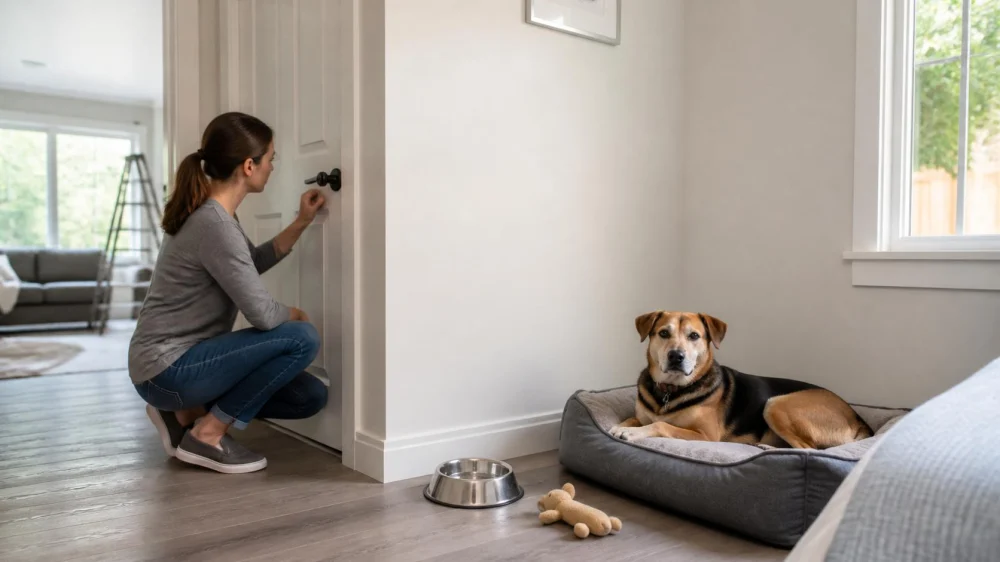
Pet Safety During Home Repairs: Build a Secure Room
On this page
Quick answer
Before home repairs begin, place your pet in a closed secure room outside the work path with water, bedding, identification, litter or toilet access, and familiar enrichment. Post a door reminder without sharing private details, tell every worker the room stays closed, and inspect air, temperature, noise, and escape routes throughout the day. Relocate the pet when fumes, dust, heat, noise, or repeated access cannot be controlled.
A pet safe room is a temporary controlled space that separates an animal from tools, debris, chemicals, open doors, strangers, and construction traffic.
Choose the room
- Outside the work zone and contractor travel path.
- Door latches securely; windows and screens are intact.
- Safe temperature and ventilation can be maintained.
- No paint, cleaners, cords, small parts, toxic plants, or unstable furniture.
- Enough space for species-appropriate rest, water, and toileting.
A bedroom may work for minor daytime repairs. It is not ideal when work affects ventilation, power, water, fire exits, or the room itself.
Set it up
- Move the pet before workers and materials arrive.
- Add familiar bedding, hiding options, and quiet enrichment.
- Separate food and water from litter or waste areas.
- Confirm collar or other identification is current when safe for the pet.
- Keep medications and emergency contacts accessible to the caregiver, not workers.
- Test the door and block unsafe gaps without reducing ventilation.
Coordinate with workers
Tell the supervisor a pet is secured and the door must remain closed. Ask when power, alarms, doors, windows, adhesives, coatings, demolition, or loud tools will be used. Do not rely on a sign alone. One household adult should be responsible for pet checks and transfers.
Never allow a loose pet to “meet” workers in an active work zone. Even a calm animal can flee after a sudden noise.
Daily checklist
- Count and visually check every pet.
- Confirm normal breathing, posture, water access, and temperature.
- Check noise, odor, dust, and ventilation.
- Inspect latches, windows, screens, and floor gaps.
- Remove tracked debris before releasing the pet.
- Store tools, fasteners, chemicals, and waste securely after work.
When to leave home
Arrange veterinary boarding, a trusted sitter, or another suitable location when there are strong fumes, heavy dust, pest treatment, floor coating, prolonged drilling, unsafe heat, structural work, repeated door access, or a pet with severe fear or respiratory disease. Ask the contractor for product cure and re-entry guidance, then confirm pet-specific risk with a veterinarian.
Seek urgent veterinary help for breathing difficulty, collapse, tremors, repeated vomiting, chemical exposure, burns, or suspected ingestion. Bring the product information when safe.
Limitations and important notes
This is general pet-safety guidance, not veterinary, toxicology, or construction advice. Species and products differ. Birds, fish, reptiles, and small mammals can be especially sensitive to fumes, dust, vibration, and temperature change. Consult qualified professionals before work begins.
Sources and evidence notes
The plan reflects common hazard-control practice: separate the animal from the work, control entry, remove exposures, monitor conditions, and relocate when the room cannot stay safe. The veterinarian, contractor, and product manufacturer are primary sources for a specific project.
Frequently asked questions
Can my pet stay in a crate all day?
Do not assume so. Confinement needs depend on species, health, duration, temperature, exercise, and veterinary guidance.
Will a closed door stop fumes?
Not necessarily. Air moves through ventilation and gaps. Relocate the pet if exposure cannot be controlled.
Should workers check the pet?
No. Assign a household caregiver and keep workers out of the safe room.
Can I use calming medication?
Only under veterinary direction for that pet. Never use human medication.
When can the pet return to the work area?
After hazards, debris, fumes, wet products, tools, and escape routes are resolved under professional guidance.
Conclusion and next steps
Walk the project route today, choose a secure room, remove hazards, and assign one caregiver. Confirm the contractor’s schedule and products. If clean air, temperature, quiet, and door control cannot be maintained, arrange an off-site stay before work starts.





 Pressly Animal Hospital4.0 (209 reviews)
 Green Dog Dental and Veterinary Center4.0 (151 reviews)
 A Animal Clinic of Queens3.0 (72 reviews)
 Clackamas Pet Clinic4.0 (748 reviews)
 PetZen Animal Wellness Center5.0 (360 reviews)
 Animal Island Pet Shop4.0 (1345 reviews)
 Is Your Pet Insurance Coverage on Track? What Every Owner Should Know
 Managing Your Pet's Stress and Anxiety: Tips for Owners in 2024
 Dog Immune Mediated Hemolytic Anemia Symptoms and Emergency Warning Signs
 How to Help Your Pet Cope with Anxiety During Vet Visits
 What Every Pet Owner Should Know About Pet Travel
 The Ultimate Guide to Pet Vaccination for US Pet Owners