
Flea and Tick Labels: Prevent Dangerous Pet Mix-Ups
On this page
Quick answer
Never choose a flea or tick product by package color or brand family alone. Match the exact label to the pet's species, current weight, age or life stage, and health situation. Read the full directions every time, prevent pets from grooming one another after topical use, save the package, and contact a veterinarian immediately if a concerning reaction occurs.
Before you choose a product
Flea and tick products include oral medicines, topical liquids, collars, sprays, shampoos, powders, and products for the home or yard. They are not interchangeable. A product intended for a dog can be dangerous to a cat, and a home treatment must not be placed on an animal unless its label specifically directs that use.
Ask a veterinarian to help match prevention to the pet, parasites in the area, lifestyle, and household. This is especially important for a pet that is very young, older, weak, sick, pregnant, nursing, taking medicine, or known to have reacted before.
Tell the veterinarian about every parasite product used on every pet. Layering a collar, chew, topical, shampoo, or yard treatment can create unintended duplicate exposure or interactions.
Essential label checkpoints
- Species: Confirm dog, cat, or another specifically named animal. Never transfer a dog-only product to a cat.
- Weight range: Weigh the pet accurately and use only the package assigned to that range.
- Minimum age: Puppies and kittens may not be eligible even when their weight appears sufficient.
- Route: Identify whether the product is swallowed, applied to skin, worn as a collar, or used in the environment.
- Amount and interval: Use the exact dose, application site, and timing. More or more often is not safer.
- Warnings: Read restrictions for health conditions, sensitivity, bathing, water exposure, children, and other animals.
- Regulatory information: In the United States, the label can identify whether a product is an FDA-approved animal drug or an EPA-registered pesticide.
- Expiration and integrity: Do not use damaged, leaking, expired, or suspiciously packaged products.
Read the label again before every use. Formulations, directions, warnings, or the pet's weight and health can change. Keep the applicator with its original box rather than separating similar-looking doses.
Plan for a multi-pet household
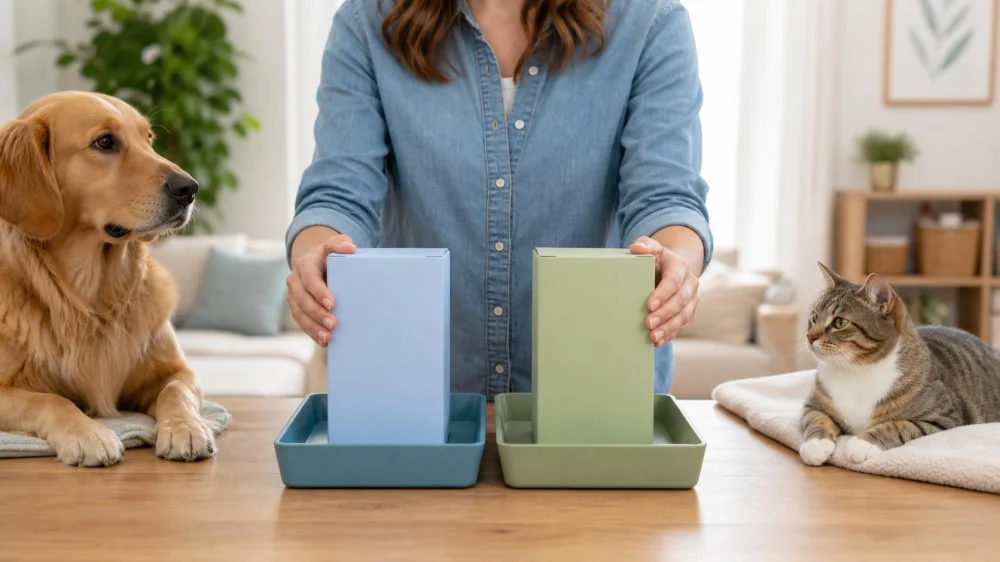
Store each species' products in a separate, clearly controlled location. Before opening anything, place the correct pet and package together, then return unused products immediately. Do not prepare multiple open applicators on the same counter.
For topical or spray products, the FDA advises treating one pet at a time and separating treated animals until the product dries, as directed. This helps prevent another animal from licking or grooming the application site. Separation is especially important when a dog product could expose a cat.
Keep children away during application and for the period stated on the label. Wash hands or use protective equipment exactly as directed. Store products away from food, medicine, and items that people or pets may put in their mouths.
Use, store, and monitor
- Follow application and dosing instructions without dividing or combining packages unless the label and veterinarian direct it.
- Do not use a household or yard pesticide directly on a pet.
- Prevent licking, rubbing, swimming, or bathing for the label-specified period.
- Observe the pet after treatment, especially after first use or a change in product.
- Keep the label, lot information, receipt, and manufacturer contact details.
- Record the date, exact product, dose or package size, and which pet received it.
- Dispose of packaging and unused product according to label and local requirements.
Do not rely on memory for the next dose. Use a written or digital record that names the pet and product, while keeping the original label available.
If a reaction is possible
Possible adverse effects can include skin irritation, vomiting, diarrhea, excessive salivation, weakness, wobbliness, trembling, unusual behavior, or seizures. Signs and urgency vary by product and pet. Contact a veterinarian immediately and follow the product's precautionary statement.
For a collar reaction, official EPA and FDA guidance directs owners to remove the collar immediately. For other exposures, whether bathing is appropriate depends on the product and the pet's condition; obtain veterinary and label-specific direction promptly. Do not induce vomiting or give a home remedy unless a veterinarian or animal poison professional specifically instructs you.
Have the package, active ingredient, regulatory number, amount, time, pet species, weight, symptoms, and any other products ready. Emergency symptoms such as seizures, collapse, severe breathing trouble, or rapidly worsening signs require urgent veterinary care.
Limits and professional help
This article cannot select a product, diagnose a reaction, or replace the exact label. Parasite risks, resistance, product approvals, and individual health factors vary. “Natural” wording does not prove that a product is safe or effective for a particular pet.
Use a licensed veterinarian for selection and medical questions. In the United States, the product label and responsible regulator explain how to report a problem. Keep the package so the correct manufacturer and agency can be identified.
Sources and evidence notes
The species, weight, age, application, separation, storage, and monitoring guidance is supported by the U.S. Food and Drug Administration's safe-use guidance and the U.S. Environmental Protection Agency's pet product guidance. Product labels and current veterinary advice control for an individual pet.
FDA regulates some flea and tick products as animal drugs, while EPA regulates others as pesticides. The label identifies the applicable path and reporting details.
Frequently asked questions
Can I use half of a large-dog dose on a small dog?
Do not split or estimate a dose unless the exact label and veterinarian direct it. Applicators and formulations may not be designed for accurate division.
Can a dog flea product be used on a cat?
No, unless that exact product label specifically includes cats. Dog-only products can be dangerous or life-threatening to cats.
Can I combine a collar and an oral product?
Only under veterinary direction after reviewing the active ingredients, health history, and all other products in use.
What if two pet packages look alike?
Stop and read the species, weight, age, active ingredient, and directions on each original label. If any part is unclear, contact the veterinarian or manufacturer before use.
Should I throw away the box after application?
No. Keep the package and applicator information in case directions are needed or a reaction must be reported.
Next steps
List every pet's species, current weight, age, health conditions, and current medicines or parasite products. Review that list with a veterinarian, then match one pet to one original label at a time. Save the package, record the use, separate pets as directed, and monitor closely.






 Animal Cardiology Specialists of Nevada4.0 (115 reviews)
 Banfield Pet Hospital3.0 (134 reviews)
 Caldwell, Holley G4.0 (153 reviews)
 VIP Petcare Vaccination Clinic0.0 (0 reviews)
 Branford Veterinary Hospital4.0 (325 reviews)
 Silver Paws Cat and Dog5.0 (7 reviews)
 Pet Aging: What Vets Want You to Know About Caring for Older Pets
 How to Help Your Pet Cope with Hot Weather - Brothers Pets
 How to Keep Your Pet’s Coat Healthy and Beautiful: Tips and Tricks
 What Every Pet Owner Should Know About Pet Aging
 The Dos and Don'ts of Pet Adoption Every Owner Should Know
 Understanding Canine Diabetes and Dietary Needs: A Guide for Pet Owners