
Pet Carrier Training: Build Calm Entry Before Travel
On this page
Quick answer
Make the carrier part of everyday life before a trip: leave it open in a quiet area, add familiar bedding, reward voluntary investigation, then practice brief door closure, lifting, and short rides in small steps. Never force an animal into a carrier for routine training. Use the correct size and secure it for travel, and ask a veterinarian about severe fear or medical limitations.
Why it matters
Carrier training is gradual positive practice that helps a pet enter, remain in, and travel in an appropriate carrier with less distress. It is useful for veterinary visits, evacuation, boarding, and routine transport.
This guide is for companion cats and dogs in the United States. Species, size, age, health, prior trauma, and travel method change the plan. Airline, vehicle, shelter, and veterinary requirements may differ.
Practical checklist
- Choose a carrier with adequate ventilation, secure closures, intact structure, and room for the pet to stand, turn, and rest appropriately.
- Place it in a familiar low-traffic area with the door secured open.
- Use bedding and rewards the pet already tolerates; avoid creating a choking or ingestion hazard.
- Practice when the pet is calm and stop before fear escalates.
- Add one challenge at a time: entry, door movement, closure, lifting, vehicle placement, then travel.
- Attach identification and keep the carrier secured so it cannot slide or open.
- Clean accidents with pet-safe methods while preserving familiar scent when practical.
Step-by-step plan
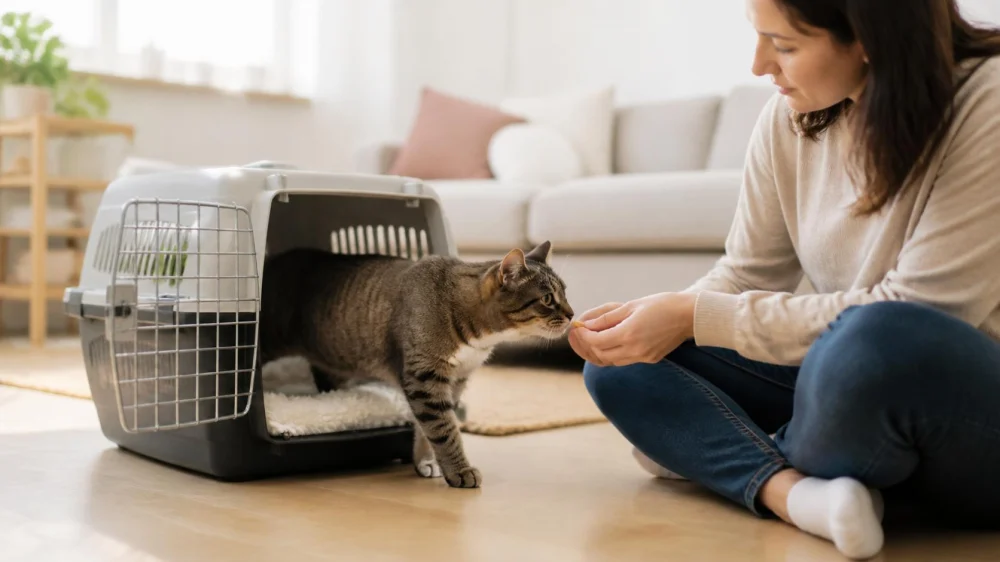
- Start with access. Remove or secure the door if the design allows and let the pet explore without being trapped.
- Reward orientation and entry. Place treats or a favorite toy near, then just inside, then farther inside at the animal's pace.
- Add the door gradually. Touch and move it briefly, then close for a moment while the pet remains calm; reopen before distress builds.
- Practice lifting on a stable surface. Secure every latch, lift smoothly with the carrier supported, set it down, and reward calm behavior.
- Introduce the vehicle while parked and climate-controlled, then try a very short ride. Secure the carrier according to manufacturer and vehicle guidance.
- Rehearse the real routine. Include leash or harness transfer, waiting, covering the carrier only if the pet benefits and ventilation remains safe, and returning home.
- Maintain the skill. Offer occasional meals, treats, or rest in the carrier so it does not predict only stressful events.
Track the step practiced, duration, reward, body-language signs, and recovery time. Progress when the pet remains comfortable, not simply because a calendar says to advance.
Limits and warning signs
A blanket, pheromone product, supplement, or medication is not a substitute for safe carrier fit and training. Some animals need a veterinarian-led behavior plan. Sedation can affect balance, temperature regulation, breathing, and travel eligibility and must not be improvised.
Stop for frantic escape attempts, injury risk, open-mouth breathing in a cat, collapse, repeated vomiting, severe respiratory distress, or other acute symptoms. Contact a veterinarian for intense fear, motion sickness, pain, or a health condition that makes transport difficult; use emergency care when symptoms are severe.
Frequently asked questions
How long does carrier training take?
It varies from days to much longer. Use the pet's body language and recovery, not a fixed deadline.
Should I leave the carrier out all the time?
Often that helps make it ordinary, provided it is stable, clean, safely open, and not blocking the home.
Can I push my pet inside if we are late?
Forced entry can increase fear and injury risk. For urgent transport, call the veterinary team for safe handling guidance.
Should I give a calming medication before travel?
Only under current veterinarian instructions for that animal and trip. Do not use another pet's medication or an unapproved dose.
Sources and evidence
The plan reflects common low-stress veterinary and animal-training principles: gradual exposure, voluntary participation, positive reinforcement, secure equipment, and professional help for severe fear or medical issues. Carrier and vehicle instructions govern physical setup.
Conclusion and next steps
Leave the safe carrier open today and reward one voluntary interaction. Build from calm entry to brief closure and movement over multiple sessions. Keep the carrier useful between trips so the next appointment does not begin with a chase.






 All Animal Care Dallas4.0 (116 reviews)
 Euclid Veterinary Hospital4.0 (179 reviews)
 Texas Coalition for Animal Protection | TCAP Hurst4.0 (1936 reviews)
 Cypress Creek Animal Hospital4.0 (293 reviews)
 Pine Bluff Animal Hospital4.0 (454 reviews)
 The Doggie’s Deli5.0 (140 reviews)
 How to Care for Your Pet During Hot Weather: Essential Tips for Pet Owners
 How to Identify and Treat Flea Bites on Cats – Effective Care Tips
 How to Reduce Anxiety in Dogs During Car Rides | Proven Tips
 How to Spot and Prevent Pet Obesity – Tips for Healthy Weight Management
 How to Help Your Pet Adjust to New Family Members
 Dog Panosteitis Symptoms in Puppies: Shifting Leg Lameness Explained