
Pet Feeding Station Hygiene: Bowls, Mats, and Storage
On this page
Quick answer
Keep a pet feeding station on an easy-to-clean surface away from human food preparation. Wash food bowls after wet-food use and at least daily for dry food, refresh and clean water bowls daily, and let everything dry before reuse. Keep food in its original package inside a clean, closed container when possible, retain the lot and date information, wash hands after handling food, and clean spills promptly.
Pet feeding-station hygiene is the routine of separating, cleaning, drying, storing, and checking the items used to feed an animal. The goal is not to create a sterile home. It is to remove food residue, limit cross-contamination, preserve product information, and notice changes that may affect a pet or the people in the household.
Choose a practical location
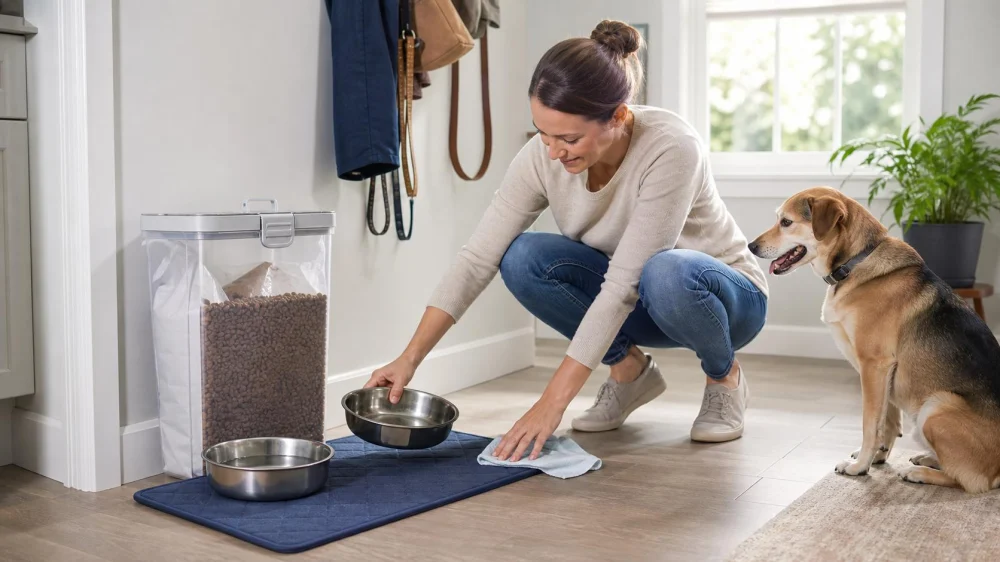
Select a stable, low-traffic area where a pet can eat without being startled and where people will not trip over bowls. A sealed floor, washable mat, and nearby cleaning route make spills easier to handle. Keep the station away from litter boxes, animal waste, cleaning chemicals, and areas used to prepare or serve human food.
Consider the pet as well as the room. A senior pet may need a nonslip surface and unobstructed approach. A pet that guards food may need a separate quiet space and professional behavior guidance. A cat may prefer distance from another animal, while an enthusiastic dog may need a container secured behind a closed door.
- Place bowls where doors cannot swing into the pet.
- Keep electrical cords and small swallowable items out of reach.
- Use a mat wider than the bowls so drips land on a washable surface.
- Avoid deep seams and decorative grooves that trap food.
- Do not store cleaners directly above or beside food and bowls.
- Give household members a clear handwashing route after feeding.
Build a bowl-cleaning routine
Visible residue is a useful reminder, but a bowl can need cleaning before it looks dirty. The US Centers for Disease Control and Prevention advises cleaning bowls after every use for wet food and every day for dry food and water. The US Food and Drug Administration also advises washing and drying food bowls after each use and washing water bowls daily.
- Remove leftover food. Follow the product label for storage or disposal; do not mix an old serving into a fresh one by habit.
- Wash with soap or detergent and water. Clean the inside, rim, outside, and base using the item’s care instructions.
- Rinse thoroughly. Remove visible soil and cleaning residue.
- Dry completely. Use a clean drying method and do not stack damp bowls where moisture remains trapped.
- Refill with clean tools. Use a dedicated scoop rather than the feeding bowl to reach into the food package.
A dishwasher can be useful for items labeled dishwasher-safe. For hand washing, follow current CDC guidance for the species and item, and keep pet-supply cleaning separate from food preparation as appropriate for the household. Reptiles, amphibians, rodents, sick animals, raw diets, and households with people at increased risk from germs call for added precautions; consult the CDC guidance and the relevant healthcare and veterinary professionals.
Cleaning removes dirt and many germs with soap or detergent and water. Disinfecting uses a product or process intended to kill germs. Routine cleaning is often the main task; disinfect when recommended for the situation, choose a product suitable for the surface, follow its label exactly, keep pets away during use, rinse if directed, and allow the item to dry before it returns to service. Never combine cleaning products.
Clean mats and feeding tools
The bowl is only one contact point. Food residue can remain on the mat, scoop, can cover, measuring cup, storage lid, floor, and hands.
- Feeding mats: wipe spills when they occur and wash on a schedule suited to the material. Clean both sides and the floor underneath.
- Scoops and measuring tools: wash and dry after use according to FDA advice, and reserve them for pet food.
- Can covers and reusable lids: clean between uses and discard pieces that crack or no longer seal.
- Slow feeders and puzzle feeders: inspect channels, corners, and removable pieces where moist food can remain.
- Water fountains: follow the manufacturer’s cleaning and filter schedule; clean the pump and hidden surfaces if the design permits.
- Food preparation surfaces: clean any accidental pet-food contact promptly and wash hands with soap and running water afterward.
Replace items that remain rough, cracked, flaking, or difficult to clean. A scratched surface is not automatically dangerous, but damaged seams can retain residue and make reliable cleaning difficult. Select replacements for cleanability, stability, size, and species needs rather than appearance alone.
Store pet food safely
Storage protects the food and keeps identifying information available if the product has a problem. The FDA recommends keeping pet food in its original bag or container. If you use a secondary bin, place the entire bag inside it when practical rather than pouring new food onto old residue.
- Check the package for storage instructions and the best-by date.
- Keep the product name, manufacturer, UPC, lot number, and date readable.
- Store unopened dry food and canned food in a cool, dry place; the FDA specifies below 80°F for this guidance.
- Use a clean, dry container with a snug lid if extra protection is needed.
- Wash and completely dry the bin between bags instead of topping it off indefinitely.
- Secure food and treats where pets, children, pests, and wildlife cannot open them.
- Promptly refrigerate or discard unused canned or pouched food as directed; the FDA says refrigerators should be at 40°F or below.
Do not rely on smell alone to determine safety. If a package is swollen, leaking, damaged, unusually odorous, contains a foreign object, or is associated with illness, stop feeding it, preserve the package information, contact a veterinarian about the pet, and follow FDA and manufacturer reporting guidance. Check current recall information using official sources.
Organize a multi-pet setup
Separate feeding can prevent one pet from eating another pet’s prescribed diet, overeating, or creating conflict. Labeling containers can help people, but do not depend on color alone if a household member has limited color vision.
- Assign each pet a specific bowl and feeding location.
- Store prescription or species-specific food separately from general food.
- Feed behind closed doors or barriers if one animal steals food.
- Pick up leftovers before pets change places.
- Track appetite individually instead of assuming an empty shared bowl means both animals ate.
- Wash hands and tools between foods when a veterinarian has given cross-contact instructions.
Young children should not manage feeding without adult supervision. People who are pregnant, age 65 or older, younger than 5, or immunocompromised may face higher risks from animal-associated germs. Ask a healthcare professional and veterinarian how household precautions should change for a specific person, pet, species, or diet.
Weekly feeding-station checklist
- Wash the mat and clean the floor beneath it.
- Inspect bowls for cracks, chips, rough edges, or unstable bases.
- Clean the food-bin exterior, lid, handle, and scoop.
- Confirm the original package and lot information remain available.
- Check best-by dates and use older opened products according to label directions.
- Look for moisture, pests, damaged packaging, or unusual odor.
- Review fountain filters and hidden parts against the manufacturer’s schedule.
- Confirm cleaners and food are stored separately and securely.
Attach the routine to a household event, such as trash day, so it is less likely to be skipped. Keep a spare bowl available so a clean, dry replacement can be used while another item is being washed.
Problems that need action
Contact a veterinarian promptly if a pet develops repeated vomiting or diarrhea, marked lethargy, difficulty swallowing, weakness, significant appetite change, or other concerning symptoms. Seek emergency veterinary care for severe symptoms, collapse, breathing difficulty, repeated unproductive retching, suspected toxin exposure, or advice from the pet’s veterinary team to do so.
Food refusal can reflect preference, stress, dental pain, illness, or another cause; changing bowls or washing more often does not diagnose it. Record when the pet last ate and drank, the exact product and lot, portion offered, medications, symptoms, and possible exposures. Do not give human medication or attempt home treatment unless a veterinarian directs it.
Evidence and limitations
The cleaning frequencies and food-storage details in this article are based on current US public-health guidance from the CDC’s pet-supply cleaning guidance and the FDA’s pet-food storage guidance. The CDC also provides broader healthy-pet hygiene information.
Manufacturer labels determine whether an item is dishwasher-safe and how food should be stored after opening. A veterinarian determines an individual animal’s diet and medical care. Species, raw feeding, infectious illness, household vulnerability, and local public-health advice may require stricter steps than this general routine.
Frequently asked questions
How often should I wash my pet’s food bowl?
Current CDC guidance says after every use for wet food and every day for dry food. FDA guidance advises washing and drying food bowls after each use. If a veterinarian or product label gives more specific instructions, follow those.
How often should I wash the water bowl?
Wash it daily and provide fresh water according to the pet’s needs. A fountain also requires cleaning of its reservoir, pump, tubing, and filter according to manufacturer instructions; adding water does not replace cleaning.
Should I pour kibble into a plastic storage bin?
The FDA recommends keeping dry food in its original bag and placing the entire bag into a secondary container when possible. This preserves lot and date information and limits old residue inside the bin. Keep the container clean, dry, and securely closed.
Can pet bowls go in the dishwasher?
Use a dishwasher only when the bowl maker identifies the item as dishwasher-safe. CDC guidance recognizes the dishwasher as a cleaning and disinfecting option for compatible hard items. Inspect damaged finishes or glued parts before reuse.
Is raw pet food handled the same way?
Raw pet food can require additional precautions because of microbial risk. Review current FDA and CDC raw-food guidance and discuss the diet with a veterinarian, especially when young children, older adults, pregnant people, or immunocompromised people live in the home.
Next steps
Set up one washable feeding zone today: keep the original food package, assign a dedicated scoop, place a spare clean bowl nearby, and write a daily bowl and weekly station-cleaning reminder. If the pet is ill, eats a medically prescribed diet, or lives with someone at increased risk from germs, ask the veterinary and healthcare teams for a household-specific plan.


 Vetco Vaccination Clinic3.0 (5 reviews)
 Living Color Aquarium0.0 (0 reviews)
 Bluebonnet Veterinary Clinic4.0 (201 reviews)
 Petco4.0 (982 reviews)
 Jamestown Veterinary Hospital4.0 (254 reviews)
 Grand Ave Seed Warehouse INC5.0 (1 reviews)
 Best Pet Insurance Companies in the US — Coverage Comparison and Cost Analysis
 Preventing and Managing Obesity in Indoor Cats – Expert Tips
 How to Reduce Stress for Cats During Travel
 Understanding Pet Dental Health: Why Oral Care Matters
 How to Make Your Home Safe for Senior Pets | Expert Tips
 Parasite Prevention: What Vets Want You to Know - Expert Tips for Pet Care