
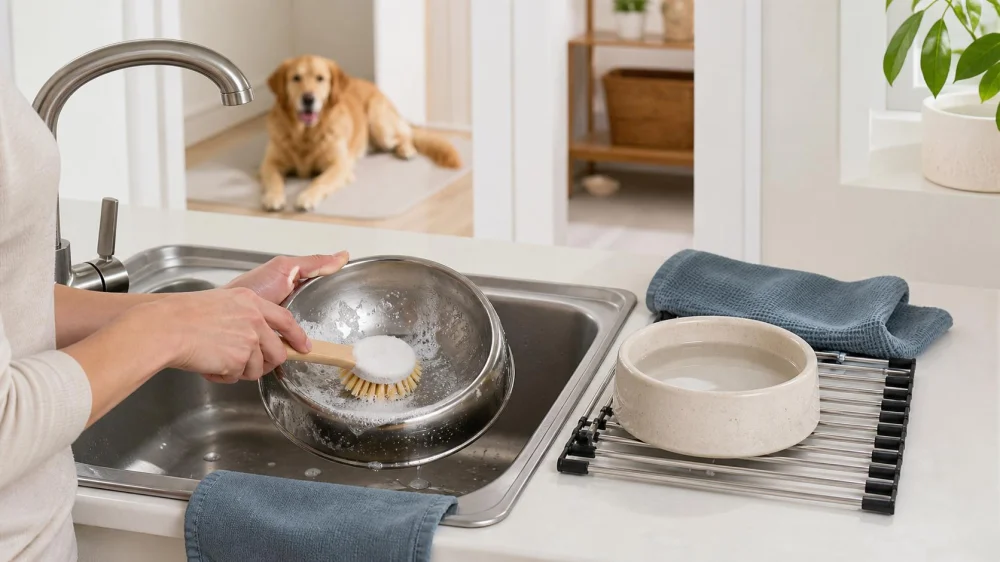
Pet Food and Water Bowls: A Cleaner Daily Routine
On this page
Quick answer
Wash pet bowls with soap or detergent and hot water after each wet-food use and at least daily for dry food and water. Use dishwasher-safe items in the dishwasher when the manufacturer allows it, then dry and refill with fresh food or water. Clean scoops and feeding mats too, wash your hands, and replace bowls that remain cracked, rough, or difficult to clean.
Why bowl cleaning matters
Food residue, saliva, dust, hair, and standing water collect on feeding surfaces. A bowl can look nearly empty while still holding a film around the bottom, rim, or seam. Routine cleaning physically removes that material and the germs associated with it.
Cleaning and disinfecting are different. Cleaning uses soap or detergent and water to remove dirt and germs. Disinfecting uses an appropriate method or chemical to kill germs after the surface has been cleaned. For most routine pet items, the U.S. Centers for Disease Control and Prevention says cleaning is usually sufficient; certain illness or household-risk situations may call for additional disinfection.
This routine is for ordinary household feeding. Reptiles, amphibians, rodents, raw food, contagious illness, chemotherapy, or immune-compromised pets or people can require stricter veterinarian and public-health instructions.
A practical cleaning schedule
- Wet-food bowl: clean after every use.
- Dry-food bowl: clean every day and sooner if wet, visibly dirty, or contaminated.
- Water bowl: empty and clean every day; refill with fresh water and clean sooner when debris or film appears.
- Food scoop or measuring cup: clean after use and keep it dedicated to pet food.
- Feeding mat: wipe spills promptly and wash on a regular schedule appropriate to its material.
- Slow feeder or puzzle: clean every food-contact groove after use according to its instructions.
- Water fountain: follow the manufacturer schedule for the bowl, pump, filter, reservoir, and tubing; visible slime means attention is overdue.
Multiple pets sharing a station can add saliva and debris faster. Separate bowls also make it easier to monitor appetite and water use when a veterinarian recommends tracking.
Wash bowls step by step
- Remove leftovers. Refrigerate or discard uneaten food according to the food label and veterinary guidance.
- Move the pet away. Prevent licking of detergent, dirty water, or cleaning supplies.
- Wash your hands. Clean hands before and after handling pet food and feeding equipment.
- Take components apart. Remove nonslip rings, inserts, fountain parts, or lids if the instructions allow.
- Wash all surfaces. Use soap or detergent and hot water, reaching the rim, base, seams, and underside.
- Rinse thoroughly. Remove loosened debris and cleaning residue.
- Dry appropriately. Air-dry on a clean rack or use a clean method that does not recontaminate the bowl.
- Refill fresh. Add food or water only after the bowl and your hands are ready.
If a dishwasher-safe bowl is cleaned in a dishwasher, place and run it according to the item and appliance instructions. Do not assume every plastic, electronic fountain component, adhesive base, or decorated bowl can tolerate the cycle.
Inspect and replace damaged bowls
Look for cracks, deep scratches, chips, peeling coatings, rust, warped plastic, persistent odor, loose rubber, and seams that no longer come clean. Damage can trap residue or create sharp edges. Replace an item when it cannot be fully cleaned or used safely.
Material alone does not guarantee hygiene. Stainless steel, ceramic, glass, silicone, and plastic each vary in quality and care requirements. A smooth, intact, correctly sized bowl that can be cleaned reliably is more useful than a material label by itself.
Check stability and fit. A bowl that tips, slides, forces an awkward posture, or allows long ears or facial folds to remain wet may need a different design selected with veterinary guidance.
Keep the feeding area cleaner
- Use a clean dedicated scoop rather than the pet's bowl to measure food.
- Remove spilled kibble and wet food promptly.
- Wash placemats and raised-feeder surfaces, including hidden undersides.
- Keep pet-food equipment separate from food preparation while cleaning as current public-health guidance recommends for your household.
- Store detergent and disinfectant securely away from pets, children, food, and medicine.
- Prevent pets from accessing dirty dishwater or the dishwasher.
- Use separate cleaning tools or sanitize shared tools as appropriate.
Illness and special situations
Clean and disinfect more often when a pet is sick or when a pet or person in the home is at higher risk from germs. Ask the veterinarian and healthcare professional which method, frequency, protective equipment, and separation are appropriate. Follow disinfectant labels exactly, including dilution, contact time, ventilation, rinsing, and surfaces where use is allowed.
Do not mix cleaning chemicals. Keep animals away until surfaces are ready for safe use. If a food recall or diagnosed infection affects feeding equipment, follow the specific FDA, CDC, food-manufacturer, and veterinary directions rather than a general routine.
Changes in drinking, appetite, vomiting, diarrhea, drooling, mouth pain, or refusal to use a bowl can require veterinary assessment. Cleaning the bowl does not diagnose or treat the underlying problem.
Sources and evidence notes
The schedule and cleaning distinction follow the CDC guidance for cleaning pet supplies. The FDA pet food handling guidance also recommends washing food bowls and feeding utensils with soap and hot water after use.
Product and appliance instructions control for material compatibility. A veterinarian should adapt the routine for illness, medical treatment, species-specific risks, or vulnerable household members.
Frequently asked questions
Can I just rinse a water bowl?
A rinse may leave film behind. Use soap or detergent and hot water on the daily schedule, rinse thoroughly, and refill fresh.
Can pet bowls go in the dishwasher?
Only when the bowl and each removable part are identified as dishwasher-safe. Follow placement and cycle instructions.
Should I disinfect bowls every day?
Routine cleaning is usually sufficient for ordinary situations. Illness, vulnerable household members, certain species, or raw food may require disinfection under specific guidance.
Why does a water fountain feel slippery?
A film can build up in the reservoir, pump, tubing, and bowl. Stop and clean every approved component according to the fountain instructions, replacing filters as directed.
Can two pets share one bowl?
Some do, but separate bowls can reduce conflict and make intake easier to observe. Ask a veterinarian or behavior professional when sharing creates health or resource concerns.
Next steps
Set up enough bowls to rotate a clean one into use while another dries. Wash wet-food bowls after each meal and dry-food and water bowls daily, along with scoops and mats. Inspect every item weekly, follow fountain instructions, and ask the veterinarian for a stricter plan during illness.

 Animal Cardiology Specialists of Nevada4.0 (115 reviews)
 Banfield Pet Hospital3.0 (134 reviews)
 Caldwell, Holley G4.0 (153 reviews)
 VIP Petcare Vaccination Clinic0.0 (0 reviews)
 Branford Veterinary Hospital4.0 (325 reviews)
 Silver Paws Cat and Dog5.0 (7 reviews)
 Pet Aging: What Vets Want You to Know About Caring for Older Pets
 How to Help Your Pet Cope with Hot Weather - Brothers Pets
 How to Keep Your Pet’s Coat Healthy and Beautiful: Tips and Tricks
 What Every Pet Owner Should Know About Pet Aging
 The Dos and Don'ts of Pet Adoption Every Owner Should Know
 Understanding Canine Diabetes and Dietary Needs: A Guide for Pet Owners