
Pet Sitter Handoff: Build a Clear Daily Care Plan
On this page
Quick answer
A useful pet-sitter handoff gives one caregiver a clear, current plan for food, water, exercise, toileting, behavior, home access, veterinary contacts, and communication. Write the plan, then walk through it together with the pet present. Label supplies, demonstrate doors and equipment, define what counts as urgent, and provide a backup person who can make decisions if you cannot be reached.
Start with a meet-and-greet
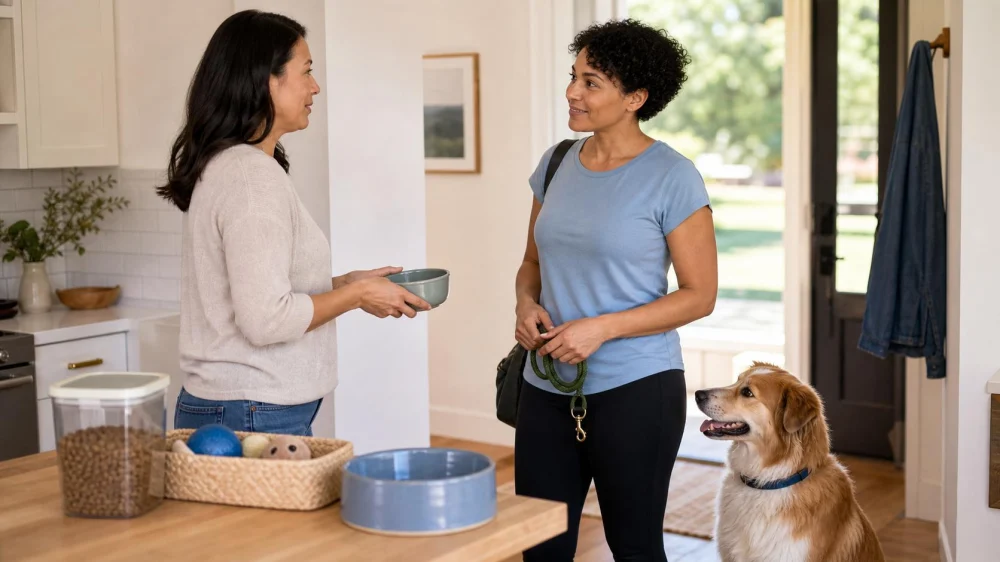
A pet-sitter handoff is the transfer of practical care information, access, supplies, and decision boundaries from an owner to a temporary caregiver. It should happen before the first unattended visit whenever possible. A profile in an app or a few text messages may introduce the job, but they do not show how the pet, home, and equipment work together.
Observe how the pet responds when the sitter enters, moves through the home, approaches supplies, and handles the leash or carrier. Do not force contact. Explain the pet's preferred greeting, hiding places, doorway behavior, triggers, and signs that they need more space. If the sitter cannot safely enter or perform a core task during the meeting, revise the arrangement before departure.
Confirm the service itself: visit length, overnight expectations, arrival window, number and type of pets, included tasks, fees for extra duties, cancellation terms, and who will actually provide care. Ask whether a substitute or employee may enter the home and how that change will be communicated.
Document the daily routine
Create a simple schedule the sitter can follow without guessing. For each pet, record:
- usual wake, meal, walk, toileting, play, rest, and bedtime times;
- food product and measured amount, where it is stored, and how it is served;
- water-bowl locations and normal refill routine;
- approved treats, food restrictions, and instructions for multi-pet feeding;
- litter box, yard, cage, enclosure, or other sanitation routine;
- where the pet may and may not go in the home;
- normal behavior and changes that should prompt a call.
Use concrete quantities and actions rather than “feed normally” or “take a long walk.” A measured scoop, marked container, or individual meal portion can reduce ambiguity. Keep food in its original labeled packaging when practical, and do not ask the sitter to start a new diet or unfamiliar supplement during your absence unless a veterinarian has directed it.
For multiple animals, provide separate descriptions and photos if they could be confused. State who eats where, whether they can share space unattended, and how doors, gates, crates, or rooms prevent conflict or food stealing.
Plan safe home access
Test every key, keypad, gate, garage method, alarm code, and lock the sitter will use. Demonstrate any door that sticks or latch that looks closed before it catches. Explain how to prevent an escape while entering, collecting packages, opening a yard gate, or moving between pet areas.
Give access through a method you are authorized to share. Do not hide a key in an obvious public place. If a building has front-desk, parking, elevator, visitor, or identification rules, arrange permission before the first visit. Provide the sitter's name to a neighbor or building contact only with appropriate consent.
Show the location of the water shutoff, electrical panel, fire extinguisher, cleaning supplies, carrier, leash, waste bags, towels, and pet-safe cleanup materials if the sitter is expected to use them. Identify rooms or cabinets that are out of scope. Remove hazards and secure human food, trash, chemicals, strings, small objects, and any item the pet commonly targets.
Explain walks and enrichment
Demonstrate how the collar, harness, leash, carrier, crate, or enclosure is fitted and secured. Name the exact route or approved area, normal duration, and weather modifications. Point out known loose dogs, wildlife, busy crossings, construction, escape points, or surfaces the pet avoids.
State whether the pet may greet people or animals, visit a dog park, ride in a vehicle, go off leash, or receive treats from others. If the answer is no, write it clearly. A sitter should not introduce new social situations or equipment simply because the pet appears comfortable.
List approved games and toys, where sessions occur, and what must be put away afterward. Note any resource guarding, toy destruction, ingestion risk, or difficulty settling. Enrichment should match the pet and the sitter's agreed scope, not create an untested challenge while the owner is away.
Prepare health and emergency information
Provide the regular veterinary clinic, nearest appropriate emergency clinic, pet insurance details if relevant, and a backup decision-maker. Confirm current phone numbers, clinic hours, transport options, and where the carrier is kept. Ask the veterinary practice what authorization or payment information it requires from a temporary caregiver; processes vary.
List current health conditions, allergies, mobility limits, and veterinarian-prescribed medication exactly as directed on the current label. Demonstrate administration only if the sitter has agreed and is able to perform it. Do not instruct a sitter to change a dose, substitute a product, use leftover medication, or improvise treatment.
Describe the pet's normal appetite, water intake, elimination, breathing, movement, energy, and behavior in plain terms. Set communication thresholds such as a missed meal, repeated vomiting, inability to urinate, breathing difficulty, collapse, major injury, suspected toxin exposure, or another sudden severe change. For urgent concerns, the sitter should contact a veterinary professional promptly rather than waiting for a routine update.
Discuss financial authorization and who may approve care if you are unreachable. Put the agreement in the format accepted by your clinic and sitter. A casual note may not meet a clinic's administrative requirements.
Agree on communication
Choose one primary channel and define when updates should arrive. A useful visit report can confirm arrival and departure, food and water, elimination, activity, medication as prescribed, home security, and any change from normal. Photos can be reassuring, but they should not replace a factual report.
Define three levels:
- Routine: include in the scheduled update.
- Needs a timely decision: call or message the owner and backup contact.
- Urgent: contact the appropriate veterinary or emergency service first when delay could harm the pet, then notify the owner.
Share travel time zones and periods when you will be unavailable. The backup person should have the written plan and enough authority to make the decisions assigned to them.
Final handoff checklist
- Update the written schedule and each pet's identification details.
- Measure or organize enough food and approved supplies, plus a reasonable reserve.
- Confirm medication labels and veterinary instructions are current.
- Test access, alarm, gates, leashes, carriers, and containment.
- Remove household hazards and secure restricted areas.
- Place veterinary, emergency, insurance, and backup contacts in one visible location and send a digital copy.
- Review update timing, urgent thresholds, and payment or authorization arrangements.
- Complete a short practice visit or walk when the job is complex.
- Tell the sitter about any last-minute health or routine change before leaving.
Limitations and important notes
A detailed handoff cannot make every pet comfortable with every caregiver or prevent all illness, escape, damage, or emergency. Some animals need veterinary, behavioral, species-specific, or medical boarding support beyond a general sitter's services. Be accurate about bite history, escape behavior, separation distress, and handling limits.
Licensing, insurance, contract, key-storage, and business requirements vary across the United States. Verify the sitter's current services, experience, coverage, references, and emergency process rather than relying only on a directory label or review score. General guidance does not replace veterinary advice or a signed service agreement.
Frequently asked questions
How far ahead should I meet a pet sitter?
Allow enough time to find another caregiver or complete a practice visit if the match is not workable. Pets with complex routines, medication, access needs, or behavior concerns usually require more preparation than a simple drop-in visit.
Should I leave printed or digital instructions?
Use both when possible. A printed copy is accessible inside the home, while a digital copy can be updated and reached away from the property. Keep the versions consistent and date the final plan.
Can a sitter give my pet medication?
Only when the service, sitter, pet, prescription, and administration method are a safe match. Confirm the sitter's scope and skill, provide current veterinarian-labeled instructions, and arrange professional support when the task exceeds general pet sitting.
What if my plans change while I am away?
Contact the sitter directly and confirm the revised visits, access, supplies, and fee. Do not assume a message was seen. Arrange continued care before a delayed return.
What information should the backup contact receive?
Give them the current care plan, sitter information, veterinary contacts, your travel contact, and a clear description of the decisions they may make. Confirm they are willing and available.
Evidence and practice notes
This article reflects common professional pet-care practice: meet before service, document routines, control access, prevent escapes, use veterinarian-directed medication instructions, define emergency escalation, and create a backup decision path. Individual animal needs and provider services vary.
No claim is made that a checklist guarantees safety or that a particular sitter is qualified. Veterinary clinics, insurers, buildings, and pet-care businesses may require their own forms and authorization procedures.
Next steps
Draft a one-page routine today, then test it by asking another person to locate the food, leash or carrier, cleaning supplies, emergency contacts, and backup key without verbal hints. Clarify anything they cannot find.
When comparing pet sitters in the United States, ask how they handle meet-and-greets, substitutes, keys, updates, medication, missed visits, and emergencies. Choose the provider whose documented process matches your pet's actual care needs.






 Mauldin Station Vet4.0 (173 reviews)
 PAZ Veterinary East4.0 (478 reviews)
 Lakeside Animal Hospital4.0 (143 reviews)
 Holistic Pet Wellness5.0 (6 reviews)
 Cape Fear Animal Hospital: Wheeler Renee DVM4.0 (18 reviews)
 Pets R Us Aurora4.0 (275 reviews)
 How to Prevent Obesity in Small Dog Breeds: Tips for a Healthy Weight
 The Ultimate Guide to Safe Dog Toys for Chewers: Durable & Non-Toxic Options
 How to Spot and Treat Kidney Disease in Pets
 How to Prevent and Treat Flea Infestations in Cats | Essential Tips
 How to Prevent Cat Urinary Tract Issues Naturally | Effective Tips
 How to Choose the Best Flea and Tick Prevention for Your Pet