
Pet Toothbrushing: Train the Routine Without Forcing It
On this page
Quick answer
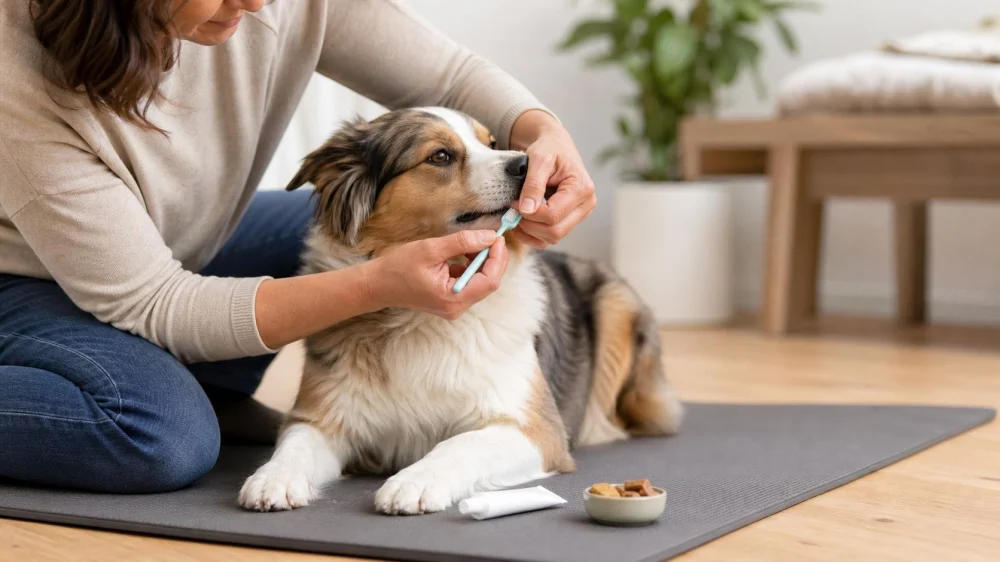
Teach pet toothbrushing through brief, reward-based steps: first comfortable face handling, then lifting the lip, tasting pet toothpaste, touching teeth with a finger or soft applicator, and finally using a suitable brush. Stop before the pet struggles, practice when calm, and never use human toothpaste. Bad breath, pain, bleeding, broken teeth, swelling, or refusal to eat requires veterinary evaluation, not harder brushing.
This guide is for U.S. dog and cat caregivers whose veterinarian says home brushing is appropriate. It cannot diagnose dental disease or replace a professional examination and cleaning. Species, age, mouth shape, behavior, and existing disease change the safest plan.
Start with a veterinary mouth check
Brushing an already painful mouth can cause distress and may worsen irritation. Ask a veterinarian to examine the teeth, gums, and oral tissues before beginning, especially when the pet has never received dental care, is older, resists face touch, or has visible buildup or odor.
Seek prompt veterinary advice for facial swelling, mouth bleeding, a broken or loose tooth, dropping food, chewing on one side, pawing at the mouth, sudden behavior change, inability to close the mouth, or reduced eating. Dental problems can exist below the gumline even when the visible tooth looks normal.
Ask the veterinary team to demonstrate handling and brushing for your pet. Confirm how often to brush, which teeth to prioritize, and whether a recent procedure changes timing.
Choose pet-safe tools
- Pet toothpaste: Use a product made for the species and follow its label. Human toothpaste can contain ingredients that should not be swallowed by pets.
- Suitable brush: A small soft pet toothbrush, finger brush, or other veterinary-recommended tool may work. Fit should allow control without scraping the gums.
- High-value reward: Use a small reward that is safe for the pet and fits its diet.
- Non-slip location: Work on the floor or a stable surface where the animal cannot fall.
- Good light: You need to see the lip and gumline without shining a bright light directly into the eyes.
Do not use baking soda, mouthwash, essential oils, peroxide, household dental tools, or homemade mixtures without veterinary direction. “Natural” does not mean safe when swallowed or used on oral tissue.
Build the routine in small steps
- Choose a calm moment. Keep the first session to a few seconds and end while the pet remains relaxed.
- Reward proximity and position. Teach the pet to approach the brushing area or rest its chin voluntarily if that method fits.
- Practice face touch. Briefly touch the cheek or muzzle, then reward. Do not grip, chase, or pin the animal.
- Lift one lip. Expose a small section of outer tooth surface without forcing the mouth open.
- Introduce toothpaste. Offer a tiny label-directed taste only if the pet can safely use the product.
- Touch one tooth. Use a clean finger or recommended applicator, then stop and reward.
- Add the brush. Touch or make one gentle motion along an outer surface.
- Increase gradually. Add a few teeth or seconds only when the current step is easy and voluntary.
Progress may take days or weeks. A setback is information, not disobedience. Return to the last comfortable step and check for pain, tool fit, environment, and reward value.
Use a simple brushing technique
Position yourself beside the pet rather than leaning over or facing it head-on. Gently lift the lip and focus on the outer surfaces near the gumline, where the cheek-facing teeth are accessible. Use short gentle motions and light pressure according to veterinary instruction and product guidance.
You usually do not need to force the jaws open or reach every inner surface at the beginning. Prioritize a calm repeatable routine over a perfect first session. Keep fingers away from a pet likely to bite and obtain professional behavior support rather than escalating restraint.
Clean and air-dry the brush after use, store it away from other pets' brushes, and replace it when bristles become damaged or after veterinary guidance following illness.
Know when to pause or stop
Pause the session if the pet turns away repeatedly, freezes, hides, growls, hisses, snaps, pants from stress, struggles, or tries to escape. These signals mean the current step is too difficult or uncomfortable. Do not punish warning behavior.
Stop and contact the veterinarian for pain, fresh bleeding beyond a minor concern the veterinarian has already discussed, swelling, loose or broken teeth, sores, pus-like discharge, a foreign object, or a sudden inability to tolerate previous brushing.
Dental-care checklist
- Obtain a veterinary oral assessment and individualized schedule.
- Use species-appropriate toothpaste and a suitable soft tool.
- Practice in very short reward-based sessions.
- Lift the lip rather than forcing the mouth open.
- Watch body language and stop before struggle.
- Record changes in breath, eating, chewing, drooling, and tolerance.
- Keep regular veterinary dental checks.
- Treat dental chews, diets, wipes, or additives as supplements only when the veterinarian recommends them.
Frequently asked questions
How often should I brush my pet's teeth?
Follow your veterinarian's recommendation. Consistency matters, and many care plans aim for frequent brushing, but the safe schedule depends on oral condition and tolerance.
Can I use my own toothpaste?
No. Human toothpaste is not designed to be swallowed by pets and may contain unsafe ingredients. Use only a veterinarian-approved, species-appropriate product as directed.
What if my pet hates the toothbrush?
Return to easier handling steps and ask whether another brush size or veterinary-recommended applicator is appropriate. Do not force the brush into the mouth.
Do dental treats replace brushing?
Not automatically. Some products may support an oral-care plan, but effectiveness, calories, chewing safety, and suitability vary. Ask the veterinarian how a product fits your pet's needs.
Why does the gum bleed when I brush?
Bleeding can be associated with inflammation, trauma, or another oral problem. Stop and contact the veterinary team rather than assuming it is normal or brushing harder.
Sources and evidence notes
This guide reflects common veterinary dental and cooperative-care principles: professional examination comes first, pet toothpaste is required, gradual reward-based handling improves tolerance, and home care does not remove disease below the gumline. Product and technique choices should be confirmed by the pet's veterinarian.
Next steps
Schedule or confirm an oral check, then choose one pet-safe toothpaste and brush with veterinary guidance. For the first week, focus on calm location, face touch, lip lift, and a brief reward. Advance only when the pet remains comfortable. A ten-second cooperative session is a better foundation than a complete brushing achieved through fear or restraint.






 Graham Animal Hospital4.0 (172 reviews)
 Kravchenko Siberian Cats3.0 (36 reviews)
 Coastal Veterinary Dermatology & Ear Clinic4.0 (103 reviews)
 Veterinary Surgical Centers4.0 (244 reviews)
 Animal Specialty Group Inc: Sullivan Stacey DVM4.0 (13 reviews)
 Fancy Lynx Maine Coons4.0 (5 reviews)
 The Dos and Don’ts of Dental Care for Pets Every Pet Owner Should Know
 Dog Polycystic Kidney Disease Symptoms in Bull Terriers and Beagles Guide
 How to Recognize and Treat Cushing’s Disease in Dogs
 How to Help Your Pet Stay Comfortable During Hot Weather
 How to Spot and Treat Fungal Infections in Pets | Brothers Pets
 How to Tell If Your Dog Has Conjunctivitis: Red Eye Signs Explained