
How to Pet-Proof Your Home Before Overnight Guests Arrive
On this page
- Quick answer
- Map what guests will change
- Secure doors, windows, and gates
- Control food, medicine, and luggage hazards
- Create a pet-only quiet zone
- Give guests clear instructions
- Arrival-day checklist
- Limitations and important notes
- Frequently asked questions
- Sources and evidence notes
- Prepare one room at a time
Quick answer
Before overnight guests arrive, protect the exits, store food and medicine behind secure doors, give luggage a pet-free location, and create a quiet room the animal can use without interruption. Tell every guest the same simple rules about doors, feeding, and interaction. Keep identification and veterinary contact details current, and supervise transitions when people are carrying bags through open doors.
This guide is for U.S. households with cats or dogs preparing for visitors. Every animal responds differently to noise, children, unfamiliar people, and routine changes. Seek individualized veterinary or qualified behavior guidance for significant fear, aggression, illness, or escape history.
Map what guests will change
Pet-proofing for visitors means managing temporary changes that can create access, ingestion, escape, or stress risks. Walk through the visit from the animal's point of view: the doorbell sounds, an exterior door stays open while bags move, unfamiliar shoes and medication enter, food appears on low tables, and sleeping arrangements change.
List where guests will sleep, place luggage, charge devices, eat, discard trash, and enter the home. Then note which of those spaces the pet can access. This reveals hazards that ordinary daily pet-proofing may not cover.
Pay extra attention when guests include young children, people unfamiliar with animals, or anyone who uses medication, mobility equipment, or medical supplies. The goal is not to assign blame; it is to create storage and movement routines that do not rely on perfect memory.
Secure doors, windows, and gates
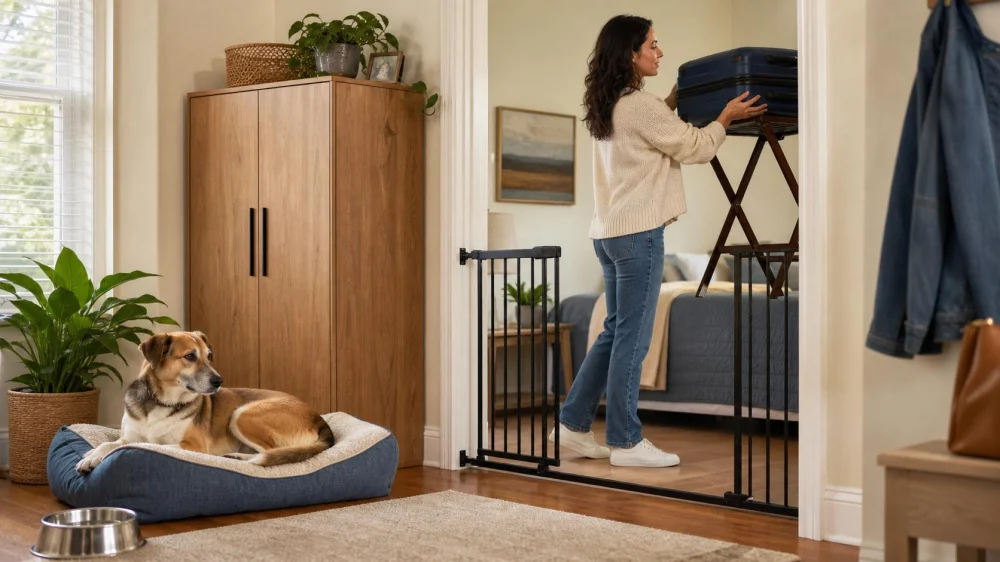
Arrival and departure are high-risk moments because attention is divided. Place the pet in a secure, comfortable area before exterior doors open repeatedly. Confirm that the containment method is appropriate for that animal; a closed room may suit one pet while causing another severe distress.
Check:
- exterior door latches and self-closing behavior;
- window screens, especially in the guest room;
- yard gates and gaps below temporary fencing;
- balcony and patio access;
- pet doors that visitors may unlock or block; and
- interior gates that a child or large dog could dislodge.
Do not place a note where only one person will see it and assume the problem is solved. Brief everyone aloud. During bag unloading, assign one adult to manage the door and confirm the pet's location.
Control food, medicine, and luggage hazards
Guest bags may contain prescription or over-the-counter medicine, vitamins, nicotine products, gum or candy, snacks, cosmetics, batteries, cords, and small objects. A zipped suitcase is not necessarily pet-resistant. Store luggage in a room the pet cannot access or inside secure furniture.
Ask guests to keep medicine in its original container and behind a closed, secure door—not on a nightstand, bathroom counter, or in an open handbag. Provide a lidded waste container that the pet cannot tip or open.
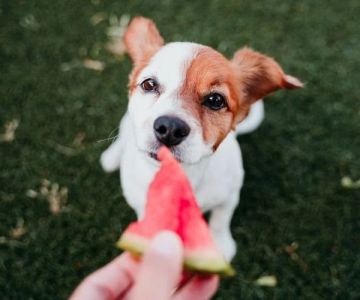
During meals, keep plates, serving dishes, cups, and trash out of reach. Guests should not offer table food or treats without the owner's approval. Many foods, quantities, and ingredients that are acceptable for people can be harmful to pets, and an animal may also have a prescribed diet or allergy.
Route charging cables and medical tubing where animals cannot chew or become entangled. Remove loose hair ties, toys with small pieces, hearing-aid batteries, sewing supplies, and fragile decorations from reachable surfaces.
Create a pet-only quiet zone
A quiet zone is a familiar, low-traffic space where the pet can rest away from visitors. Set it up before the household becomes busy. Include familiar bedding, water, appropriate litter or toileting access, and enrichment the pet already uses safely.
Keep ventilation and temperature comfortable. Do not use a garage, closet, balcony, or laundry area without evaluating chemicals, appliances, heat, noise, and escape routes. Make sure no guest needs to enter the quiet zone for clothing or supplies.
Tell visitors that the zone is not a place to follow, pet, photograph, or coax the animal out. A pet who retreats is communicating a need for space. Children should have active adult supervision around animals and barriers.
Give guests clear instructions
Use a short briefing rather than a long list that is hard to remember:
- Doors: confirm the pet's location before opening an exterior door.
- Food: give nothing unless the owner approves it.
- Space: allow the pet to approach; do not follow it into the quiet zone.
- Storage: keep bags, medicine, and small objects behind the designated closed door.
- Problems: tell the owner immediately about a possible ingestion, escape, scratch, bite, or behavior change.
Explain any pet-specific signals in plain language, such as freezing, hiding, turning away, growling, hissing, or attempting to leave. Do not punish warning behavior; create distance and contact an appropriate professional when safety is uncertain.
Arrival-day checklist
- Exercise or engage the pet in its normal safe routine before the busiest period.
- Place the pet securely before the first exterior door opens.
- Show guests where bags, medicine, food, and trash belong.
- Review door, feeding, and quiet-zone rules.
- Check that collars and identification are current and appropriately fitted.
- Keep the pet's normal food, medication instructions, and routine under the owner's control.
- Save the veterinarian, emergency clinic, and poison-control resources appropriate to your location.
- Inspect guest areas again after unpacking.
Limitations and important notes
- Do not introduce a crate, medication, calming product, or major behavior plan for the first time without appropriate guidance just because visitors are coming.
- A child and pet should not be left together without suitable active supervision, even if both have behaved calmly before.
- If a possible toxin or foreign object was swallowed, contact a veterinarian or appropriate poison-control resource promptly; do not wait for symptoms or induce vomiting unless instructed.
- Separate animals safely when there is a bite risk, resource guarding, intense fear, or escalating conflict.
- Emergency numbers and service availability vary by location in the United States; verify them before the visit.
Frequently asked questions
Should I keep my pet in another room for the whole visit?
It depends on the animal, visit length, room, and safety risks. Some pets benefit from a quiet retreat; others become distressed by isolation. Plan with a veterinarian or qualified behavior professional when the response is uncertain.
How should guests meet a shy pet?
Let the pet control distance. Guests can sit or move calmly, avoid staring or reaching, and allow the animal to retreat. Do not force an introduction for a photograph or greeting.
Is a closed suitcase safe around pets?
Not always. Zippers, soft fabric, exterior pockets, and partially closed bags may be accessible. Use a pet-free room or secure storage.
What if a guest accidentally feeds my pet?
Find out exactly what, how much, and when. Contact a veterinarian or appropriate poison resource promptly if the item may be harmful, the amount is unknown, or the pet has symptoms.
How can I reduce door-dashing during arrivals?
Secure the pet before unloading begins, use more than one appropriate barrier when needed, assign a door manager, and make sure every guest knows the rule before opening the door.
Sources and evidence notes
The guidance reflects common veterinary and household-safety practice: prevent access to toxins and foreign objects, protect exits, supervise child-animal interactions, preserve a retreat space, and seek prompt professional help for ingestion or behavior emergencies. A veterinarian and qualified behavior professional can tailor precautions to an individual pet.
Prepare one room at a time
Start with the guest room: create secure storage for bags and medicine, remove small reachable objects, inspect the window, and provide a pet-resistant trash container. Then secure the arrival route and prepare the quiet zone. Finish by giving every visitor the same five-rule briefing before the first exterior door opens.




 Tri-County Tropicals, Inc.4.0 (34 reviews)
 McKean Veterinary Hospital4.0 (228 reviews)
 Twin Oaks Veterinary Clinic4.0 (147 reviews)
 WandererHub Pets Salon - Hamilton Heights5.0 (114 reviews)
 UrgentVet4.0 (399 reviews)
 My Family Pet store4.0 (141 reviews)
 The Role of Mental Stimulation in Pet Health: Why It’s Crucial for Your Pet’s Well-Being
 How to Reduce Anxiety in Dogs During Car Rides | Proven Tips
 The Dos and Don’ts of Parasite Prevention Every Pet Owner Should Know
 How to Prevent and Treat Fungal Infections in Pets
 How to Provide Comfort for Pets with Cancer
 Understanding Canine Epilepsy and Seizure Management