
Pet Drinking More Water: What to Measure Before the Vet
On this page
Quick answer
A clear, persistent increase in a dog’s or cat’s drinking deserves a veterinary call, especially when urination, weight, appetite, energy, or medication has also changed. Keep fresh water freely available. Measure what the pet drinks over a typical day, account for spills and shared bowls, and record urine changes; these observations help the veterinarian choose appropriate tests.
What increased drinking can mean
Polydipsia means excessive thirst or water intake. It is a sign, not a diagnosis. Weather, exercise, dry food, lactation, and some medications can change drinking, while diabetes, kidney disease, hormonal disorders, infection, and other illnesses can also increase thirst or urine production.
The pattern matters. A gradual change over weeks, sudden repeated bowl-emptying, nighttime drinking, or increased urination alongside thirst can each guide the history. A veterinarian may need physical examination, blood tests, and urine testing to distinguish causes.
Urgent warning signs
Contact an emergency veterinary service promptly when increased drinking occurs with collapse, severe weakness, repeated vomiting, trouble breathing, seizures, suspected toxin exposure, marked disorientation, or inability to keep water down. A cat repeatedly straining in the litter box but producing little or no urine may have an obstruction and needs emergency care.
Arrange prompt veterinary assessment for weight loss, major appetite change, lethargy, dehydration, blood in urine, painful urination, very large urine volumes, new accidents, or a pet that is receiving insulin or another medication that can affect thirst or urination.
How to measure water intake
- Choose a typical 24-hour period rather than an unusually hot, active, or stressful day.
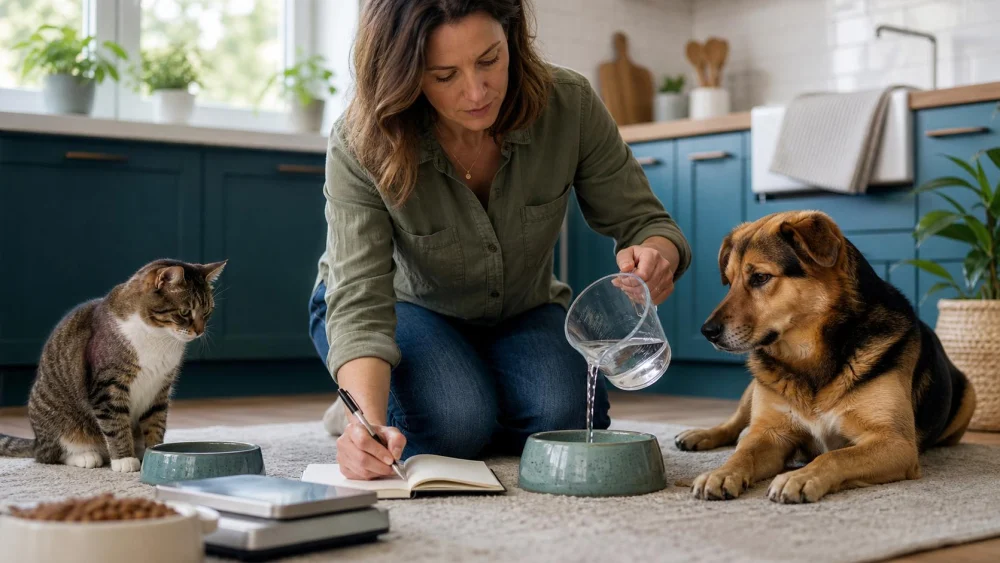
- Measure the water placed in all bowls using the same marked container.
- Record every measured refill.
- At the end, measure what remains and subtract it from the total offered.
- Note spilled water, fountain reservoir changes, outdoor sources, and water added to food.
- Record the pet’s current weight if it can be obtained safely and accurately.
In a multi-pet home, separate animals only if doing so is safe and does not significantly alter their routine. Another option is to supervise access or use separate measured stations. A camera can reveal which animal is drinking without withholding access.
Track related signs
- Urination: frequency, volume, accidents, straining, color, and litter clump size.
- Appetite: increased, decreased, unchanged, or difficulty eating.
- Weight: measured trend rather than visual impression alone.
- Energy and movement: weakness, restlessness, hind-limb changes, or reduced activity.
- Digestive signs: vomiting, diarrhea, or nausea.
- Medication: recent starts, dose changes, missed doses, supplements, and possible accidental exposure.
- Environment: heat, exercise, diet change, new fountain, or household disruption.
Photographs of litter clumps or a short video of unusual drinking can be useful. Do not collect a urine sample unless the clinic requests one and explains the container, storage, and timing.
Prepare for the veterinary visit
Bring the measurement log, diet details including wet and dry food, current medication packages, recent weight records, and the timeline. Tell the veterinarian whether water intake or urine output seemed to change first. Mention previous kidney, urinary, endocrine, liver, or reproductive conditions.
The veterinarian may recommend urine concentration testing, blood glucose, kidney and liver values, electrolytes, imaging, culture, or other tests depending on the history. One symptom cannot select the correct test by itself.
Do not restrict water
Do not limit water to reduce accidents or “test” whether the pet is truly thirsty. Increased drinking may compensate for increased water loss, and restriction can worsen dehydration or electrolyte problems. Keep clean water accessible unless a treating veterinarian gives specific, supervised instructions.
Do not change insulin, steroids, diuretics, seizure medication, or other prescriptions on your own. Some medicines can affect thirst, but abrupt changes can be dangerous.
Two-day monitoring checklist
- Call the veterinary clinic and describe the change and any warning signs.
- Keep normal access to fresh water.
- Measure offered, refilled, remaining, and spilled water.
- Record food type and amount.
- Track urine output, appetite, energy, vomiting, and stool.
- Weigh the pet only if it can be done without stress or injury.
- Escalate immediately if emergency signs develop.
Important notes and limitations
This article provides general observation guidance for dogs and cats, not a normal-intake calculator or diagnosis. Body size, diet moisture, activity, temperature, pregnancy or lactation, medications, and disease affect intake. Birds, rabbits, reptiles, and other species have different needs and require species-appropriate veterinary advice.
Evidence and sources
Cornell University’s College of Veterinary Medicine notes that increased thirst and urination can occur with feline diabetes, hyperthyroidism, and chronic kidney disease, and describes monitoring water, urine, appetite, and weight. The Merck Veterinary Manual likewise identifies thirst and urination changes across multiple disorders. These examples show why the sign is nonspecific rather than providing a home diagnosis.
- Cornell Feline Health Center: Feline Diabetes
- Cornell Feline Health Center: Chronic Kidney Disease
- Merck Veterinary Manual: Diabetes Mellitus in Dogs and Cats
Frequently asked questions
How much water is too much for a pet?
There is no single safe cutoff for every animal and diet. Measure a representative day and share the pet’s weight, food moisture, environment, and trend with a veterinarian.
Could hot weather explain increased drinking?
Heat and activity can increase intake, but a large, persistent, or unexplained change still deserves discussion, especially with other symptoms.
Does wet food affect the measurement?
Yes. Wet food contributes substantial water, so bowl intake alone does not represent total intake. Record food type and quantity rather than trying to calculate an exact total without veterinary guidance.
Why is my cat making larger litter clumps?
Larger or more numerous clumps may reflect increased urine volume, but litter and cleaning schedules affect appearance. Record the trend and arrange a veterinary assessment.
Can medication cause increased thirst?
Some medications can. Report every prescription, supplement, start date, and dose change, but do not stop or adjust treatment without the prescribing veterinarian.
Next steps
Keep water available, start a measured 24-hour log, note urine and weight changes, and contact the veterinary clinic with the timeline. Use emergency care for severe illness, suspected poisoning, repeated vomiting, collapse, or inability to urinate.
 Lee Suzanne J DVM5.0 (5 reviews)
 Animal Wellness Center4.0 (60 reviews)
 New Haven Veterinary Hospital4.0 (118 reviews)
 Animal Hospital of West Woodstock4.0 (125 reviews)
 Animal Clinic at New Lenox4.0 (209 reviews)
 VCA Chancellor Animal Hospital4.0 (208 reviews)
 Common Skin Conditions in Dogs and Their Treatments | Dog Skin Care Tips
 Dog Intervertebral Disc Disease Symptoms in Dachshunds Explained
 How to Recognize and Treat Heatstroke in Pets: A Comprehensive Guide
 The Importance of Regular Exercise for Senior Pets
 How to Choose the Best Diet for Your Pet’s Age and Health Needs
 How to Provide Safe and Effective Flea Treatment for Your Pet" — Optimized for the target audience and search engines.