
Pet Microchip Records: Register, Verify, and Update
On this page
Quick answer
A pet microchip carries an identification number, not live location data. It helps only when the number is readable and connected to current owner details in an appropriate registry. Register it promptly, confirm the name and phone information after moves or number changes, keep the chip record with veterinary files, and ask the veterinarian to scan it periodically. Continue using a secure collar tag when appropriate.
Know what a pet microchip can and cannot do
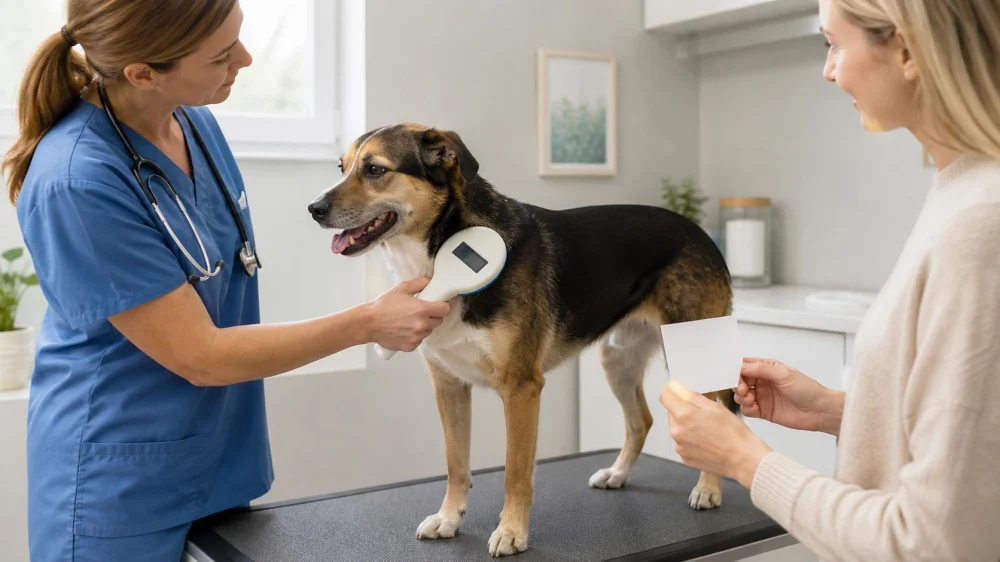
A pet microchip is a small passive identification device implanted under the skin by a veterinary professional. A compatible scanner energizes it briefly and displays a unique number. The chip itself does not broadcast a location, track movement, or usually store the owner's address. A shelter or clinic uses the number to identify a registry and contact the person listed there. The chain works only when implantation, registration, scanning, and current contact information all connect.
This guide is for United States pet owners checking an already implanted chip or planning implantation with a veterinarian. Species, size, health, travel, adoption, rescue, ownership, and local licensing rules can change the process. Implantation and medical concerns belong with a veterinarian.
Practical checklist
- Locate the chip number in implantation, adoption, shelter, or veterinary records; do not guess from a product name.
- Ask a veterinary clinic or shelter to scan the pet and compare the displayed number with the record.
- Identify the registry linked to the number and use its official site or support channel.
- Register the chip if the record is incomplete and verify owner name, primary phone, backup phone, email, and address.
- Update the record after moving, changing numbers, transferring ownership, or changing an emergency contact.
- Keep login recovery information and proof of ownership secure without posting the full chip number publicly.
- Confirm what the registry charges, which services are optional, and whether basic contact updates remain available.
- Use a readable collar identification tag and required license or rabies tags when safe and applicable.
Step-by-step plan
- Gather adoption and veterinary paperwork and write the chip number exactly as shown. Keep source documents rather than relying on a copied note alone.
- At a routine veterinary visit, request a scan across the appropriate body areas and confirm that the number matches the record.
- Navigate independently to the official registry and review the account. Avoid unsolicited messages that ask for passwords, payment, or personal details through unfamiliar links.
- Enter current contact information and a reliable backup. Clarify who is authorized to make future changes and how ownership transfer works.
- Save confirmation privately with the pet's vaccination, medication, photograph, and emergency-contact records.
- Set a yearly reminder and another reminder tied to any household move or phone change. Ask the veterinarian to rescan during a routine exam.
- If the pet is lost, contact local shelters, animal control, veterinarians, and the registry promptly and follow local lost-pet procedures; do not wait for GPS tracking that the chip cannot provide.
Maintain a private chip record with the full number, implant date if known, registry, account owner, verified contact channels, last update date, last successful scan date, veterinarian, current pet photo, and transfer documents. Share the number only with legitimate parties who need it.
Limits and important notes
A chip does not replace a collar tag, license, secure enclosure, leash, or active lost-pet search. Scanners and registries are separate systems, and a readable number may still lead to outdated information. A chip can migrate from its initial site or rarely fail to scan, which is why veterinary checks matter. Registry add-ons do not turn a passive chip into a GPS device.
Contact a veterinarian for swelling, pain, discharge, skin change, or another concern near the implant site, or when repeated professional scans cannot find a documented chip. For ownership disputes, travel documentation, or unclear registry transfer, use the appropriate veterinarian, shelter, registry, animal-control authority, or legal process rather than changing records without authorization.
Frequently asked questions
Does a pet microchip show the pet's GPS location?
No. A standard pet microchip is passive and provides an identification number when scanned. It does not broadcast location. GPS trackers are separate devices with their own power and service requirements.
Why must I register a chip after implantation?
The number must connect to current owner contact information in a registry so a shelter or clinic can reach someone. An unregistered or outdated record weakens that connection.
Should the veterinarian scan the chip again?
Yes. AVMA materials advise periodic scanning, including at routine visits, to confirm the chip remains detectable and the number matches the record.
Does a microchip replace a collar tag?
No. A visible tag can help a finder contact you quickly, while a chip provides permanent backup identification if the collar is missing. Use both when appropriate and safe.
Sources and evidence
This article reflects American Veterinary Medical Association microchipping guidance reviewed in September 2026. AVMA explains that a chip holds a unique identification number, is not GPS, must be registered with current contact information, should be scanned periodically, and does not replace collar identification and rabies tags. A veterinarian and the official registry remain the sources for the individual pet and chip.
Conclusion and next steps
Find the chip number today, confirm it with a veterinary scan, and sign in through the official registry. Correct every contact field, add a reliable backup, and save the confirmation with the pet's records. Put a yearly scan-and-update reminder on the calendar and keep visible identification current rather than treating the chip as a location tracker.



 Evergreen Veterinary Hospital4.0 (273 reviews)
 Gladeville Veterinary Services: Travis Whitlow, DVM4.0 (11 reviews)
 Red Fern Veterinary Care5.0 (4 reviews)
 Acorn Lake Veterinary Service4.0 (67 reviews)
 The Animal Care Center Of Ooltewah4.0 (266 reviews)
 Triad Aquatic Services, LLC.5.0 (4 reviews)
 Preventing Obesity in Indoor Dogs with Daily Exercise – Effective Tips
 Expert Advice on Pet Behavior That Every Owner Should Know
 How to Spot and Treat Stress-Related Symptoms in Pets
 Dog Fibrotic Myopathy Symptoms in German Shepherds Explained
 How to Improve Your Puppy & Kitten Care for a Healthy Start
 How to Identify and Treat Flea Bites on Cats – Effective Care Tips